TRENDING

Wednesday, 11 November 2026
----------------------
1 Jumada Al-Thani 1448 AH
U.S.‑led talks in Abu Dhabi have stalled over cease‑fire and territory demands, leaving Ukraine’s civilians to bear the ongoing cost of war.
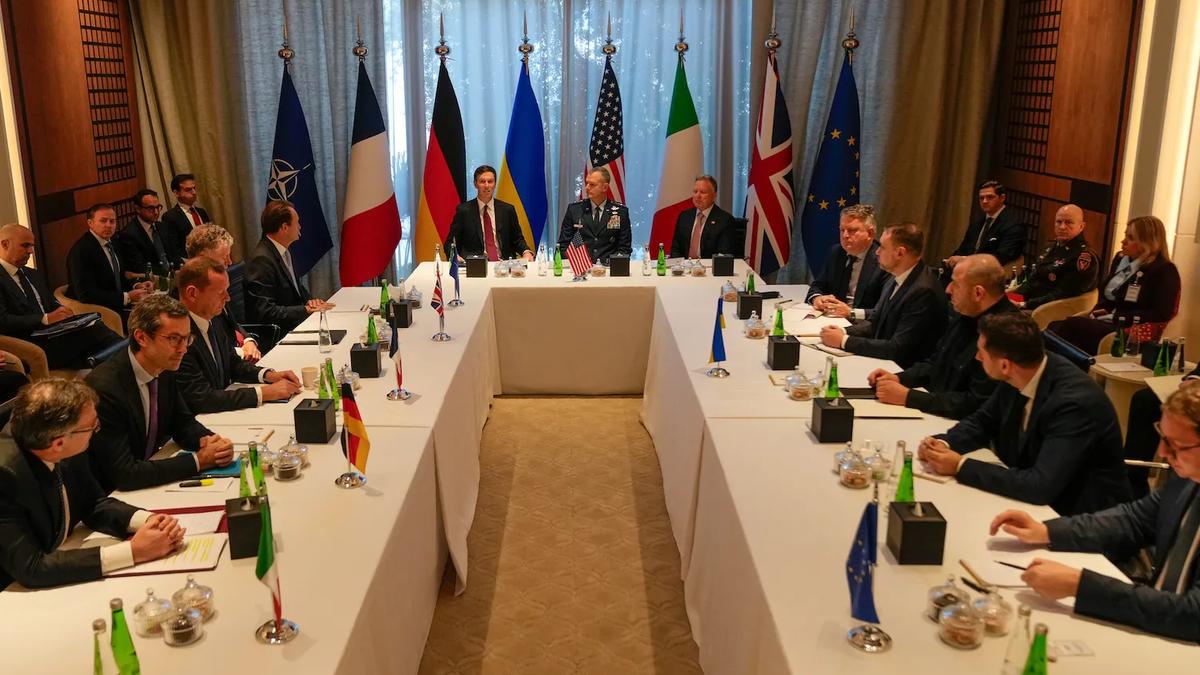
The United States, Russia, and Ukraine reconvened in Abu Dhabi for a two‑day, trilateral peace conference—the first such gathering in nine months. Day one centered on security guarantees for Kyiv, with U.S. negotiator Jared Kushner describing the dialogue as “constructive.” Yet both sides entered the talks with entrenched positions: Kyiv and its European allies demand an immediate cease‑fire, while Moscow refuses, insisting Kyiv withdraw from the four occupied districts of the Donbas. Hours before the summit, Russian forces struck Ukraine’s power grid, underscoring the fragility of any progress.
- Strategic incentives – For Washington, brokering a settlement offers a way to limit Russian aggression without committing additional troops, preserving its global image after a costly involvement in the Middle East. For Moscow, refusing a cease‑fire preserves leverage; a pause could allow re‑armament and a diplomatic reset that eases sanctions pressure. Kyiv seeks a cease‑fire to protect civilians and buy time to rebuild its depleted air‑defence stockpiles, which are running low on U.S.‑made interceptors.
- Domestic politics – President Volodymyr Zelensky faces a war‑wearied electorate demanding tangible security, while Russian President Vladimir Putin must appear strong to his nationalist base and the military establishment that controls much of the economy. In Washington, Secretary of State Marco Rubio must balance congressional war fatigue with the desire to showcase diplomatic leadership ahead of the upcoming mid‑term elections.
- Alliance calculus – NATO allies, especially the Baltic states, push for a firm Russian concession on the Donbas to prevent a precedent of territorial loss. Meanwhile, the European Union, represented by Ursula von der Leyen, is channeling funds into a Black Sea security hub for Bulgaria and Romania, signaling a shift toward regional maritime stability that could limit Russian naval options.
- Economic trade‑offs – Prolonged conflict strains Russia’s wartime economy, already hit by sanctions and a shrinking export base. Ukraine’s reconstruction needs are mounting, and its reliance on Western military aid creates a dependency that the United States can leverage for political concessions.
The overnight attacks on Ukraine’s power grid left six regions without electricity, forcing families to rely on generators and heating coal. In the harsh approaching winter, these outages risk a humanitarian crisis, with hospitals operating on backup power and schools closing.
Since 2022, more than 7 million Ukrainians have been internally displaced. The stalled talks mean no immediate pathway to safe return, prolonging overcrowded shelters in western cities and straining local services.
Inflation, driven by disrupted supply chains and the loss of industrial output in the Donbas, has eroded real wages. Farmers in the south struggle to harvest grain amid shelling, threatening food security for both urban and rural households.
Continuous bombardment and the uncertainty of peace talks fuel anxiety and PTSD among civilians, especially children who have known only conflict. Mental‑health services remain under‑funded, with NGOs warning of a looming crisis.
- Western narrative of mediation – Official statements highlight the United States as an impartial broker, but the reality is a calculated effort to keep Russia engaged on terms that preserve U.S. influence in Eastern Europe. The focus on “constructive dialogue” downplays the fact that the U.S. is also negotiating arms sales and basing rights with regional partners.
- Russian propaganda on time‑buying – Sergey Lavrov frames the cease‑fire demand as a European ploy to “buy time,” yet Moscow simultaneously escalates attacks on civilian infrastructure, a tactic aimed at breaking Ukrainian morale while signaling to its own populace that the war is still being fought.
- European fatigue hidden behind funding announcements – The €56 million pledge for a Black Sea hub is presented as a security boost, but it also serves to divert attention from Europe’s growing reluctance to provide unlimited military aid to Kyiv, a shift that could reshape the balance of power in the region.
- Domestic political costs ignored – In the United States, the talks are used to showcase diplomatic activity ahead of elections, masking the fact that congressional committees are debating massive defense spending bills that could lock the U.S. into a prolonged arms supply chain to Ukraine.
- Next round of negotiations – Watch for any shift in Moscow’s stance on a temporary cease‑fire, especially if Russia’s economy shows signs of further strain or if Western sanctions tighten.
- U.S. congressional action – Upcoming defense appropriations and potential impeachment proceedings against Defense Secretary Pete Hegseth could affect the flow of military aid, altering Kyiv’s bargaining power.
- Black Sea security developments – The operationalization of the maritime hub in Bulgaria and Romania will test NATO’s ability to contain Russian naval activity, influencing Moscow’s calculus on the battlefield.
- Energy resilience in Ukraine – How quickly Ukraine can repair its grid and secure alternative heating will determine civilian stability and, indirectly, the political pressure on Kyiv to accept a negotiated settlement.
- Public sentiment in Russia and Ukraine – Protests, war‑weariness, and nationalist rallies will shape each leader’s room to maneuver; any surge in domestic dissent could force a change in tone at the negotiating table.
Russia sees a cease‑fire as a chance to regroup and avoid losing momentum, while Ukraine demands it to protect civilians and rebuild its defences. Both sides fear that conceding now would weaken their strategic positions.
The United States acts as a mediator, seeking to limit Russian aggression while maintaining influence in Eastern Europe. It also uses the talks to showcase diplomatic activity ahead of domestic elections.
Civilians face ongoing power outages, displacement, economic hardship, and psychological trauma. The lack of progress prolongs these hardships and delays any path to normalcy.
Editor's Note: Analysis based on publicly available reports and historical patterns; future developments may shift dynamics.
Source referenced: FOREIGNPOLICY
This brief was synthesized by our Editorial Engine and reviewed by The Ground Narrative team.