TRENDING

Wednesday, 11 November 2026
----------------------
1 Jumada Al-Thani 1448 AH
Recent Israeli attacks in the Gaza Strip killed six Palestinians, including a father and son, despite an internationally brokered 'ceasefire.' These deaths occur as a severe winter storm exacerbates an already dire humanitarian crisis, with aid blockades preventing essential supplies.
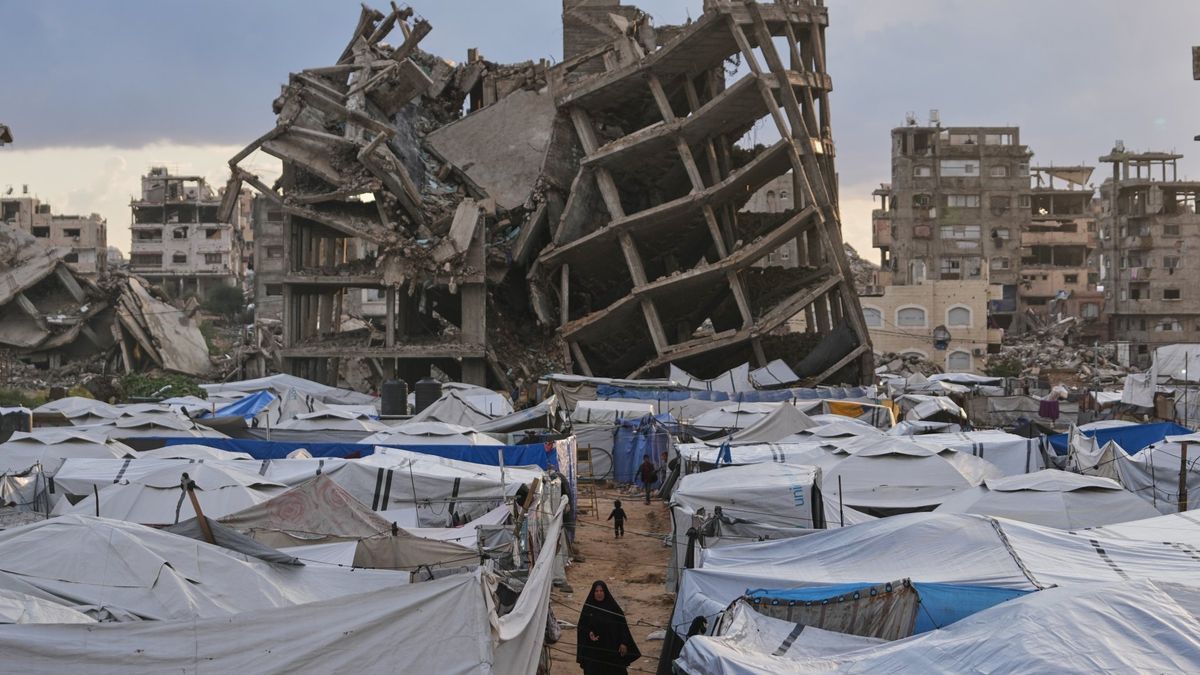
Recent Israeli military actions in the Gaza Strip have resulted in the deaths of at least six Palestinians, including a father and his 13-year-old son. The father and son were killed in an air attack on a tent in Gaza City's Zeitoun neighbourhood, while three others died in a separate Israeli air attack on a family home in the Daraj area. Another man was killed by Israeli gunfire in the southern city of Khan Younis. These fatalities occur despite a United States-brokered “ceasefire” agreement, with over 1,600 Palestinians reportedly killed by Israel in the besieged enclave since that truce. The ongoing violence is compounded by a severe humanitarian crisis: a recent storm flooded approximately 70,000 tents, killing at least five people, while Israel continues to restrict the entry of crucial humanitarian aid, including 60,000 mobile homes and 200,000 tents, allowing only a fraction to pass through, even as 85 percent of homes in Gaza have been destroyed or damaged.
The current situation in Gaza is a stark illustration of asymmetric power dynamics, where the stated goals of security and stability are constantly undermined by the realities of military control and political leverage. Israel, holding military control over approximately two-thirds of the territory and its borders, exercises significant power over the flow of goods, people, and reconstruction materials. Its military operations, even under a “ceasefire,” are framed as responses to security threats, asserting its right to self-defense and aiming to dismantle Hamas's capabilities. The continued restriction of essential aid, including shelter, is a form of pressure, intended to weaken Hamas by making governance and civilian life untenable, or to deter future aggression by demonstrating the consequences of conflict.
Hamas, for its part, derives its power from its continued resistance and its refusal to disarm. Its presence in Gaza, even amidst devastating losses, allows it to maintain a narrative of defiance against occupation. Disarming would mean relinquishing its primary leverage and identity as a resistance movement, a step it has consistently rejected in negotiations. The ongoing humanitarian catastrophe, while inflicted upon the population it claims to represent, also serves as a potent symbol of perceived oppression, which can be used to rally support internally and internationally, albeit at immense human cost. The stalled negotiations for disarmament and Israeli withdrawal highlight this fundamental impasse: Israel demands Hamas's capitulation, while Hamas demands an end to occupation and blockade, neither willing to concede first.
The United States, as the nominal broker of the “ceasefire,” occupies a contradictory position. While advocating for peace and humanitarian aid, it remains Israel's primary military and diplomatic ally, providing substantial aid and political cover on the international stage. This dual role limits its ability to exert decisive pressure on Israel to alter its policies on aid or military operations. The US prioritizes regional stability and the security of its ally, often leading to a complex balancing act that frequently defers to Israeli security concerns, even when they conflict with humanitarian imperatives. This dynamic effectively grants Israel significant latitude in its actions, while placing the onus of de-escalation heavily on Hamas.
The most immediate and devastating consequence of these power dynamics is borne by the civilian population of Gaza. The recent killings of a father and his 13-year-old son are not isolated incidents but represent the daily terror faced by families caught in a cycle of violence. These are not mere statistics; they are lives abruptly ended, leaving behind grieving families and deepening an already profound collective trauma.
The destruction of 85 percent of homes in Gaza has forced the vast majority of the population into precarious temporary shelters. The recent storm, which flooded 70,000 tents and killed five people, vividly illustrates the dire conditions. Families, already displaced multiple times, now face exposure to the elements, disease, and a complete lack of dignity. These tents offer little protection from the cold, rain, or the constant threat of renewed attacks. The deliberate restriction on the entry of mobile homes and additional tents by Israel transforms a natural disaster into a man-made catastrophe, denying basic shelter to hundreds of thousands of people.
Children like the 13-year-old boy killed are growing up in an environment of perpetual fear, loss, and deprivation. They witness violence, experience displacement, and are denied access to education, adequate nutrition, and healthcare. The psychological toll of this sustained trauma will impact generations, manifesting as PTSD, developmental issues, and a profound sense of hopelessness. The future prospects for these children are severely limited by the destruction of infrastructure, the collapse of the economy, and the absence of a safe, stable environment.
The healthcare system in Gaza has been systematically decimated, with hospitals destroyed, medical supplies scarce due to the blockade, and personnel overwhelmed. This means preventable diseases become deadly, and injuries often lead to long-term disability. Simultaneously, Gaza's economy has been shattered. With no functional infrastructure, limited trade, and a population unable to work or rebuild, the region is entirely dependent on external aid, which is itself restricted. This creates a cycle of poverty and dependency, stripping individuals of their agency and ability to forge a sustainable future.
Beneath the headlines and official statements, several critical narratives are often downplayed or omitted, obscuring the full scope of the situation in Gaza and the roles played by powerful actors.
The term
Source referenced: ALJAZEERA
This brief was synthesized by our Editorial Engine and reviewed by The Ground Narrative team.