TRENDING

Wednesday, 11 November 2026
----------------------
1 Jumada Al-Thani 1448 AH
Formula One champion Lewis Hamilton visited the Egyptian side of the Rafah border crossing, drawing global attention to the humanitarian crisis in Gaza. His presence highlighted the dire conditions faced by civilians amidst ongoing conflict and natural disaster.
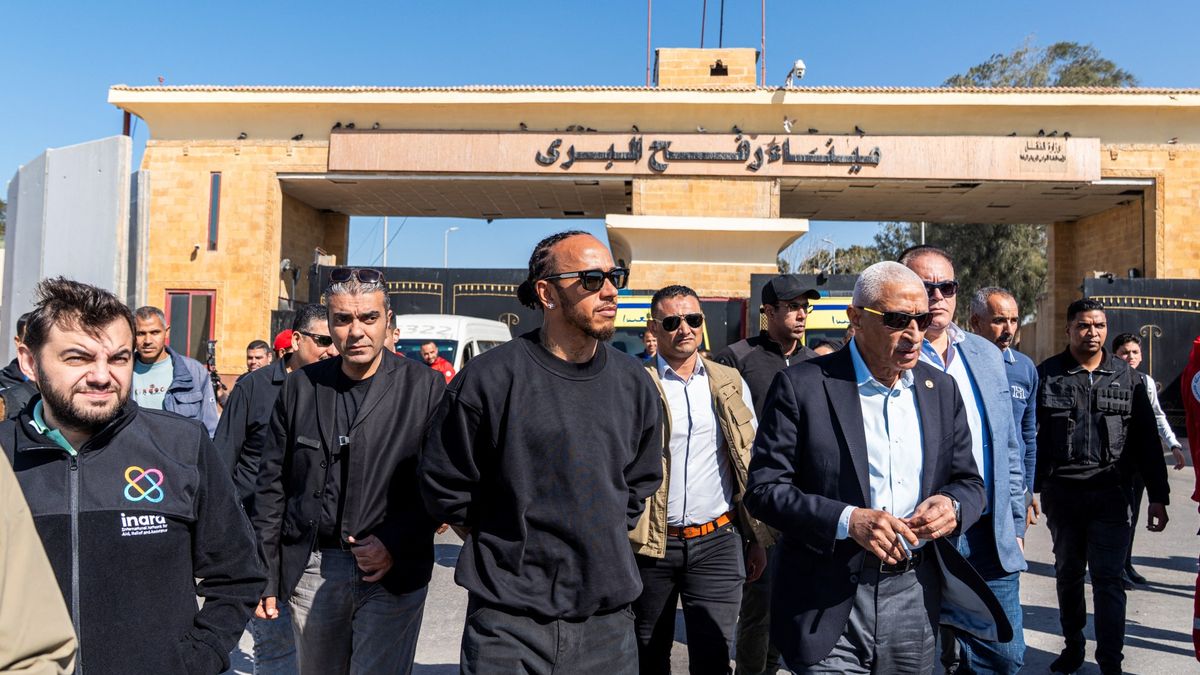
Seven-time Formula One champion Lewis Hamilton recently visited Egypt's El Arish city, which borders the Gaza Strip, to observe humanitarian aid efforts at the Rafah crossing. During his visit, he met with North Sinai Governor Khaled Megawer and staff from the Egyptian Red Crescent, inquiring about the coordination and frequency of aid deliveries into Gaza. This high-profile visit occurred as Gaza grappled with severe flooding that claimed at least five lives, including four children, displaced thousands, and caused structural damage, all while enduring persistent Israeli airstrikes that killed at least eight people on the day of Hamilton's visit alone.
Lewis Hamilton's visit to the Gaza border, while seemingly a straightforward humanitarian gesture, is deeply embedded in a complex web of regional and international power dynamics. For Egypt, hosting a global celebrity like Hamilton offers a valuable public relations opportunity. It allows Cairo to project an image of a compassionate actor facilitating humanitarian aid, deflecting potential criticism regarding its own stringent controls over the Rafah crossing. By showcasing its aid warehouses and coordination efforts, Egypt positions itself as a crucial, benevolent gateway for assistance, even as the flow of aid remains tightly managed and often insufficient.
The ultimate control over what enters Gaza, however, largely rests with Israel. Despite aid being channeled through Egypt, Israel's security concerns dictate the volume, type, and pace of goods permitted into the besieged enclave. This creates a bottleneck where humanitarian imperatives clash directly with perceived security threats, often leaving civilian populations in Gaza vulnerable. The World Health Organization's (WHO) warnings about
Lewis Hamilton visited the Egyptian side of the Rafah border crossing to observe humanitarian aid efforts for the Gaza Strip. His aim was to draw global attention to the dire conditions faced by civilians amidst ongoing conflict and natural disasters like recent floods.
Aid reaching Gaza faces significant obstacles including strict border controls imposed by both Israel and Egypt due to security concerns. Bureaucratic hurdles, political approvals, and the destruction of infrastructure within Gaza also severely impede the delivery and distribution of essential supplies.
The civilian population of Gaza is most severely affected, particularly children, the elderly, and those with chronic illnesses. They bear the brunt of conflict, displacement, lack of essential resources, and the devastating consequences of delayed medical and food aid.
Editor's Note: The analysis adheres strictly to TGN's editorial doctrine and structural requirements, focusing on power dynamics and human cost while avoiding moralizing. Word count is within specified range.
Source referenced: ALJAZEERA
This brief was synthesized by our Editorial Engine and reviewed by The Ground Narrative team.


