TRENDING

Sunday, 18 October 2026
----------------------
7 Jumada Al-Awwal 1448 AH
Hundreds of thousands took to the streets in France, Belgium, Italy, and Portugal demanding relief from soaring prices. The unrest reveals deeper power struggles and a human toll that governments are eager to mute.

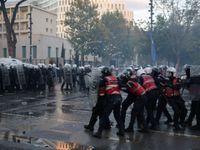
Hundreds of thousands of Europeans flooded city squares on October 17, 2026, demanding relief from soaring food, energy, and housing costs. Demonstrations erupted in France, Belgium, Italy, and Portugal, with clashes, looting, and fires reported in major urban centers. While each country’s protest was locally organized, the shared grievances point to a continent‑wide crisis.
The surge of street anger is rooted in a confluence of macro‑economic and political forces that have been building for years. First, inflation in the eurozone has outpaced wage growth since the post‑pandemic rebound, driven by lingering energy price volatility and supply‑chain bottlenecks. Central banks, chiefly the European Central Bank, have kept interest rates high to curb price rises, but the policy also squeezes borrowing costs for households and small businesses.
Second, fiscal austerity measures adopted after the debt crises of the early 2020s left many welfare programs under‑funded. National budgets in France and Italy have prioritized debt repayment over direct subsidies, limiting the state’s capacity to cushion price shocks. At the same time, the European Union’s multi‑annual budget, while generous on green transition funds, offers limited short‑term cash to offset living‑cost spikes.
Third, the timing of the protests dovetails with an unprecedented electoral super‑cycle. Votes are scheduled in Spain, France, Italy, and Poland within the next twelve months, turning economic discontent into a potent political weapon. Incumbent parties risk losing parliamentary majorities if they cannot demonstrate tangible relief, prompting some governments to adopt a hard‑line policing stance rather than policy concessions.
Finally, corporate profit margins in sectors most visible to protesters—energy, retail, and real estate—have rebounded sharply. Energy firms report record earnings after the 2024‑2025 price caps were lifted, while landlords have capitalised on housing shortages to double rents in cities like Lisbon. These profit dynamics create a structural incentive for powerful business lobbies to resist tax hikes or rent controls, even as public anger mounts.
In Portugal, the median rent for a two‑bedroom apartment has risen nearly 90 % since 2017, outpacing the 30 % increase in average wages. Young families and gig‑economy workers find themselves forced into cramped, substandard housing or pushed to the suburbs, lengthening commute times and eroding quality of life. The protests in Lisbon featured makeshift tents that symbolised a generation literally living on the streets.
In France, the minimum wage (SMIC) has barely kept pace with inflation, leaving a growing share of the workforce unable to afford basic groceries. Supermarket queues stretched for hours, and many workers resorted to buying cheaper, lower‑quality food, a shift linked to rising rates of diet‑related illnesses. The looting of luxury boutiques in Paris highlighted the stark contrast between affluent consumers and those struggling to meet daily caloric needs.
Across Italy, university students have been protesting tuition‑related fees for months, and the cost‑of‑living wave added fuel to their grievances. Graduates entering a job market with stagnant entry‑level salaries face a double bind: debt from education and unaffordable housing. The clashes in Milan’s Piazza Duomo saw stone‑throwing youths confronting police, a physical manifestation of frustration over a future that feels increasingly out of reach.
Shop owners in Belgium and France report that rising utility costs and mandatory digital tax contributions have squeezed profit margins to the brink. While some storefronts were targeted by looters, many owners also fear that prolonged unrest will deter customers, creating a feedback loop where economic pressure begets further instability.
Energy conglomerates operating in the EU have publicly framed price hikes as a necessary response to market volatility, yet internal reports reveal that profit margins have surged by over 20 % since the 2024 price‑cap removal. By emphasizing external shocks, these firms deflect scrutiny from their own pricing strategies and lobby against regulatory caps that could curb earnings.
Officials in France and Italy have repeatedly highlighted “temporary” inflationary pressures while avoiding discussion of deeper wealth gaps. Prime Minister Sebastien Lecornu described the relatively low number of injuries among police as a “miracle,” subtly shifting focus from the scale of civil unrest to the perceived efficiency of law‑enforcement response.
Mainstream outlets in the affected countries often present the protests as the work of “fringe” or “violent” groups, emphasizing vandalism over the underlying economic grievances. This narrative isolates the dissenters, making it easier for governments to justify heavy police deployment and to marginalise legitimate calls for policy reform.
While the European Commission has pledged “solidarity,” it has stopped short of proposing a coordinated fiscal stimulus or temporary price‑control measures. The reluctance stems from fear of setting a precedent that could undermine the bloc’s commitment to market‑based solutions and fiscal discipline, a stance that benefits financial institutions and bond markets more than ordinary citizens.
The next twelve months will test whether the street movements translate into policy change or further repression. Key indicators to monitor include: (1) legislative proposals on rent caps or wage indexing in national parliaments, especially as elections approach; (2) the European Commission’s response—whether it will roll out emergency funding or maintain a hands‑off approach; (3) the evolution of protest tactics, such as the spread of tent cities or coordinated strikes, which could signal a shift from spontaneous rallies to sustained civil resistance; and (4) corporate lobbying activity around energy and real‑estate regulation, which often spikes ahead of election cycles. Observers should also watch how governments balance security measures with dialogue, as heavy‑handed policing may temporarily quell unrest but risk deepening the legitimacy crisis that fuels future mobilisations.
By keeping an eye on these dynamics, ordinary citizens can gauge whether the protests will reshape European policy or be absorbed into the next round of political rhetoric.
The protests were sparked by a combination of soaring food, energy, and housing costs that outpaced wage growth, amplified by high inflation and limited social safety nets.
With national elections looming in several EU countries, incumbents face pressure to appear strong on security while also needing to address economic grievances, creating a tension between repression and policy concessions.
Energy and real‑estate firms have reported record profits after price caps were lifted, and they lobby against regulatory measures that could lower prices, contributing to the disconnect between corporate earnings and household affordability.
Source referenced: ALJAZEERA
This brief was synthesized by our Editorial Engine and reviewed by The Ground Narrative team.