TRENDING

Sunday, 25 October 2026
----------------------
14 Jumada Al-Awwal 1448 AH
The coordinated sanctions by the UK, Canada, France, and Norway on Israeli networks financing settler violence in the West Bank have sparked a diplomatic row, underscoring the deepening divisions over the Israeli-Palestinian conflict.
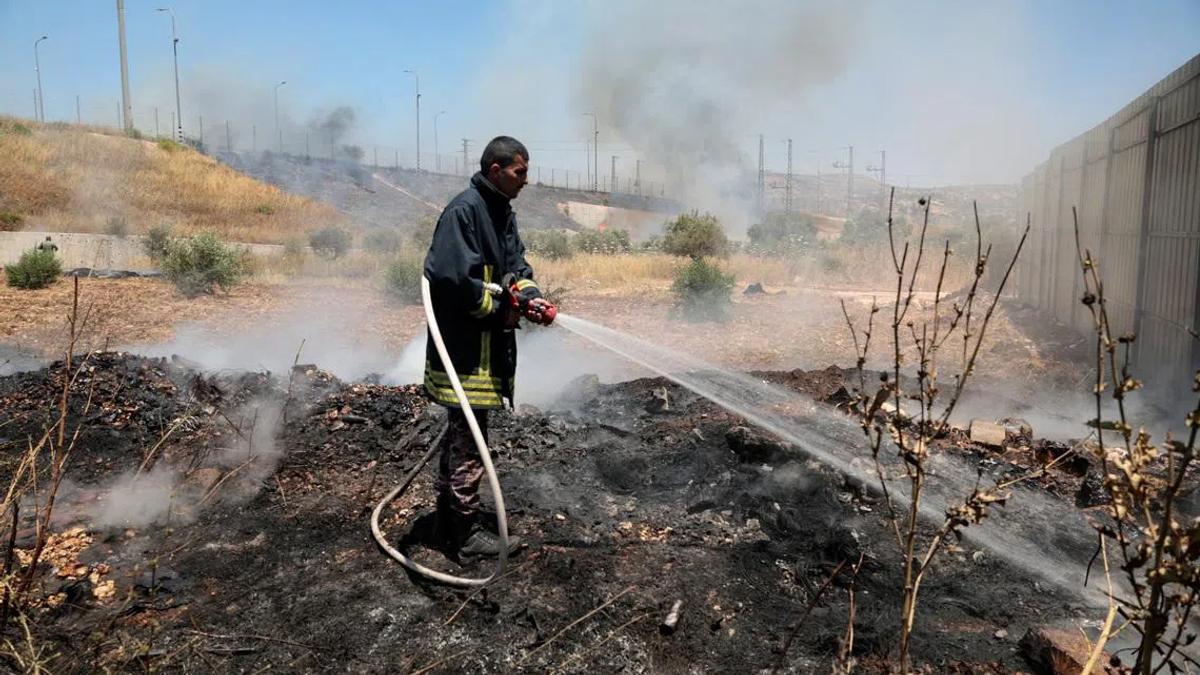
The recent surge in settler violence in the West Bank has prompted a coordinated response from the UK, Canada, France, and Norway, who have imposed new sanctions on Israeli networks involved in financing and carrying out these attacks. This move is a significant escalation in the diplomatic row between these Western countries and the Israeli government, which has been accused of failing to take adequate measures to prevent settler violence.
The Israeli-Palestinian conflict has been a longstanding issue, with the establishment of Israeli settlements in the West Bank being a major point of contention. The settlements, which have been built on land that Israel captured in the 1967 war, are considered a violation of international law by nearly all countries and UN bodies. However, Israel disputes this, citing historical and biblical ties to the land.
The sanctions imposed by the UK, Canada, France, and Norway are aimed at holding extremist settlers accountable for their actions and pressuring the Israeli government to take meaningful action to prevent further violence. The move is also seen as a response to the expansion of settlements under Prime Minister Benjamin Netanyahu's government, which has been widely criticized by the international community.
The crisis in the West Bank has significant regional implications, with the potential to destabilize the entire Middle East. The Israeli-Palestinian conflict is a key factor in the region's instability, and any escalation of violence could have far-reaching consequences.
The imposition of sanctions by the UK, Canada, France, and Norway is likely to have significant consequences for Israel's relations with the international community. The Israeli government has rejected the sanctions, accusing the Western countries of failing to control antisemitism and fuelling it with such measures. However, the sanctions are a clear indication that the international community is increasingly frustrated with Israel's actions in the West Bank.
The crisis in the West Bank has also led to renewed diplomatic efforts to resolve the Israeli-Palestinian conflict. France is due to host a meeting on June 12, bringing together Israeli and Palestinian civil society groups and foreign ministers from around the world. The meeting will mark a year since the adoption of the New York Declaration, a non-binding resolution endorsed by the UN General Assembly that set out a roadmap towards a Palestinian state.
The coordinated sanctions by the UK, Canada, France, and Norway on Israeli networks financing settler violence in the West Bank are a significant development in the Israeli-Palestinian conflict. The move is a clear indication that the international community is increasingly frustrated with Israel's actions in the West Bank and is willing to take concrete steps to pressure the Israeli government to take meaningful action to prevent further violence. The crisis in the West Bank has significant regional implications and could have far-reaching consequences for the entire Middle East.
Editor's Note: The analysis is based on publicly available information and does not reflect any confidential or classified sources.
Source referenced: STRAITSTIMES
This brief was synthesized by our Editorial Engine and reviewed by The Ground Narrative team.