TRENDING

Monday, 5 October 2026
----------------------
24 Rabi' Al-Thani 1448 AH
Israeli settlers have besieged three homes in the West Bank village of Qusra, prompting a rare critical response from the US Ambassador to Israel. The incident highlights the complex power dynamics at play in the region, where Israeli settlement building and settler violence continue to escalate tensions.
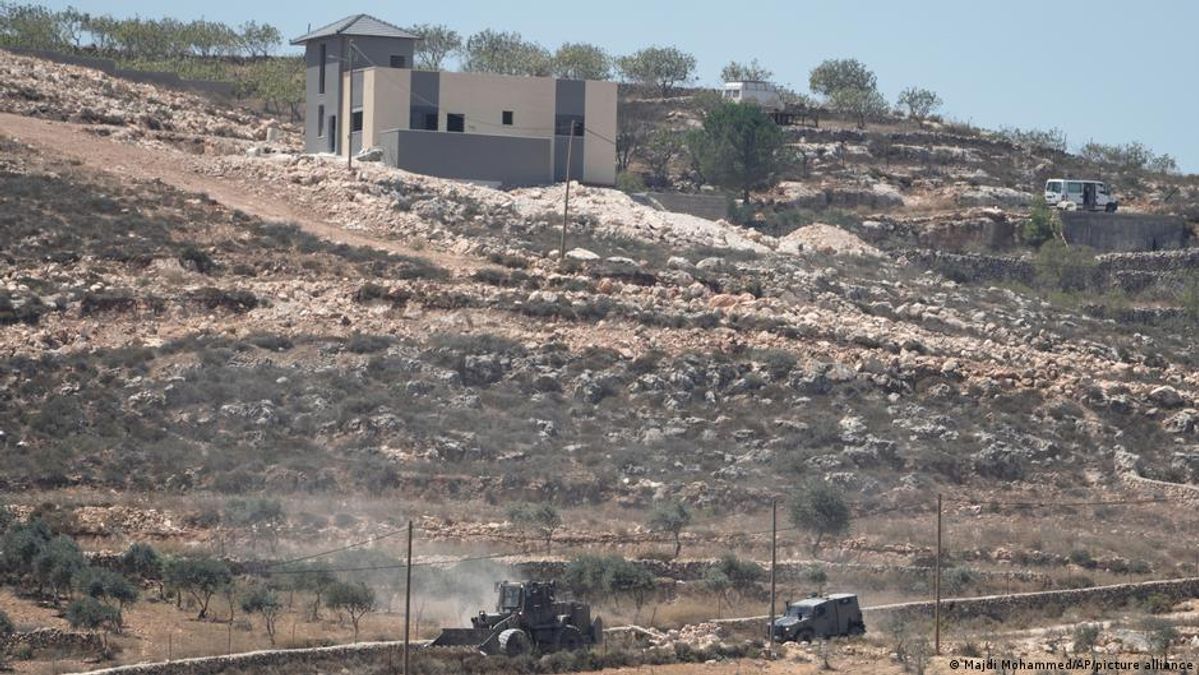
The village of Qusra in the West Bank has been the site of a recent confrontation between Israeli settlers and Palestinian residents. A group of settlers surrounded three homes in the village, including one owned by a Palestinian-American, and prevented the occupants from leaving. The Israeli military intervened, dismantling two illegal outposts and detaining one Israeli settler.
The incident in Qusra is a microcosm of the larger power struggle in the West Bank. Israeli settlement building, which is considered illegal under international law, continues to expand, with over 500,000 Israelis living in the West Bank. The Israeli government's response to settler violence has been criticized as inadequate, with many accusing Prime Minister Benjamin Netanyahu's government of turning a blind eye to attacks on Palestinians. The US Ambassador to Israel, Mike Huckabee, has spoken out against the incident, but his criticism has been tempered by his support for the Israeli settler movement.
The residents of Qusra have borne the brunt of the violence, with many forced to flee their homes or live under siege. The village has been a frequent flashpoint of violence, with its mosque damaged in attacks last month. The incident has also highlighted the plight of Palestinian-Americans, who are often caught in the middle of the conflict. The homeowner, Loui Ridi, has been forced to watch from afar as his family is besieged by settlers.
What is being downplayed in the official statements is the extent to which the Israeli government is complicit in settler violence. While the government condemns the violence, it has been accused of doing too little to prevent it. The UN Human Rights Office has called on the Israeli authorities to take immediate action against the settlers, citing the fact that 18 Palestinians have died in attacks involving settlers in the first seven months of this year. The international community has also been criticized for its failure to hold Israel accountable for its actions in the West Bank.
As the situation in Qusra continues to unfold, readers should watch for further escalation of violence in the West Bank. The Israeli government's response to settler violence will be closely monitored, as will the US Ambassador's continued involvement in the issue. The incident has also highlighted the need for a lasting peace solution in the region, with the two-state solution looking increasingly unlikely. The international community must take a stronger stance against Israeli settlement building and settler violence if a peaceful resolution is to be achieved.
Editor's Note: The analysis is based on publicly available information and may not reflect the full complexity of the situation on the ground.
Source referenced: DW
This brief was synthesized by our Editorial Engine and reviewed by The Ground Narrative team.


