TRENDING

Monday, 5 October 2026
----------------------
24 Rabi' Al-Thani 1448 AH
Devastating earthquakes have exposed Venezuela's governance failures and ignited public dissatisfaction, challenging the legitimacy of the Rodríguez administration. The crisis is forcing a complex re-evaluation of U.S. policy in the region amidst calls for democratic change.
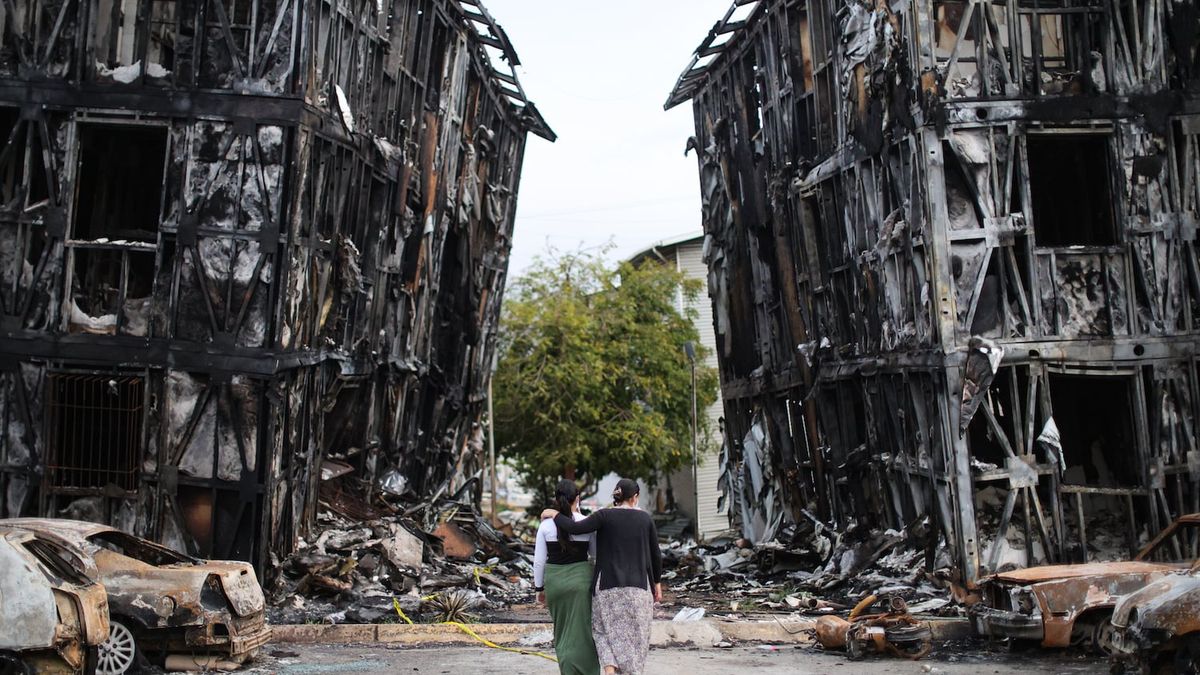
Venezuela is grappling with a profound humanitarian crisis and escalating political instability following a series of devastating earthquakes that struck the nation last week. The twin tremors, measuring 7.2 and 7.5 magnitude, have not only inflicted a tragic human toll and widespread physical destruction but have also starkly exposed the vulnerabilities of the country's governance and its fragile political landscape. The government's perceived bungled response has ignited public outrage, raising questions about the efficacy of the current administration and the long-term trajectory of U.S. policy in the region.
The earthquakes, which occurred days before June 30, 2026, unleashed widespread devastation across Venezuela, particularly in areas like Caracas, where images of burned-down buildings circulated widely. Official government figures reported at least 2,295 fatalities, yet citizen-compiled registries suggest a far higher number, with tens of thousands still missing and feared dead under rubble. The sheer scale of the disaster is underscored by a United Nations official's announcement on Monday that the organization planned to dispatch 10,000 body bags to the country. The U.N. Development Program (UNDP) has estimated direct physical damages alone at $6.7 billion, with the broader economic disruption expected to be significantly higher, further straining an economy already weakened by years of crisis.
The immediate aftermath has been characterized by a widely criticized government response. Reports indicate that official response teams were slow to reach some of the worst-hit areas and, in some instances, even obstructed independent rescuers from accessing disaster zones. This perceived inadequacy has fueled public anger, with social media videos showing Venezuelans openly lambasting officials. Acting President Delcy Rodríguez, who assumed power after the United States' ouster of Nicolás Maduro in January 2026, faced direct public scorn, being booed by residents during a tour of a devastated neighborhood. Ángel Rangel Sánchez, a former head of Venezuela’s civil defense agency, articulated a critical systemic flaw, stating that the nation's armed forces are “prepared to respond to riots but not the main threat of natural disasters.” This highlights a fundamental misallocation of state resources and priorities, where security apparatuses are geared towards internal political control rather than public safety and emergency preparedness.
The crisis has laid bare deep-seated public dissatisfaction with the Rodríguez administration, whose popularity was already low, with a majority of Venezuelans expressing a desire for elections to choose their own leader. Historically, natural disasters have often served as catalysts for political change, particularly in contexts of authoritarian or weak governance. The article draws parallels to the 1972 earthquake in Nicaragua and the 1985 earthquake in Mexico, both of which planted seeds for the eventual downfall of authoritarian regimes by galvanizing civil society and opposition movements. In Mexico, the emergence of citizen search-and-rescue groups like Los Topos became a significant force in post-quake citizen organizing, contributing to a successful opposition presidential campaign. Notably, members of Los Topos have traveled to Venezuela this week, signaling a potential for similar civil society mobilization.
Global research supports this trend, with a 2025 paper by Swedish and Norwegian universities finding that natural disasters often lead to short-term upticks in civil society participation and political competition, creating a “window of opportunity for democratization.” For Venezuela, this suggests that the current humanitarian crisis could accelerate demands for genuine political reform and accountability, potentially challenging the stability of the Rodríguez government.
The unfolding crisis is further complicated by the intricate dynamics of U.S. foreign policy and the role of Venezuela's opposition. María Corina Machado, widely regarded as Venezuela's most popular opposition figure, attempted to return to the country from abroad to assist with earthquake response efforts. However, her plans were reportedly paused after both the Trump administration and the Rodríguez administration indicated their lack of support, with her expired Venezuelan passport further complicating reentry. This development highlights a complex and seemingly contradictory U.S. stance. While Secretary of State Marco Rubio has expressed a long-term vision for free elections in Venezuela after a period of stabilization, the immediate actions suggest a prioritization of stability under the current Rodríguez administration, even if it means sidelining a prominent opposition figure during a critical humanitarian moment. An unnamed administration official told Axios that Machado's attempts were driving Rubio “crazy,” while the top U.S. diplomat in Caracas publicly expressed “great deal of confidence” in the Rodríguez administration.
The United States has, however, mobilized significant aid, deploying some 2,000 military personnel to assist with relief efforts and pledging $100 million in new assistance to aid groups. This represents a notable departure from President Donald Trump's general policy of scaling back foreign aid, underscoring the severity of the crisis and perhaps a strategic imperative to prevent further regional destabilization. Yet, the overall U.S. approach appears to be a delicate balancing act: providing humanitarian assistance while seemingly endorsing the current, albeit unpopular, administration for the sake of managing the immediate crisis, rather than actively fostering immediate democratic transition through opposition figures.
The Venezuelan earthquake crisis is more than a natural disaster; it is a profound geopolitical event that tests the resilience of a nation, the legitimacy of its government, and the strategic calculus of international actors. The failure to adequately respond to the humanitarian needs of its citizens risks further eroding public trust and potentially igniting widespread social unrest. As Tony Frangie-Mawad noted, “without genuine democratization and a real technification of Venezuelan institutions—the boring, unglamorous machinery of a state that actually functions—there will be no reconstructed Venezuela.” The long-term consequences could include increased migration, regional instability, and a re-evaluation of international engagement with Venezuela. The coming months will reveal whether this “window of opportunity” for change, opened by tragedy, will lead to meaningful reforms or further entrench the nation in its cycle of crisis.
Source referenced: FOREIGNPOLICY
This brief was synthesized by our Editorial Engine and reviewed by The Ground Narrative team.


