TRENDING

Thursday, 17 September 2026
----------------------
6 Rabi' Al-Thani 1448 AH
The United States denied President Mahmoud Abbas a visa to attend the UN General Assembly, citing “failed reforms.” The move deepens diplomatic rifts and raises the stakes for Palestinians on the ground.
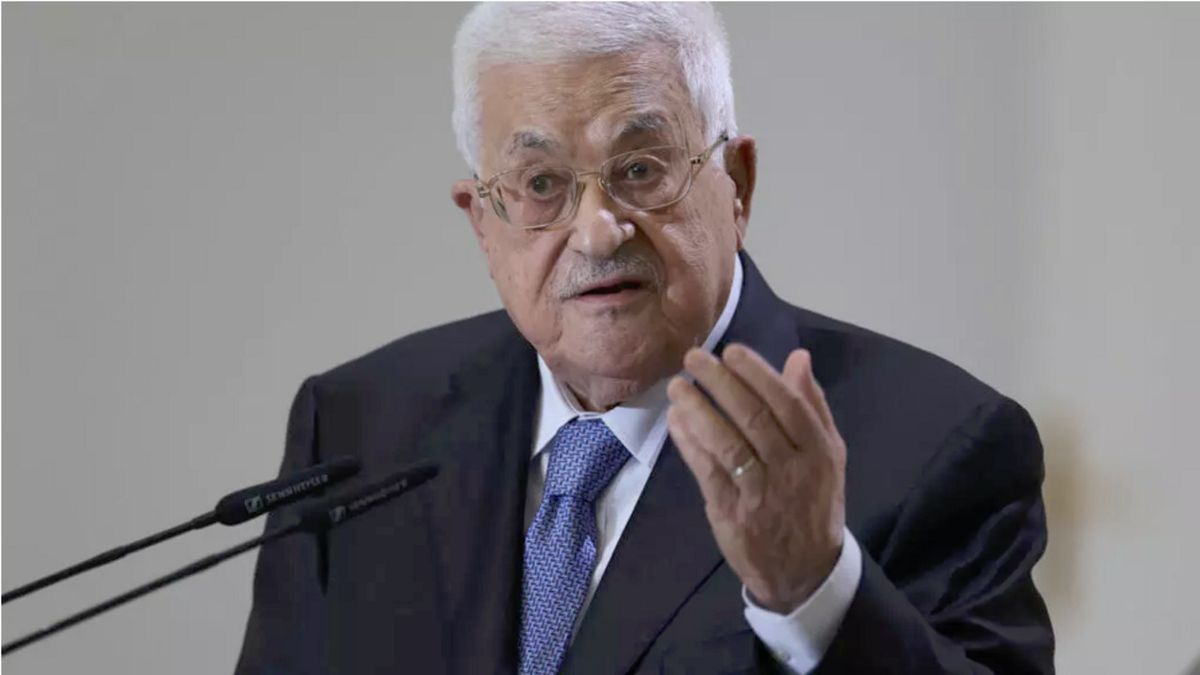
The U.S. State Department announced it will deny visas to members of the Palestine Liberation Organization and the Palestinian Authority, explicitly covering President Mahmoud Abbas, who was slated to speak at the upcoming UN General Assembly in New York. The decision echoes a similar ban imposed by the Trump administration last year, forcing Abbas to address the assembly via video link.
The visa denial is a lever of diplomatic pressure that the United States can wield without expending military resources. By branding the PA and PLO as “failed reformers” and accusing them of “undermining peace prospects,” Washington signals to Israel and domestic constituencies that it will not reward Palestinian leadership that does not align with its preferred negotiation framework. The move also serves a domestic political function: it reinforces a narrative of a tough stance on groups perceived as supporting terrorism, a line that resonates with key voting blocs and defense‑industry donors. Internationally, the ban tests the limits of U.S. influence over multilateral forums; by barring a high‑profile Palestinian leader, the U.S. attempts to marginalize Palestinian diplomatic leverage while preserving its strategic partnership with Israel.
The immediate human cost falls on ordinary Palestinians who rely on the UN platform to draw attention to daily hardships—restricted movement, settlement expansion, and a deteriorating economy. Abbas’s absence reduces the visibility of their grievances, limiting potential humanitarian aid and diplomatic pressure that could alleviate blockades or settlement violence. In the West Bank, where Israeli settler attacks have claimed over a thousand lives since October 7, 2023, the ban compounds a sense of abandonment. Families of victims lose a rare opportunity for their stories to reach a global audience, while NGOs operating under the PA face tighter funding constraints as international donors cite “political instability” as a justification for reduced assistance. The broader Palestinian diaspora also feels the sting, as the UN stage often serves as a rallying point for solidarity movements worldwide.
Official statements focus on “reform failures” and “terrorist financing,” but they omit the structural incentives driving those accusations. The United States benefits from a weakened Palestinian negotiating position, which eases pressure on Israel to make concessions on settlements or the blockade of Gaza. By delegitimizing the PA’s diplomatic outreach, Washington also shields itself from scrutiny over its own arms sales and military aid to Israel, which total billions of dollars annually. Moreover, the visa ban sidesteps the growing international consensus—exemplified by France and Saudi‑co‑hosted UN resolutions—recognizing a Palestinian state. The U.S. narrative downplays how its policy isolates the PA from multilateral legitimacy, effectively forcing Palestinian leadership into a narrower, more dependent relationship with Israel and donor agencies.
Watch how the European Union and Arab states respond in the coming weeks. A coordinated diplomatic push to overturn the visa ban could force Washington to recalibrate its approach ahead of the UN vote on statehood recognition. Simultaneously, monitor any escalation in settler violence in the West Bank; a spike could trigger renewed calls for international intervention, putting additional pressure on the U.S. to adjust its stance. Finally, keep an eye on internal Palestinian politics—if Abbas’s isolation fuels dissent within Fatah or emboldens Hamas, the power calculus in Jerusalem and Washington could shift dramatically.
Source referenced: FRANCE24
This brief was synthesized by our Editorial Engine and reviewed by The Ground Narrative team.