TRENDING

Monday, 5 October 2026
----------------------
24 Rabi' Al-Thani 1448 AH
A Pentagon report acknowledges 153 civilian deaths from US military operations in 2025, a stark increase from the previous year, primarily in Yemen. However, this official tally omits hundreds more killed in other US-led operations, raising critical questions about accountability and the true human cost of America's global military footprint.
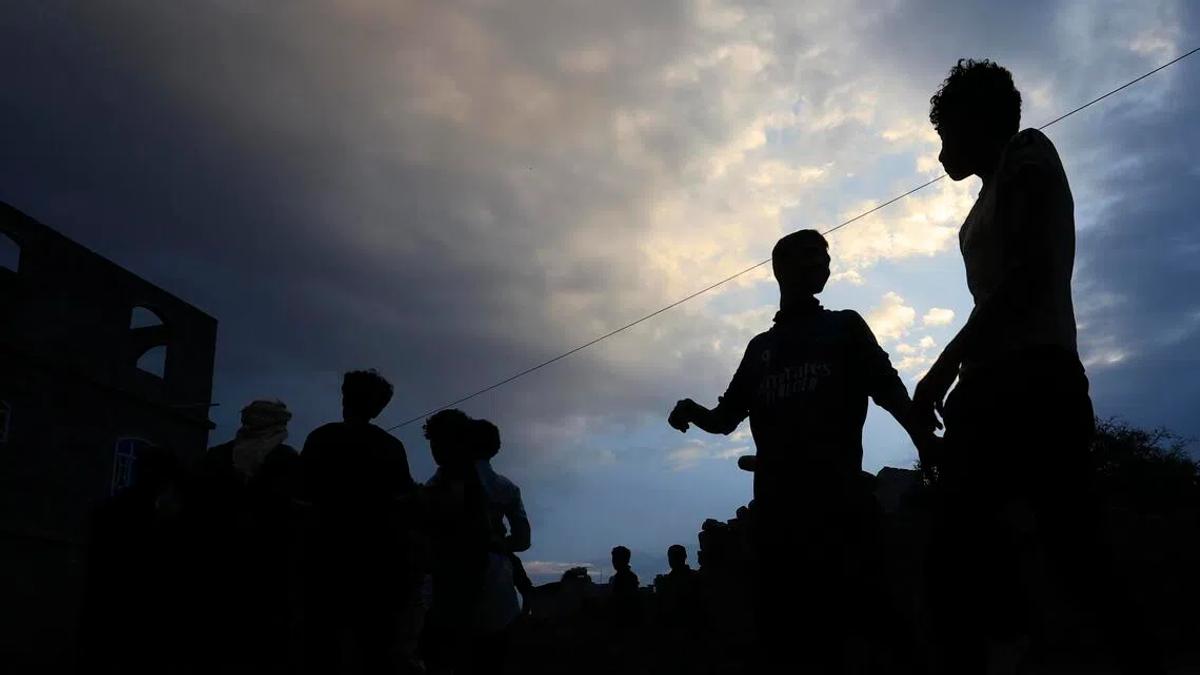
The US military's operations in 2025 resulted in the deaths of 153 civilians and wounded 243, according to a recent Pentagon assessment. This figure represents a dramatic increase from the mere two civilian casualties reported in 2024. All officially acknowledged deaths and injuries for 2025 were attributed to three specific US strikes in Yemen, targeting Iran-backed Houthi militants. The US Central Command assessed these incidents as "more likely than not" causing civilian harm, with 15 other incidents in Yemen still under review.
This report, while seemingly transparent, reveals a critical aspect of how powerful nations manage the narrative of their military actions. The Pentagon's assessment focuses exclusively on casualties from operations aimed at "degrading the capabilities of Iran-backed Houthi militants." This framing allows the US to define the scope of accountability, limiting it to specific conflict zones and objectives. The significant increase in reported civilian deaths in Yemen underscores the escalating nature of this particular conflict, where the US operates to counter perceived threats to regional stability and its allies. Simultaneously, the US Southern Command's assertion of "no incidents" in its area of responsibility in 2025, despite other reports, highlights the power of official classification. When the Trump administration labels targets in the Eastern Pacific as "narco-terrorists," it effectively expands the justification for military force beyond traditional counter-terrorism, blurring the lines between law enforcement and warfare and granting broad operational latitude.
The most immediate human cost falls upon the civilians of Yemen, who are caught in a protracted conflict involving multiple international actors. Already enduring a severe humanitarian crisis, these individuals and communities bear the brunt of airstrikes, their lives and livelihoods shattered as collateral damage in a geopolitical struggle far removed from their daily realities. Beyond Yemen, the report's omissions point to another group of victims: the more than 200 people killed in US military strikes against alleged narcotics vessels in the Eastern Pacific since September 2025. These individuals, often from marginalized communities, are labeled as "narco-terrorists" without due process, their deaths dismissed by official counts. Human rights organizations like Human Rights Watch and Amnesty International have condemned these strikes as unlawful extrajudicial killings, highlighting how the powerful can redefine adversaries to bypass legal protections, leaving families and communities to grapple with profound loss and trauma.
The most glaring omission in the Pentagon's official assessment is the deliberate exclusion of the 200+ civilian deaths from anti-narcotics operations in the Caribbean and Eastern Pacific. By compartmentalizing these casualties and not including them in the overall civilian harm report, the US government effectively downplays the true scale of its global military footprint and the human cost it entails. This selective reporting allows the powerful to control the public perception of accountability, presenting a lower, more manageable figure while quietly continuing operations that result in significant loss of life. The assertion by the American Civil Liberties Union that the "narco-terrorist" claims are "unsubstantiated, fear-mongering" points to a deeper issue: the weaponization of language to justify military action and circumvent international law, leaving victims without recourse or recognition. The public is presented with a curated reality, where the full scope of military action and its consequences remains obscured.
Moving forward, observers should closely watch how the Pentagon addresses the ongoing assessments for the 15 additional incidents in Yemen; their findings will indicate the military's internal threshold for acknowledging harm. Crucially, the continued pressure from human rights organizations and international legal bodies will be vital in challenging the selective reporting and demanding a more comprehensive accounting of all civilian casualties from *all* US military operations, regardless of the mission's classification. The evolving definition of "terrorism" and its application to non-traditional threats, like drug trafficking, will also be a key area to monitor, as it shapes the future legal and ethical boundaries of military engagement and the potential for further unacknowledged civilian harm. The humanitarian situation in Yemen, inextricably linked to these military actions, will remain a critical barometer of the broader human cost of these power dynamics.
Source referenced: STRAITSTIMES
This brief was synthesized by our Editorial Engine and reviewed by The Ground Narrative team.