TRENDING

Tuesday, 13 October 2026
----------------------
2 Jumada Al-Awwal 1448 AH
A US military delegation has met with Lebanon's army to discuss Israel's withdrawal from a 'pilot zone' in southern Lebanon, marking a significant shift in the Israeli-Hezbollah conflict. The move aims to implement a framework agreement reached on June 26, which could have far-reaching implications for regional stability.
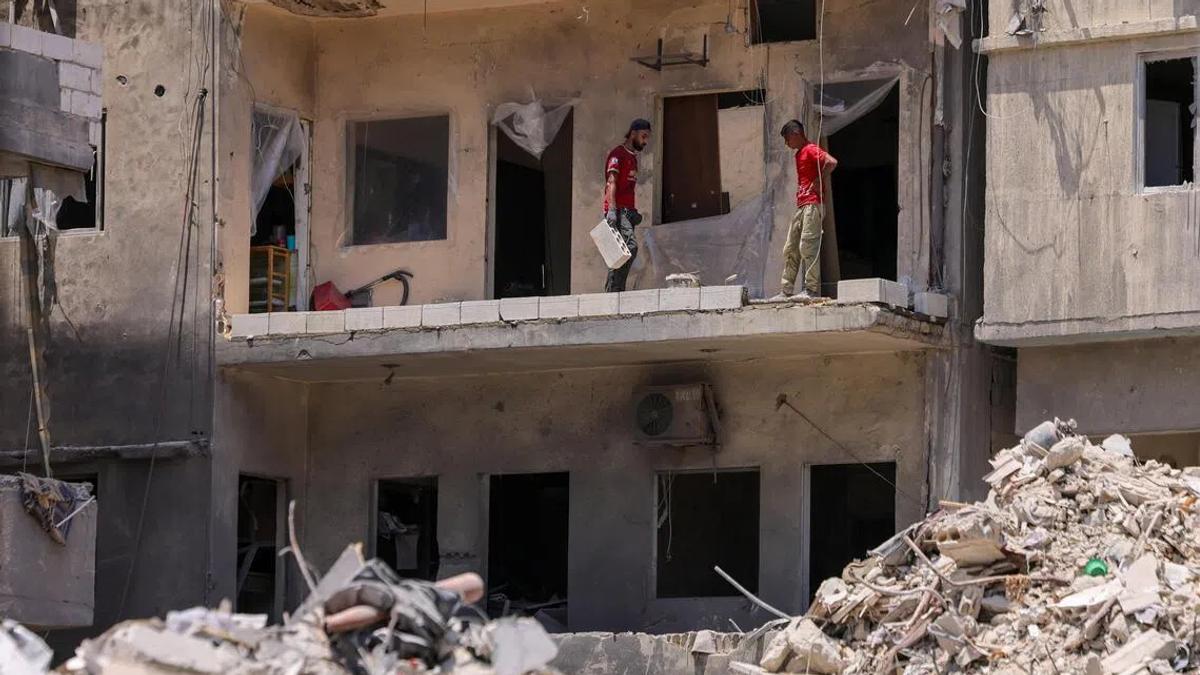
The recent meeting between a US military delegation and Lebanon's army in Beirut marks a significant development in the Israeli-Hezbollah conflict. The delegation's primary objective was to discuss the implementation of Israel's withdrawal from one of the 'pilot zones' in occupied territory, as outlined in the framework agreement reached on June 26. This agreement, which has been rejected by Hezbollah, aims to gradually withdraw Israeli forces from areas of southern Lebanon where they have been deployed as part of their military campaign against the Iranian-backed Shi'ite movement.
The pilot zones, which will be taken over by the Lebanese military, are a crucial aspect of the agreement. These areas, dubbed 'pilot zones,' will serve as a testbed for the implementation of the framework agreement. The Lebanese military's control over these zones will be a significant shift in the balance of power in the region, as it will allow them to assert their authority and potentially challenge Hezbollah's influence.
The US military delegation's involvement in the talks highlights the country's growing role in regional affairs. The US has been actively engaged in mediating the conflict between Israel and Hezbollah, and this move is a testament to its commitment to finding a peaceful resolution. The US Central Command will coordinate with both countries to ensure the smooth implementation of the agreement, which could have far-reaching implications for regional stability.
Despite the agreement, Israel has vowed to remain in a 'security zone' 10km deep as long as Hezbollah remains armed. This stance reflects Israel's deep-seated security concerns, which have driven its military campaign against Hezbollah. Hezbollah's rejection of the agreement is also a significant development, as it highlights the group's determination to resist any attempts to undermine its influence in the region.
The implementation of the framework agreement and the withdrawal of Israeli forces from the pilot zones will have significant consequences for regional stability. The Lebanese military's control over these areas will be a crucial factor in determining the future of the conflict. If the agreement is successful, it could pave the way for a broader peace process between Israel and Hezbollah, potentially leading to a significant reduction in tensions in the region.
However, if the agreement fails, it could lead to a further escalation of the conflict, with potentially disastrous consequences for regional stability. The upcoming talks in Rome, scheduled for July 15 and 16, will be a critical test of the agreement's viability. Lebanon's participation in the talks is conditional on Israel's withdrawal from the pilot zones, which will be a key indicator of the agreement's success.
The US-led withdrawal from Lebanon's pilot zones marks a significant shift in the Israeli-Hezbollah conflict. The implementation of the framework agreement and the withdrawal of Israeli forces from these areas will have far-reaching implications for regional stability. While the agreement's success is far from guaranteed, it represents a crucial step towards finding a peaceful resolution to the conflict. The upcoming talks in Rome will be a critical test of the agreement's viability, and the international community must remain vigilant in its support for a peaceful resolution to this long-standing conflict.
Editor's Note: The success of the agreement is uncertain, and its implementation will depend on various factors, including Israel's willingness to withdraw from the pilot zones and Hezbollah's response to the agreement.
Source referenced: STRAITSTIMES
This brief was synthesized by our Editorial Engine and reviewed by The Ground Narrative team.