TRENDING

Monday, 26 October 2026
----------------------
15 Jumada Al-Awwal 1448 AH
Israeli Prime Minister Benjamin Netanyahu's meeting with US President Donald Trump aims to project unity amidst the ongoing Iran war and recent bilateral tensions. The high-stakes summit will address regional security, the Israel-Lebanon deal, and Gaza's humanitarian crisis, with significant implications for Middle East stability and both leaders' domestic political standing.
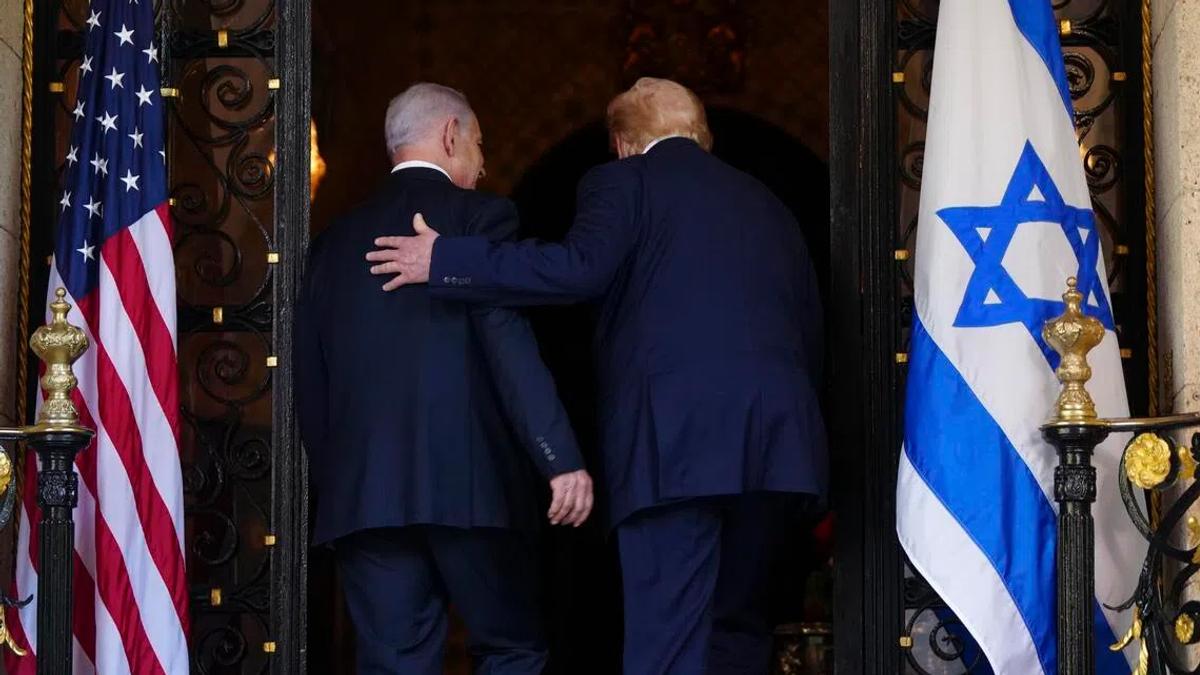
On July 28, 2026, Israeli Prime Minister Benjamin Netanyahu met with US President Donald Trump at the White House, marking their first in-person encounter since the commencement of the 'Iran war' in late February. This high-stakes summit in Washington D.C. served as a critical platform for both leaders to address pressing regional security challenges, particularly the ongoing conflict with Iran, while simultaneously aiming to reaffirm the strength of the US-Israel alliance despite recent public disagreements.
The meeting, the eighth between the two leaders since President Trump's return to office in 2025, was largely orchestrated to project an image of unwavering unity. Relations between Netanyahu and Trump have reportedly experienced periods of strain in recent months, notably in April during ceasefire negotiations, which saw President Trump express strong frustrations with his Israeli counterpart. However, both leaders have since sought to downplay these exchanges, with Netanyahu characterizing them as 'tactical disagreements' rather than fundamental rifts in their shared objectives. The strategic imperative to demonstrate a cohesive front to the international community, particularly to adversaries like Iran and regional actors such as Lebanon, underscores the diplomatic significance of this summit. As international relations expert Yonatan Freeman noted, the primary aim was to dispel any perceptions of a cooling in relations, emphasizing that areas of agreement between the allies far outweigh their differences.
The central agenda item for the discussions was undoubtedly the 'Iran war,' which began with US-Israeli strikes on Iran in late February. While the United States has expressed a desire to explore diplomatic avenues and give negotiations a chance, Israel has not actively participated in the latest round of hostilities that flared in July, following the collapse of an April ceasefire. This divergence highlights a potential strategic nuance between Washington and Jerusalem regarding the *means*—such as the timeline, intensity, and immediate objectives of military operations—even if their ultimate *ends* concerning Iran's regional influence and nuclear ambitions remain aligned. Netanyahu's pre-departure statement, emphasizing the safeguarding of Israel's security and the expansion of peace, directly alluded to the critical nature of coordinating strategy on Iran.
Beyond the immediate concerns of the Iran war, the leaders delved into other critical regional issues. Discussions included the challenging implementation of a US-sponsored framework deal signed by Israel and Lebanon in June. This agreement, aimed at de-escalating tensions along their shared border, faces significant hurdles on the ground. Furthermore, the dire humanitarian situation in Gaza was on the agenda, with diplomatic efforts to kickstart the devastated Palestinian territory's reconstruction remaining at a standstill nearly three years after the conflict between Israel and Hamas erupted. While some observers suggested a possible easing of Israel's military presence in areas like Lebanon, Syria, or Gaza, President Trump's stated regional priorities primarily revolve around Iran and the expansion of the Abraham Accords. These US-brokered normalization agreements, initiated during Trump's first term, saw Israel establish diplomatic ties with several Arab nations, and their further expansion remains a key objective for the US administration in reshaping the Middle East's geopolitical landscape.
The timing of Netanyahu's visit also carries significant domestic political weight. With Israeli national elections approaching, in which he plans to seek another term, Netanyahu faces considerable public anger over his government's perceived failures surrounding the October 7, 2023, attack by Hamas. A strong showing of support from the US President and tangible progress on security and diplomatic fronts could bolster his standing with the Israeli electorate. For both leaders, the summit served as an opportunity to project strong leadership and strategic alignment, sending a clear message to both domestic audiences and international adversaries about the enduring strength and shared objectives of the US-Israel alliance in a highly volatile Middle East.
Source referenced: STRAITSTIMES
This brief was synthesized by our Editorial Engine and reviewed by The Ground Narrative team.