TRENDING

Monday, 5 October 2026
----------------------
24 Rabi' Al-Thani 1448 AH
Indirect talks between the U.S. and Iran have failed, with Washington rejecting Tehran's offer amidst ongoing conflict. This analysis unpacks the high economic and human costs of the standoff, revealing what powerful actors are downplaying.
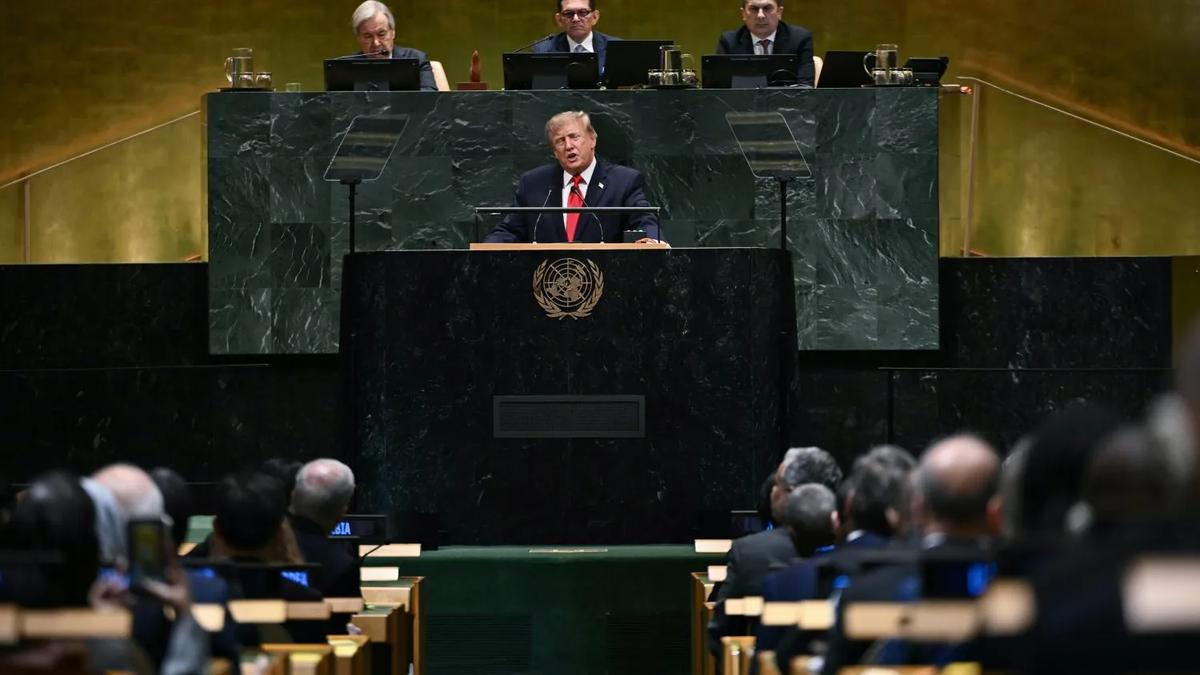
Following the UN General Assembly, indirect talks between the United States and Iran in New York have concluded without a breakthrough. U.S. Ambassador to the United Nations, Mike Waltz, confirmed that the Trump administration rejected Iran's offer, deeming it insufficient to address concerns over its nuclear program and regional actions, particularly regarding the Strait of Hormuz. The failure signals a continuation of the high-stakes confrontation between Washington and Tehran.
The current U.S. strategy hinges on applying maximum pressure through economic sanctions and military deterrence, aiming to compel Iran to abandon its alleged nuclear ambitions and cease regional destabilization. For the Trump administration, the incentive is to demonstrate decisive action, avoiding the perception of "kicking the can down the road" as Waltz articulated, and to prevent a nuclear breakout that could trigger a regional arms race. The analogy to North Korea's playbook highlights a perceived imperative to act pre-emptively.
Iran, in turn, leverages its strategic chokehold on the Strait of Hormuz, its developing missile and drone capabilities, and the implicit threat of its nuclear program as bargaining chips. The Iranian regime's primary incentive is survival and the assertion of regional influence, viewing any concession as a weakening of its sovereignty. This dynamic creates a dangerous feedback loop: U.S. pressure hardens Iran's resolve, leading to further escalations that raise the stakes for all parties.
Economically, the conflict has directly impacted global oil markets, driving up prices and creating a significant trade-off. While Gulf allies might benefit from increased oil exports, the global economy, and particularly American consumers, bear the brunt of higher energy costs. Diplomatically, the U.S. claims international consensus against Iran's actions, citing a record number of nations condemning its violations. However, this broad condemnation does not translate into shared military burden, leaving the U.S. to shoulder the direct costs of confrontation.
The most immediate human cost of this standoff is borne by the ordinary citizen. Americans are now paying approximately 40 percent more for gas compared to pre-conflict levels, a direct tax on their daily lives. This economic burden, coupled with the war's deep unpopularity, creates a disconnect between the administration's strategic imperatives and the public's lived reality.
Beyond the pump, U.S. military personnel face the direct consequences of damaged bases and the expenditure of "precious munitions," including a significant portion of Patriot missile interceptors. While Ambassador Waltz denied "false accounting on our casualty numbers," the toll on service members and their families remains a critical, often understated, aspect of the conflict.
In Iran, the civilian population likely endures the compounding effects of international sanctions and the constant threat of escalation, even as the regime continues its contested programs. Across the broader Middle East, the specter of a nuclear arms race, explicitly raised by Saudi Arabia, threatens to destabilize an already volatile region, impacting the security, livelihoods, and future of millions.
What is consistently downplayed by powerful actors is the true cost and effectiveness of the current strategy. Ambassador Waltz, while acknowledging the conflict's difficulty, dismisses concerns about U.S. losses and public opposition, framing them as necessary sacrifices for future security. His refusal to "publicly expose those mistakes in the midst of a conflict" highlights a deliberate lack of transparency regarding military operations and their efficacy, leaving the public in the dark about the full picture.
The administration's narrative focuses heavily on Iran's "illegal" actions and "terrorist" nature, largely omitting any discussion of Iran's own security concerns, internal dynamics, or specific demands in the failed talks. This one-sided framing simplifies a complex geopolitical reality, making it harder for the public to understand the full range of motivations and potential pathways to de-escalation.
Furthermore, while the stated goal is to prevent Iran from acquiring nuclear weapons, the continued "aggressive progression" of Iran's program, despite intense pressure, raises questions about whether the current approach is truly achieving its objectives or merely accelerating a dangerous arms race. The immediate destabilizing effects—such as soaring oil prices and regional attacks—are often framed as unavoidable consequences rather than potential indicators of a strategy needing re-evaluation.
The immediate future will likely see continued volatility in global oil markets, directly impacting consumer prices worldwide. Watch for further statements from Gulf allies regarding their oil production and any shifts in their stance on nuclear proliferation, particularly from Saudi Arabia.
On the military front, any further attacks on shipping or infrastructure in the Persian Gulf will signal continued Iranian defiance and could prompt further U.S. military responses. The pace of Iran's nuclear program will remain a critical indicator, determining the urgency and nature of future international interventions or diplomatic efforts.
Domestically, the ongoing costs and unpopularity of the conflict could become a significant factor in U.S. political discourse, potentially influencing the administration's policy trajectory. Finally, despite the current impasse, any subtle signals of renewed willingness for indirect dialogue from either Washington or Tehran, perhaps mediated by other powers, will be crucial to watch for as the human and economic costs continue to mount.
Source referenced: FOREIGNPOLICY
This brief was synthesized by our Editorial Engine and reviewed by The Ground Narrative team.


