TRENDING

Tuesday, 27 October 2026
----------------------
16 Jumada Al-Awwal 1448 AH
A potential peace deal between the United States and Iran is reportedly close, aiming to de-escalate a protracted Middle East conflict. This diplomatic push faces significant opposition from hardline factions within Iran, while simultaneously prompting strategic shifts among regional actors.
The Middle East is currently navigating a complex diplomatic landscape, marked by the potential for a significant peace agreement between the United States and Iran. This nascent deal, aimed at de-escalating a protracted "Middle East war," has triggered a cascade of reactions, from internal dissent within Iran to strategic realignments among regional powers. The unfolding events underscore the intricate interplay of international diplomacy, domestic politics, and regional security dynamics that define the contemporary geopolitical environment.
The prospect of a US-Iran peace deal gained considerable traction following statements from Iranian Foreign Minister Abbas Araghchi, who indicated that a draft agreement could be signed "remotely" in the "coming days." This diplomatic push, reportedly championed by US President Donald Trump and facilitated by mediator Pakistan, seeks to address the underlying tensions that have fueled instability across the region. French Foreign Minister Jean-Noël Barrot has also publicly urged both nations to seize this opportunity, highlighting the international desire for an end to the "unsustainable situation." Key aspects of the proposed deal, as articulated by Iran's Foreign Minister, include the cessation of a naval blockade, though crucially, the Strait of Hormuz is not expected to revert to its pre-war status, signaling Iran's intent to maintain strategic leverage over this vital global chokepoint.
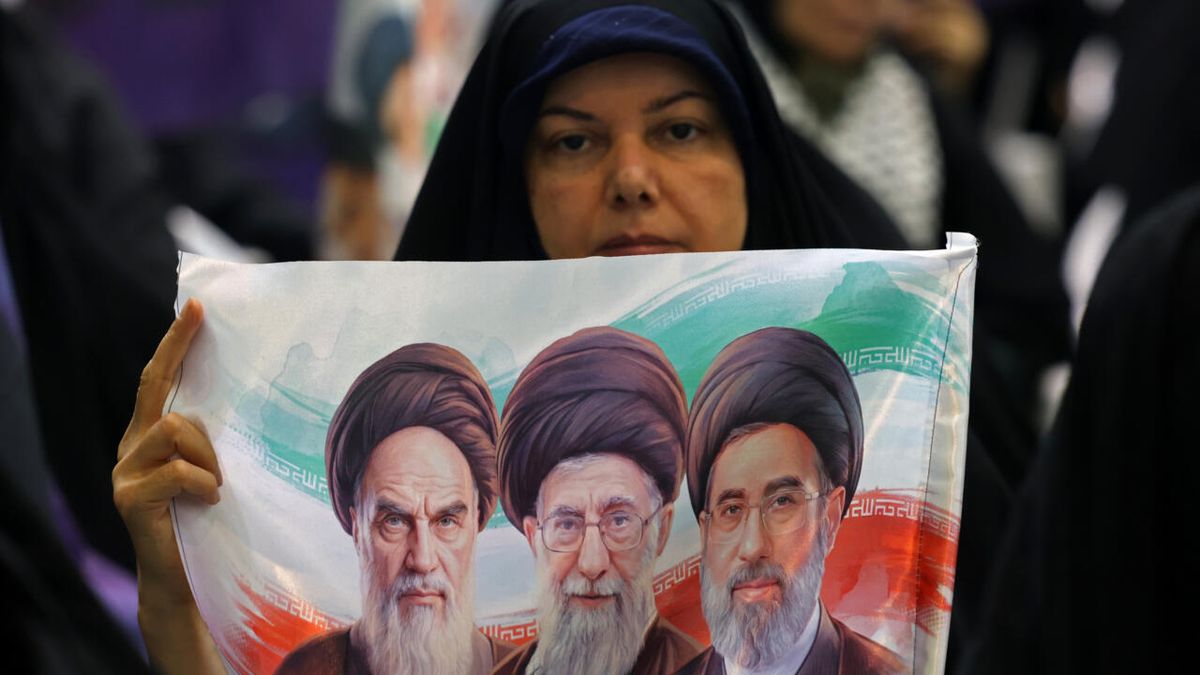
However, the path to peace is fraught with internal challenges for Iran. On Saturday, dozens of protestors gathered outside a foreign ministry office in Mashhad, Iran's northeastern city, to voice their strong opposition to the potential agreement. Chanting slogans such as "death to dishonourable Araghchi, the infiltrator," the demonstrators, some waving red and black flags, targeted Foreign Minister Araghchi following a televised interview where he discussed the deal. This public display of dissent, amplified by hardline Iranian figures who view any rapprochement with the US as a betrayal, underscores the deep ideological divisions within the Islamic Republic. The protests highlight the delicate balance the Iranian government must strike between pursuing diplomatic solutions to alleviate international pressure and managing domestic political sensitivities, particularly from factions resistant to engagement with Western powers.
The potential US-Iran accord is not occurring in a vacuum; its implications are already reverberating across the Middle East, prompting both tactical shifts and continued military engagements. In Lebanon, the country reported Israeli strikes in its southern and eastern regions on Saturday. Concurrently, the Israeli army issued broad evacuation warnings for the city of Nabatieh and over 20 other locations, signaling potential further raids. Lebanon's involvement in the broader conflict is directly linked to Hezbollah's actions, which attacked Israel in support of its patron, Tehran. These ongoing military actions underscore the fragility of regional stability and the complex web of proxy conflicts that could be influenced, but not necessarily immediately resolved, by a US-Iran peace deal.
Further illustrating the shifting geopolitical landscape, the United Arab Emirates has reportedly agreed to unlock billions of dollars for Iran. This move, described by sources as a "tactical shift," comes after weeks of Iranian attacks on the wealthy Gulf Arab state during what is characterized as a "US-Israeli war with the Islamic Republic." The UAE's decision suggests a pragmatic re-evaluation of its regional strategy, potentially prioritizing de-escalation and economic engagement over continued confrontation, especially if a broader US-Iran rapprochement appears imminent. This realignment by a key Gulf state could have significant implications for regional alliances and economic flows, potentially paving the way for broader diplomatic and economic normalization efforts in the future.
The potential US-Iran peace deal represents a pivotal moment in Middle Eastern geopolitics. Should it materialize, it could fundamentally alter the regional security architecture, potentially reducing the frequency and intensity of proxy conflicts that have destabilized nations from Yemen to Lebanon. For the United States, particularly under a Trump administration, such a deal would be framed as a significant foreign policy achievement, demonstrating a capacity to de-escalate tensions with a long-standing adversary. For Iran, the agreement could offer much-needed economic relief and a pathway out of international isolation, albeit at the cost of navigating significant internal political opposition.
The stipulation that the Strait of Hormuz will not return to its pre-war status is particularly noteworthy. This indicates Iran's strategic intent to maintain a degree of control or leverage over this critical maritime passage, through which a substantial portion of the world's oil supply transits. This position has profound implications for global energy security and international shipping, suggesting that even in a state of "peace," Iran aims to retain strategic assets that bolster its regional influence. The coming days will be crucial in determining whether the diplomatic momentum can overcome internal Iranian resistance and the entrenched regional rivalries, ultimately shaping the trajectory of the Middle East for years to come. The complex interplay of these factors ensures that any resolution will be a delicate balance, constantly tested by the region's inherent volatility.
Editor's Note: The article refers to a 'Middle East war' and 'US-Israeli war with the Islamic Republic' without specific dates or detailed context. The analysis assumes these refer to a broader, ongoing period of heightened tensions and proxy conflicts involving these actors, rather than a single declared war. The analysis also assumes the 'naval blockade' refers to international sanctions or restrictions impacting Iranian shipping.
Source referenced: FRANCE24
This brief was synthesized by our Editorial Engine and reviewed by The Ground Narrative team.