TRENDING

Wednesday, 11 November 2026
----------------------
1 Jumada Al-Thani 1448 AH
The 9th China International Import Expo saw more than $650 million in agreements for American agricultural products. While officials tout the event as a sign of openness, deeper power calculations shape who truly benefits.
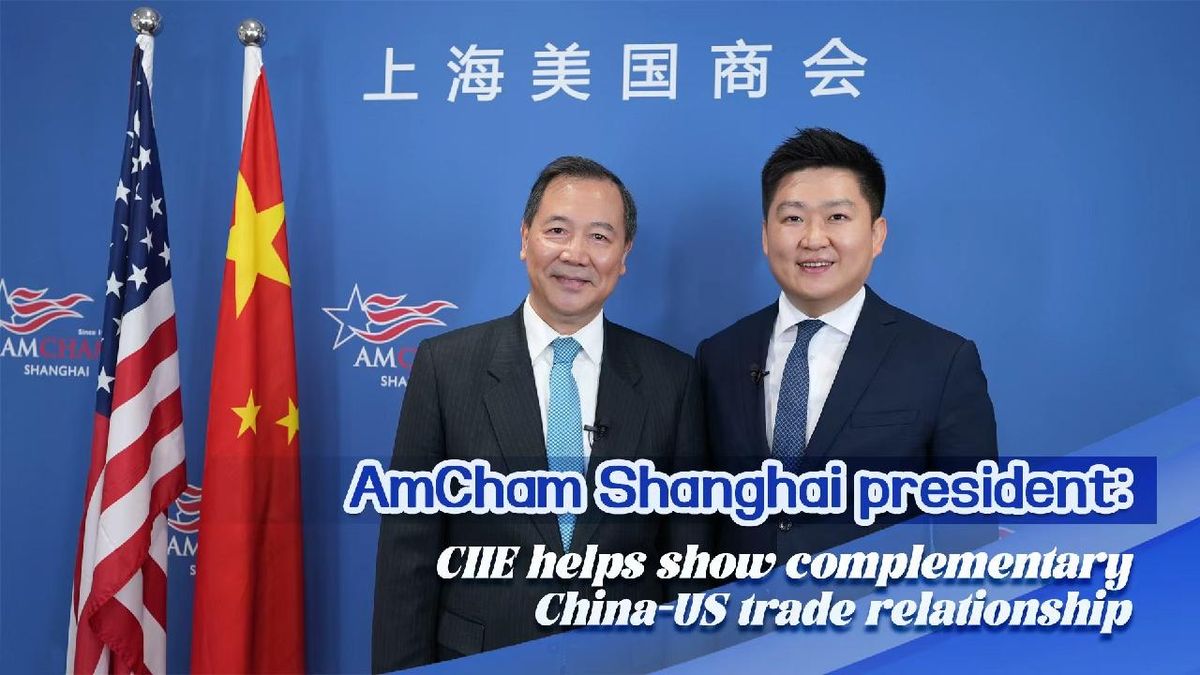
The American Food and Agriculture Pavilion opened at the 9th China International Import Expo (CIIE) in Shanghai on November 6, showcasing sorghum, wheat, beef and animal‑nutrition products. Organised by AmCham Shanghai and the U.S. Department of Agriculture, the pavilion attracted over 40 trade associations and companies, with participants reporting more than $650 million in signed deals on the first day alone.
China’s decision to host an import‑focused expo is a calculated move in a broader economic playbook. By inviting foreign firms onto a state‑run stage, Beijing signals a willingness to liberalise certain market segments while retaining tight control over strategic sectors. The China International Import Expo therefore functions as a diplomatic showcase: it projects confidence to domestic audiences that the leadership can secure foreign goods, and it offers a controlled gateway for firms seeking the world’s second‑largest consumer market.
For the United States, the expo serves multiple, sometimes conflicting, objectives. First, American farmers and agribusinesses have long lobbied for stable export channels to offset domestic overproduction and price volatility. The $650 million in deals represents a tangible infusion of revenue for a sector that has faced shrinking margins due to trade disputes and climate‑related yield shocks. Second, the U.S. government views the expo as a soft‑power instrument, using commercial ties to keep diplomatic channels open amid broader strategic rivalry. By co‑organising the pavilion, the Department of Agriculture signals that Washington is still willing to engage economically, even as political rhetoric in Washington and Beijing grows more confrontational.
Small and medium‑sized enterprises (SMEs) are a particular focus. Unlike large multinational corporations that can absorb regulatory uncertainty, SMEs rely on single‑point market entry opportunities. The CIIE’s matchmaking sessions, exhibition space, and government‑backed logistics reduce the cost of entry for these firms. However, the upside comes with a hidden cost: dependence on a market that can be reshaped by sudden policy shifts, such as import quota adjustments or stricter phytosanitary standards. The power balance thus tilts toward a relationship where China holds the gate‑keeping authority, while U.S. firms trade market access for vulnerability.
The immediate beneficiaries of the signed contracts are grain growers in the Midwest, cattle ranchers in the Great Plains, and feed‑mill operators in the South. For many of these producers, export sales constitute a critical portion of annual revenue. A single good harvest season, buoyed by Chinese demand, can mean the difference between farm expansion and foreclosure. Yet the volatility of this reliance is stark: a policy reversal in Beijing could leave entire counties facing surplus crops, depressed prices, and job losses in ancillary services such as transportation and equipment sales.
Chinese consumers stand to gain access to a broader range of protein and grain products, potentially lowering food prices and diversifying diets. However, the influx of imported agricultural goods can undercut domestic farmers, especially those producing similar commodities. Smallholder farmers in provinces like Heilongjiang and Henan may see reduced market share, prompting a shift toward state‑supported crops or forcing migration to urban areas. The social cost of such displacement includes loss of rural livelihoods and increased pressure on urban infrastructure.
The surge in cross‑border agricultural trade amplifies environmental footprints on both sides. Shipping large volumes of grain across the Pacific adds to carbon emissions, while intensified livestock production to meet export standards can exacerbate water usage and waste management challenges. Moreover, the rapid scaling of export‑oriented farms often relies on seasonal labor, which in the United States is frequently sourced from migrant workers facing precarious legal status and limited protections.
Official narratives from both governments emphasise mutual benefit and market openness, yet several critical dimensions remain under‑reported. First, Chinese authorities have quietly tightened inspection regimes for foreign agricultural imports, citing bio‑security concerns. While publicly framed as protecting public health, these measures give Beijing a lever to selectively delay or reject shipments, effectively turning regulatory compliance into a bargaining chip.
Second, the U.S. administration’s public endorsement of the expo masks an internal debate over export‑control policies. Recent legislative proposals aim to restrict shipments of certain high‑tech agricultural inputs to countries deemed strategic competitors. If such measures pass, they could curtail the very deals celebrated at CIIE, leaving firms with sunk costs and eroding trust in the reliability of trade agreements.
Third, the role of AmCham Shanghai as a conduit for corporate interests is downplayed. While the chamber presents itself as a neutral business advocate, its funding streams include substantial contributions from multinational agribusinesses that stand to profit from reduced trade barriers. This financial dependency can shape the chamber’s public messaging, subtly aligning it with corporate rather than public interests.
Finally, the broader geopolitical context—rising U.S.–China rivalry over technology, security, and influence—creates a fragile backdrop. The expo’s success does not eliminate the risk that future diplomatic flashpoints could trigger retaliatory trade measures, sanctions, or even restrictions on foreign investment in critical supply chains. Such scenarios are rarely highlighted in the optimistic press releases surrounding the event.
Observers should monitor three converging signals. One, any amendment to China’s import licensing rules or phytosanitary standards that could affect the flow of U.S. agricultural goods. Two, legislative activity in Washington concerning export controls on advanced farming technologies, which could reshape the composition of future deals. Three, the tone of diplomatic engagements between the two capitals in the lead‑up to the 2028 U.S. presidential election, as candidates may weaponise trade successes or failures for domestic political gain. Tracking these developments will reveal whether the CIIE remains a bridge for mutual gain or becomes a pressure point in an increasingly competitive bilateral relationship.
On the first day of the expo, participants reported more than $650 million in agreements covering grain, beef and animal‑nutrition products.
Farmers become vulnerable to sudden policy changes, import restrictions or shifts in Chinese demand, which could leave them with surplus crops and reduced income.
The expo serves as a diplomatic tool for Beijing to project openness while retaining regulatory control, and for Washington to maintain economic engagement amid broader strategic tensions.
Editor's Note: Analysis based on publicly available statements and trade data; future policy shifts could alter the dynamics described.
Source referenced: CGTN
This brief was synthesized by our Editorial Engine and reviewed by The Ground Narrative team.