TRENDING

Friday, 16 October 2026
----------------------
5 Jumada Al-Awwal 1448 AH
The United States has expanded its military operations against Iran, with a sixth consecutive night of strikes reportedly hitting civilian infrastructure across southern Iran, including bridges, railway stations, and residential areas. This escalation follows a failed ceasefire and intensifies a critical confrontation over the strategic Strait of Hormuz, raising significant questions about Washington's objectives and compliance with international law.
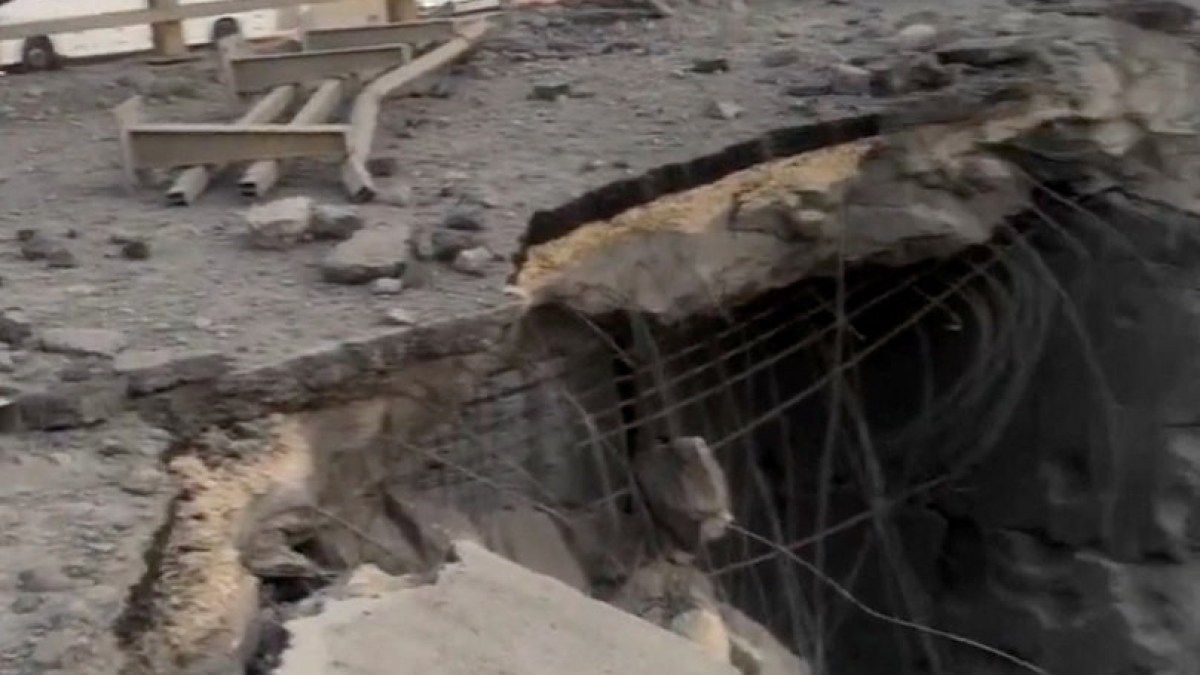
In a significant escalation of the ongoing conflict, the United States has expanded its military campaign against Iran, reportedly targeting civilian infrastructure across the country's southern regions. As of July 17, 2026, US forces have carried out a sixth consecutive night of attacks, drawing strong condemnation from Tehran, which accuses Washington of striking vital non-military sites and committing war crimes. This intensified phase of hostilities follows a previously agreed ceasefire that has now demonstrably failed, pushing the two nations closer to a broader confrontation.
The latest strikes have reportedly impacted a wide array of civilian facilities. Iranian officials and media outlets indicate that railway stations, residential neighborhoods, bridges, water facilities, food silos, and even civilian airports have come under attack. Geographically, the focus has been on southern Iran's coastline, particularly Hormozgan province, with explosions reported in cities such as Bandar Abbas, Ahvaz, Qeshm, and Bushehr. Bandar Abbas, a critical naval hub overlooking the Strait of Hormuz, has been among the hardest hit, with reports of casualties and extensive damage to key transport routes and communications infrastructure. Notably, a double-tap missile strike on a girls' elementary school in Minab on February 28, attributed to the US, previously resulted in significant civilian casualties, underscoring the humanitarian toll of the conflict.
The expansion of US strikes beyond conventional military targets raises critical questions regarding Washington's strategic objectives. The Trump administration maintains that its operations are aimed at degrading Iran's capacity to threaten shipping through the Strait of Hormuz, a vital global maritime trade route. US Central Command (CENTCOM) has stated its focus is on "Iranian command centres, air defence sites, missile and drone capabilities, and coastal surveillance facilities" used to menace vessels in the waterway. However, the increasing targeting of infrastructure with clear civilian utility suggests a broader strategy.
Military analysts offer several interpretations for this shift. Mark Hilborne of King's College London suggests that while the US may justify these as "dual-use" targets—civilian infrastructure with potential military applications—their impact on civilians is undeniable. Bridges, in particular, are seen as crucial for Iran's military logistics, enabling the movement of equipment to the south and supporting operations that could interfere with Strait of Hormuz shipping. The targeting of a bridge linked to China's Belt and Road Initiative also highlights an economic dimension, potentially aiming to disrupt Iran's ability to circumvent sanctions through trade. Alex Alfirraz Scheers, a military analyst, emphasizes the strategic importance of Bandar Abbas, home to both Iran's conventional navy and the Islamic Revolutionary Guard Corps' naval arm, given its direct oversight of the Strait of Hormuz and its historical role in Iran's oil exports.
This escalation coincides with a growing confrontation over the Strait of Hormuz itself. Iran has threatened to block marine traffic in response to Oman's announcement of a new shipping transit corridor, while the US has resumed a naval blockade of vessels traveling to and from Iranian ports. This tit-for-tat dynamic underscores the high stakes involved, as any disruption to the Strait could have profound global economic repercussions.
Iran has vehemently accused the United States of committing war crimes, with Foreign Minister Abbas Araghchi asserting that strikes on "vital infrastructure" and threats to target energy facilities demonstrate "criminal intent" and constitute "a flagrant violation of the United Nations Charter and the fundamental principles of international law." He specifically cited international humanitarian law, including the Geneva Conventions, which protect civilian objects from attack unless they contribute to military action. This creates a legal grey zone, as militaries often attempt to justify such attacks by labeling targets as "dual-use."
Joel Rayburn, a retired US Army colonel, noted that US military lawyers might clear these targets based on their potential military utility. However, the human toll remains a central point of contention. Iranian authorities report thousands of casualties since the conflict began on February 28, with dozens more killed and hundreds injured since fighting resumed after a brief ceasefire. The reported destruction of a hospital in Ahvaz, necessitating the evacuation of over 200 patients, further highlights the severe humanitarian impact of these strikes.
The expanded US military campaign against Iran carries significant regional and global implications. Beyond the direct conflict, the region is experiencing heightened tensions, with Iran's military claiming to have hit US aircraft in Bahrain, and air defense systems activated across Bahrain, Kuwait, Oman, Qatar, the United Arab Emirates, and Jordan. This widespread activation signals a pervasive sense of insecurity and the potential for the conflict to draw in other regional actors.
The failure of the April ceasefire and the subsequent breakdown of negotiations, which aimed to end the war that began with Israeli and US strikes, underscore the deep diplomatic impasse. The current trajectory suggests a dangerous escalation, with the risk of spiraling into an all-out war. Washington's objectives appear to be multifaceted: to degrade Iran's military capabilities, enforce its naval blockade, exert economic pressure, and ultimately compel Tehran back to the negotiating table on US terms. However, the targeting of civilian infrastructure risks alienating international opinion, fueling anti-US sentiment, and potentially strengthening Iran's resolve, making a peaceful resolution increasingly elusive. The international community watches with growing concern as the conflict intensifies, threatening broader regional stability and global economic interests.
Source referenced: ALJAZEERA
This brief was synthesized by our Editorial Engine and reviewed by The Ground Narrative team.


