TRENDING

Tuesday, 6 October 2026
----------------------
25 Rabi' Al-Thani 1448 AH
The Pentagon announced the formal conclusion of Operation Inherent Resolve, ending a 12‑year U.S. military presence in Iraq. The withdrawal reshapes power balances, but the human toll and lingering instability remain stark.
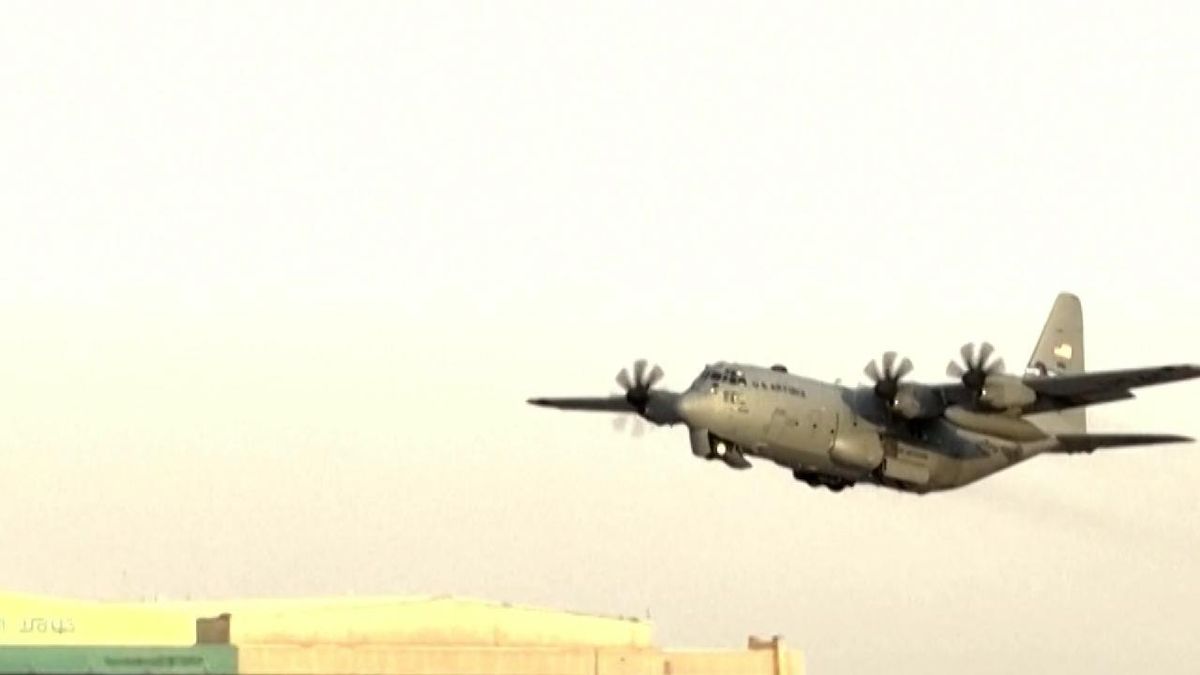
The United States officially ended its 12‑year mission fighting ISIS in Iraq on September 30, 2026, marking the formal conclusion of Operation Inherent Resolve. All U.S. and coalition troops withdrew, and the Pentagon declared the mission complete, citing the defeat of the territorial caliphate and a shift toward Iraqi‑led security responsibilities.
The decision to close the mission reflects a convergence of domestic politics, fiscal constraints, and evolving threat calculations. In Washington, the war‑fatigue narrative has hardened after two decades of near‑continuous engagement in the Middle East. Congressional appropriations for overseas operations have been trimmed, and the Biden administration faces pressure to redirect resources toward domestic infrastructure and competing great‑power challenges, notably the rivalry with China.
Strategically, the U.S. has recalibrated its counter‑terrorism doctrine. The rise of “lone‑wolf” attacks and the diffusion of jihadist ideology into online spaces have made large‑scale troop deployments less cost‑effective. The Pentagon’s own assessments suggest that the core ISIS leadership has been dismantled, and the remaining cells operate at a lower intensity that can be managed through intelligence sharing and targeted strikes rather than a standing ground force.
For Iraq, the withdrawal is both an opportunity and a risk. The Iraqi government, under Prime Minister Mohammed Shia al‑Sudani, has been building its own security apparatus, but it remains heavily dependent on U.S. training, logistics, and air support. The power vacuum left by coalition forces could embolden regional actors—particularly Iran, which has cultivated militia proxies across the country. Tehran’s influence in the Shia‑dominated political elite gives it leverage to shape Iraq’s security agenda, potentially steering it away from Western alignment.
Economic considerations also play a role. The U.S. defense budget allocates billions annually to overseas basing and force protection. By ending the mission, Washington can reallocate those funds to emerging priorities such as cyber‑defense and the Indo‑Pacific theater. Meanwhile, Iraqi contractors who supplied the coalition—ranging from construction firms to logistics providers—face an abrupt loss of revenue, threatening a fragile post‑conflict reconstruction economy.
Even as the headline celebrates a “mission accomplished,” ordinary Iraqis bear the brunt of the transition. In the provinces of Anbar, Nineveh, and Karbala, security forces remain stretched thin, and sporadic ISIS‑linked attacks continue to claim lives. Families displaced by the 2014‑2017 onslaught have yet to receive durable housing, and many live in makeshift camps that lack basic services.
Thousands of local contractors who worked for the U.S. military now confront unemployment. These workers, many of whom risked their lives to transport supplies and maintain bases, receive little in the way of severance or retraining. Their economic insecurity feeds a broader sense of abandonment that can be exploited by extremist recruiters promising financial stability.
Iraqi soldiers and police officers, trained and equipped by the United States, are suddenly tasked with filling the operational gaps left by departing air support and intelligence assets. The rapid shift strains morale and raises the risk of operational errors, which could lead to civilian casualties and erode public confidence in the state.
The destabilization risk extends beyond Iraq’s borders. Neighboring Syria and Turkey already host millions of refugees; any resurgence of ISIS activity could trigger new displacement flows, further burdening already strained humanitarian systems.
Official statements emphasize the defeat of ISIS’s territorial caliphate, yet they downplay the persistence of an ideological network that continues to inspire attacks across the region. By framing the withdrawal as a clean victory, Washington sidesteps the question of how to sustain counter‑terrorism capabilities without a physical presence.
While U.S. officials highlight the success of the mission, they rarely acknowledge how the drawdown enhances Iran’s strategic depth in Iraq. Tehran’s militia groups—Kata’ib Hezbollah, Ahrar al‑Sham, and others—have been expanding recruitment and consolidating control over key districts. The reduction of U.S. surveillance aircraft and joint patrols removes a critical check on these forces.
Prime Minister al‑Sudani’s government publicly welcomes the end of foreign troops, portraying it as a triumph of sovereignty. However, internal power brokers within the Shiite political establishment view the withdrawal as an opening to increase their leverage over the security sector, often at the expense of Sunni and Kurdish communities.
The U.S. defense industry benefits from the narrative of mission completion, which can be leveraged to secure future contracts for “post‑conflict” reconstruction projects in other theaters. Simultaneously, private security firms that have been operating in Iraq anticipate new contracts in neighboring states, shifting the profit motive away from direct combat.
The next months will reveal whether Iraqi security forces can maintain stability without U.S. air cover and intelligence sharing. Key indicators include the frequency of ISIS‑linked attacks, the pace of Iranian militia integration into Iraqi security structures, and the Iraqi government’s ability to fund and equip its forces amid a shrinking budget.
International observers should monitor diplomatic signals from Washington, Tehran, and Beijing, each of which seeks to shape Iraq’s post‑withdrawal trajectory. A surge in Chinese infrastructure investment or Iranian political overtures could signal a realignment of Iraq’s strategic orientation.
Finally, the humanitarian community must watch for spikes in displacement and the emergence of new refugee flows, which would underscore the human cost of a premature exit. The world’s attention may have shifted, but the lived reality for millions of Iraqis remains in flux.
The US says the territorial ISIS caliphate is defeated, but the group’s ideology and sleeper cells remain. Iraqi forces must now handle security without US air support, making the fight more challenging.
Iran’s militia proxies gain more freedom to operate and expand influence over Iraqi politics and security institutions, filling the gap left by coalition forces.
Thousands of Iraqi contractors who supported US bases lose jobs and income, increasing unemployment and creating fertile ground for extremist recruitment.
Source referenced: CGTN
This brief was synthesized by our Editorial Engine and reviewed by The Ground Narrative team.