TRENDING

Thursday, 12 November 2026
----------------------
2 Jumada Al-Thani 1448 AH
After a blue‑wave victory, voters are pressuring Congress to halt the flow of American weapons to Israel. The article dissects the power dynamics, the human toll, and the gaps in official narratives.
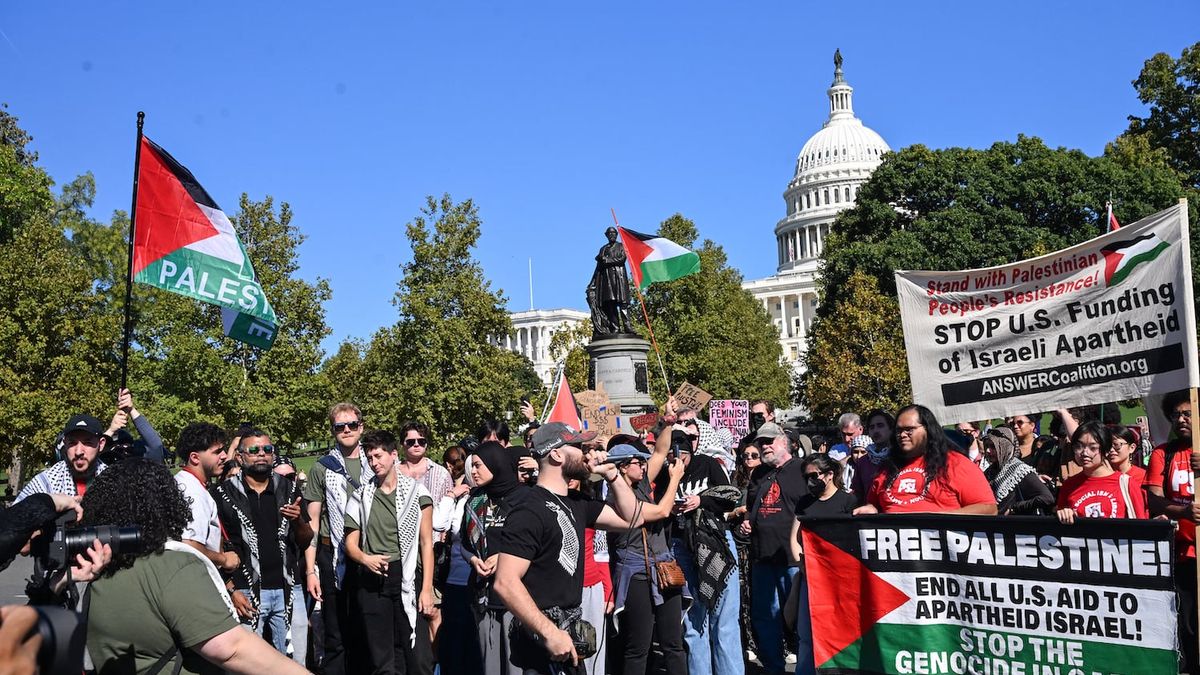
In the November 3, 2026 midterm elections, a wave of Democratic victories gave the party historic majorities in both chambers. Polls showed that roughly six‑in‑ten Americans opposed the war against Iran, and a majority favored slashing or ending U.S. military aid to Israel. In response, former President Donald Trump announced on Election Day that the United States would cease the $3.8 billion annual aid package to Israel by year‑end, even though the existing aid agreement runs through FY 2028.
The “blue tsunami” turned voter frustration into a concrete political mandate. Lawmakers now face a calculus where supporting the aid pipeline risks primary challenges, while opposing it can be framed as weakening a key ally. The shift forces Congress to reconcile domestic opinion with longstanding strategic doctrines that view Israel as a cornerstone of regional stability.
Even if the FY 2027 appropriations strip the earmarked $3.8 billion, the broader aid framework—foreign military financing, foreign military sales, and commercial export licenses—remains intact. Defense contractors, many of whom depend on high‑margin Israeli contracts, lobby aggressively to preserve supplemental funding. The Department of Defense’s existing stockpiles and co‑production agreements (Section 219) create a bureaucratic inertia that can outlast a single congressional session.
Washington’s stance on Iran is intertwined with the Israel‑Iran rivalry. Cutting aid could be read by Tehran as a weakening of the U.S. deterrent, potentially emboldening its regional proxies. Conversely, maintaining the flow signals continuity to allies like Saudi Arabia, which watches the U.S.–Israel axis as a counterbalance to Iranian influence. The power balance therefore hinges on how Congress navigates the dual pressures of public opinion and alliance management.
The most immediate victims are civilians in Gaza and the West Bank. Continued American weapons shipments enable Israel to conduct airstrikes, artillery barrages, and ground operations that have already killed thousands, maimed many more, and displaced entire neighborhoods. Each new missile or drone sold by the United States extends the lethal reach of a conflict that ordinary Palestinians cannot escape.
Domestic costs are two‑fold. Directly, the $3.8 billion aid line item represents taxpayer money that could be redirected to infrastructure, education, or health care. Indirectly, the war has spurred a surge in recruitment for private‑military contractors, exposing veterans to high‑risk overseas deployments under the banner of “supporting an ally.” The fiscal burden also manifests in higher defense spending that crowds out other federal priorities.
Beyond the immediate battlefield, the broader Middle Eastern economy suffers. Trade routes through the Red Sea face disruptions, oil prices experience volatility, and neighboring states allocate resources to civil‑defense measures rather than development. The ripple effects compound humanitarian crises across Lebanon, Jordan, and Egypt, where refugee inflows strain already fragile public services.
While public discourse focuses on voter sentiment, defense firms and pro‑Israel lobbying groups operate with far less visibility. They fund think‑tank research, sponsor congressional trips, and employ former lawmakers as consultants to shape policy language. These activities often escape the headline‑making scrutiny that election‑night polls receive.
Section 219 of the National Defense Authorization Act authorizes joint weapons development, effectively allowing Israeli‑origin technology to be incorporated into U.S. platforms. This co‑production arrangement sidesteps traditional export‑control reviews, meaning that even if direct aid is cut, the U.S. defense industrial base continues to benefit from Israeli innovations linked to contested operations.
The Trump administration’s announcement framed the aid cut as a response to voter anger, yet it stopped short of detailing a concrete exit strategy. By leaving the FY 2028 agreement untouched, the executive branch maintains a veneer of responsiveness while preserving the structural capacity to resume aid with minimal legislative friction.
Key votes will revolve around the removal of the FY 2027 earmark, the repeal of Section 219, and the adoption of a Section 502B‑based human‑rights report. The outcome will signal whether the midterm mandate translates into lasting policy change or a temporary political gesture.
Watch for increased lobbying disclosures in the coming months, especially from firms that have secured large contracts under the current aid framework. Their influence will likely surface in amendment proposals and earmark language.
Any shift in U.S. aid levels will be closely monitored by Iran, Hezbollah, and Gulf states. Changes in missile launch alerts, cyber‑attack frequency, or diplomatic overtures at the UN will serve as early indicators of how the power balance is recalibrating.
Polls conducted after the first quarter of 2027 will reveal whether the initial backlash sustains or wanes. A resurgence of pro‑Israel sentiment could embolden lawmakers to revive the aid stream, while persistent opposition may force a more comprehensive overhaul of U.S. Middle‑East policy.
In sum, the midterm election has opened a window for congressional re‑assertion over foreign‑policy spending, but the entrenched mechanisms of defense procurement, alliance expectations, and lobbying power will determine how far that window can be widened.
It would remove the $3.8 billion annual foreign military financing and could halt new weapons sales, but existing contracts, stockpiles, and co‑production agreements may still allow arms to flow.
Less U.S. funding would limit Israel’s ability to purchase new American weapons, potentially reducing the intensity of air and ground operations, though Israel could still rely on other sources.
Editor's Note: Analysis based on publicly available polling data and legislative records up to November 2026.
Source referenced: FOREIGNPOLICY
This brief was synthesized by our Editorial Engine and reviewed by The Ground Narrative team.


