TRENDING

Saturday, 19 September 2026
----------------------
8 Rabi' Al-Thani 1448 AH
Chinese and US officials are meeting for trade talks, a critical moment for global economic stability. This analysis unpacks the power dynamics and human costs behind the diplomatic facade.
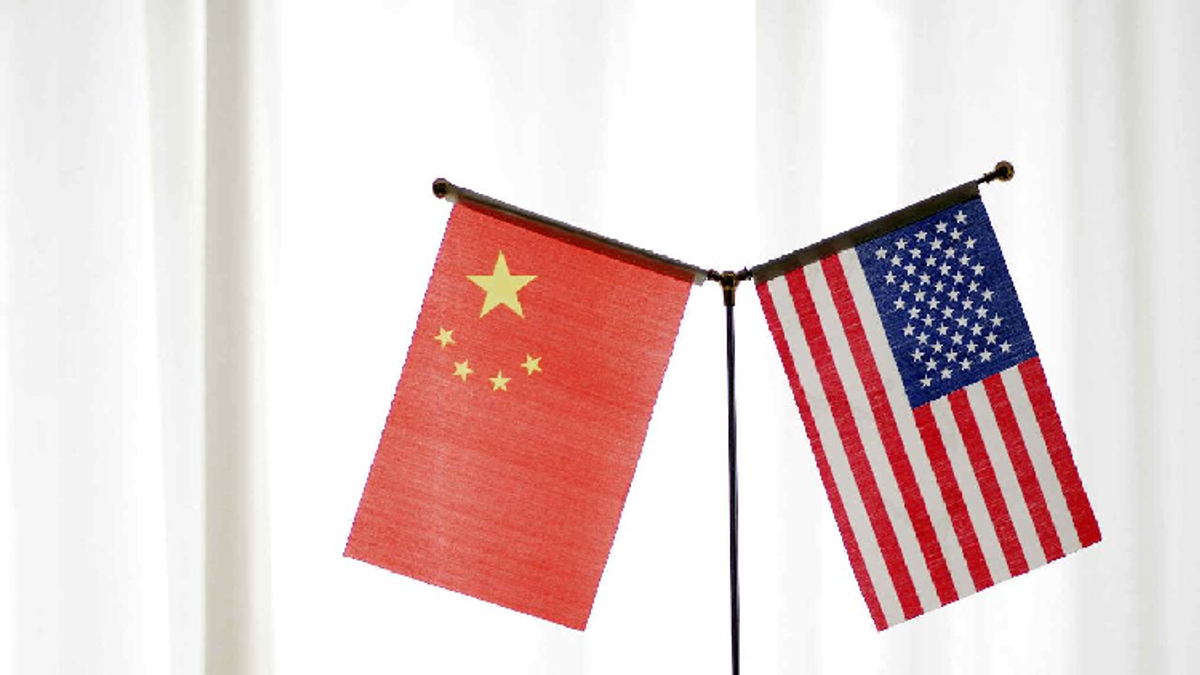
Chinese Vice Premier He Lifeng is leading a high-level delegation to the United States for economic and trade talks from September 19 to 23, 2026. The stated objective is to hold consultations on "economic and trade issues of mutual concern," building on previous agreements between the two nations' leaders. These discussions represent a continued effort to manage the complex and often contentious economic relationship between the world's two largest economies.
The decision to send a high-level delegation underscores the enduring, if often strained, interdependence between the US and China. For Washington, these talks are driven by a mix of domestic political pressures, including concerns over inflation, manufacturing job security, and the desire to "de-risk" supply chains away from China. There's also a significant push to maintain a technological edge, particularly in advanced sectors like semiconductors and artificial intelligence, viewing China's rise in these areas as a direct challenge. The underlying power dynamic for the US is about shaping global economic rules and ensuring its strategic primacy.
On Beijing's side, the impetus for engagement comes from a need for external stability amidst domestic economic headwinds. China is grappling with a significant property sector slowdown, high youth unemployment, and the ongoing challenge of transitioning its economy from export-led growth to one driven by domestic consumption and high-tech innovation. Stable trade relations with the US are crucial for maintaining export markets, attracting foreign investment, and securing access to critical technologies and components. The Chinese leadership's power calculus prioritizes economic stability as a cornerstone of internal political legitimacy. Both nations, despite their rhetoric of competition, are acutely aware that a full economic decoupling would inflict severe costs on their own economies and the global system. These talks are less about resolving fundamental differences and more about establishing guardrails to prevent an outright economic collision.
While vice premiers and ministers discuss macroeconomic policy, the real costs of trade tensions are borne by ordinary citizens and businesses far from the negotiating table. Factory workers in both the US and China face uncertainty: American workers worry about job displacement from cheaper imports or automation, while Chinese workers in export-oriented industries fear reduced demand and factory closures. Small and medium-sized enterprises (SMEs) that rely on cross-border supply chains are particularly vulnerable, struggling with tariffs, export controls, and the increased complexity of international trade.
Consumers in both countries also pay a price. Tariffs, whether imposed by Washington or Beijing, often translate into higher prices for goods, from electronics to clothing, eroding purchasing power. Farmers, especially in the US, have historically been caught in the crossfire, facing retaliatory tariffs on agricultural exports. The human cost extends beyond direct economic impact; it includes the anxiety of job insecurity, the burden of rising living costs, and the erosion of trust in a stable global economic order that many once took for granted.
What official statements from both capitals often downplay or omit is the deep-seated structural rivalry that these trade talks merely attempt to manage, not resolve. The "important consensus reached by the two heads of state" is a diplomatic framing designed to project stability, but it masks fundamental disagreements over industrial policy, intellectual property, state subsidies, and geopolitical influence. Neither side is truly abandoning its long-term strategic objectives: the US aims to slow China's technological ascent, and China seeks to achieve self-sufficiency and global leadership in key industries.
The talks are presented as a path to "mutual concern," yet the underlying reality is a zero-sum competition for technological supremacy and economic dominance. What's omitted is the inherent tension between global economic integration and national security imperatives, a tension that is increasingly driving policy in both Washington and Beijing. The public is often fed narratives of either "fair trade" or "economic aggression," obscuring the complex, often contradictory, motivations and the significant domestic political calculations behind each negotiating position.
Readers should closely watch several key indicators in the wake of these talks. First, observe any concrete outcomes, however minor, such as agreements on specific product tariffs, market access, or regulatory cooperation. The absence of any tangible agreements, or merely a commitment to "continue dialogue," would signal continued stagnation. Second, pay attention to the rhetoric from both sides post-talks; any shift in tone, either conciliatory or confrontational, will be telling. Third, monitor the impact on global supply chains, particularly in critical sectors like rare earths, semiconductors, and renewable energy components. Any new restrictions or diversification efforts will ripple through international markets. Finally, with elections looming in the US, domestic political pressures will continue to shape Washington's approach, potentially leading to more protectionist measures or a hardening of positions, regardless of the outcomes of these specific talks. The ongoing dance between economic necessity and strategic competition will continue to define this crucial relationship.
Source referenced: CGTN
This brief was synthesized by our Editorial Engine and reviewed by The Ground Narrative team.