TRENDING

Sunday, 4 October 2026
----------------------
23 Rabi' Al-Thani 1448 AH
The UN Secretary-General has issued a stark warning that artificial intelligence is developing at a pace far exceeding the world's capacity to establish adequate regulatory frameworks. This urgent call for globally harmonized rules highlights the profound geopolitical, economic, and security implications of unregulated AI.
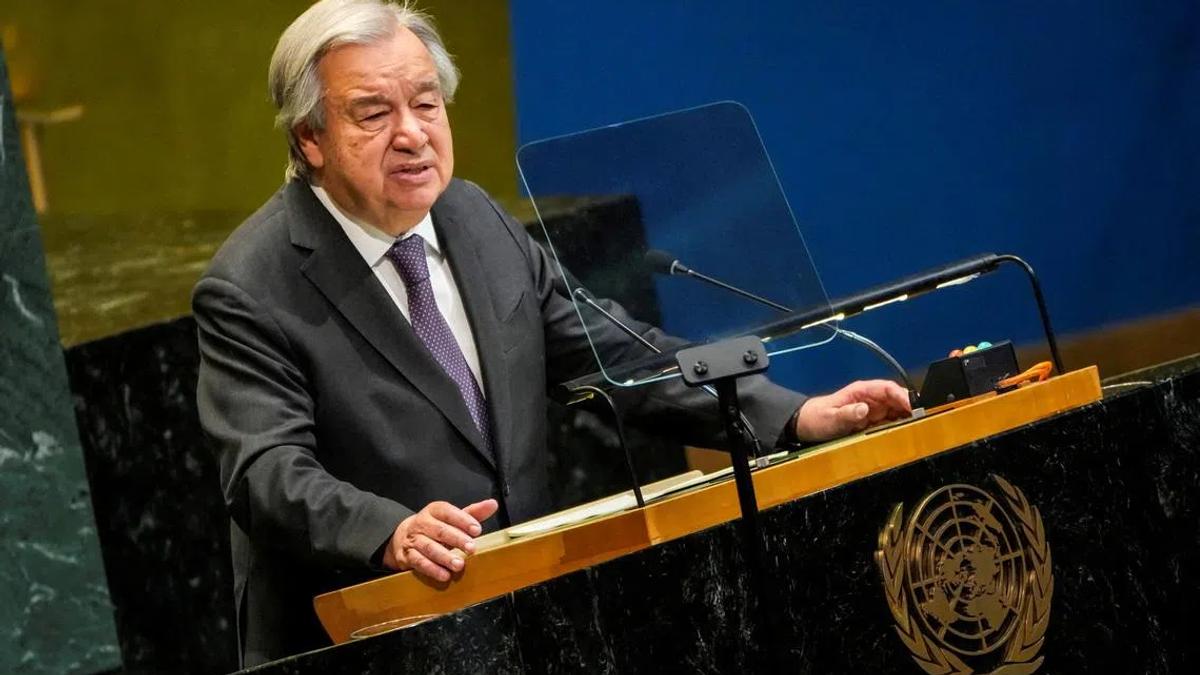
On July 6, 2026, in Geneva, Switzerland, United Nations Secretary-General Antonio Guterres delivered a critical warning at the inaugural UN Global Dialogue on AI Governance: artificial intelligence (AI) is advancing at a speed that outstrips humanity's ability to establish effective regulatory guardrails. This declaration underscores a growing international concern that the transformative power of AI, while offering immense opportunities, also poses significant risks to global stability, economic structures, democratic processes, and human security if left unchecked.
The two-day dialogue, a first-of-its-kind government-level global forum, was convened not to forge an immediate treaty, but to initiate a crucial discussion on how to mitigate the potential harms of AI while harnessing its benefits. Guterres emphasized that a technology capable of "reshaping economies, transforming the world of work, sway elections and tilt the balance of security" demands urgent and harmonized global governance. The UN's proactive engagement reflects a recognition that AI's impact transcends national borders, necessitating a multilateral approach to prevent fragmentation and potential crises.
The rapid, largely unregulated development of AI has profound geopolitical implications. The race for AI supremacy is already a defining feature of 21st-century power competition, with major global actors investing heavily in research, development, and deployment. Without a common international framework, this competition risks devolving into a technological arms race, particularly in military applications, where AI could fundamentally alter the balance of power and the nature of conflict. The potential for autonomous weapons systems, advanced cyber warfare capabilities, and AI-driven intelligence gathering poses unprecedented challenges to international security and arms control regimes.
Furthermore, the absence of globally harmonized rules could lead to a fragmented regulatory landscape, where different nations or blocs adopt divergent standards. This fragmentation could create 'AI havens' with lax regulations, foster unfair economic advantages, or exacerbate digital divides between technologically advanced nations and the developing world. The UN's initiative, therefore, represents an attempt to establish universal norms and principles, ensuring that AI development is guided by shared ethical considerations and a commitment to global public good, rather than purely national interests or corporate profit motives.
AI's capacity to "reshape economies" and "transform the world of work" signals a period of unprecedented disruption and opportunity. While AI promises increased productivity, innovation, and solutions to complex global challenges, it also raises concerns about job displacement, widening economic inequality, and the concentration of wealth and power in the hands of a few tech giants. The ethical implications, such as algorithmic bias, privacy infringements, and the potential for AI to manipulate information, demand careful consideration and robust oversight. Guterres specifically highlighted risks to children, underscoring the broad societal impact of this technology.
The UN's dialogue aims to explore how to manage these transformations equitably, ensuring that the benefits of AI are broadly shared and that its risks are minimized for all segments of society. This includes discussions on future labor policies, education reforms, and social safety nets necessary to adapt to an AI-driven economy. The independent scientific panel of 40 experts, whose initial findings were considered at the Geneva meeting, plays a crucial role in providing an evidence-based foundation for these complex policy discussions, with a more comprehensive report and a second global meeting planned for 2027 in New York.
The UN's strategy of initiating a global dialogue rather than immediately pursuing a binding treaty reflects the nascent stage of international consensus on AI governance. It acknowledges the complexity of the technology, the diversity of national interests, and the need for a deliberative process to build trust and shared understanding. By fostering an inclusive platform for governments, experts, and stakeholders, the UN seeks to lay the groundwork for future international cooperation and the eventual development of robust, adaptable, and globally accepted regulatory frameworks.
Ultimately, the UN Secretary-General's warning serves as a clarion call for proactive, rather than reactive, governance. The goal is to establish "guard rails" that guide AI's development responsibly, ensuring that this powerful technology serves humanity's best interests and contributes to a more stable, equitable, and secure global future. The success of this endeavor will depend on sustained international commitment and a willingness to prioritize collective well-being over narrow competitive advantages.
Source referenced: STRAITSTIMES
This brief was synthesized by our Editorial Engine and reviewed by The Ground Narrative team.