TRENDING

Sunday, 25 October 2026
----------------------
14 Jumada Al-Awwal 1448 AH
UN Secretary-General Antonio Guterres's historic visit to Syria marks a pivotal moment in the country's post-civil war transition, signaling renewed international engagement with the new leadership under President Ahmed al-Sharaa. The visit aims to foster stability and inclusivity while addressing the complex challenges of reconstruction and persistent regional security concerns, particularly in the Golan Heights.
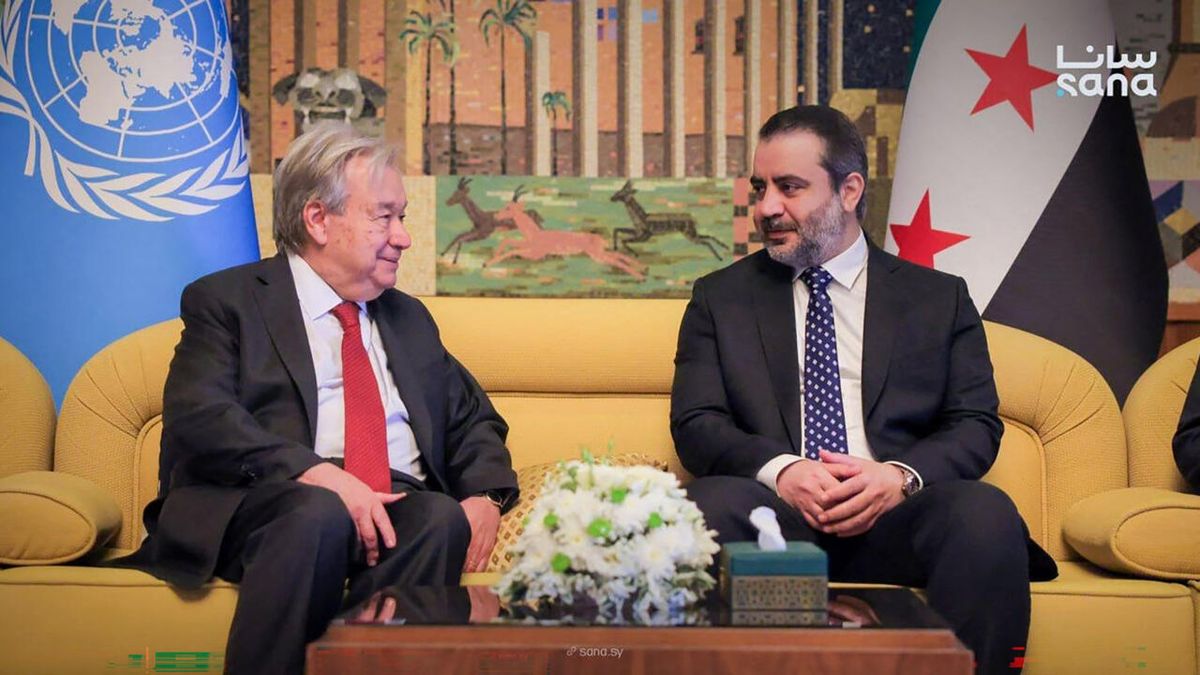
United Nations Secretary-General Antonio Guterres arrived in Damascus on Saturday, July 25, 2026, for a three-day visit, marking the first time a UN chief has set foot in Syria since before the devastating civil war erupted. This high-level diplomatic engagement underscores a significant shift in the international community's approach to Syria, more than a year and a half after President Ahmed al-Sharaa's new authorities overthrew longtime ruler Bashar al-Assad in December 2024.
The visit, during which Guterres is expected to meet with President Sharaa, Foreign Minister Asaad al-Shaibani, civil society representatives, and address the transitional parliament, aims to reaffirm the UN's commitment to supporting Syria's post-conflict transition and rebuilding efforts. His spokesman, Stephane Dujarric, emphasized that the opportunity is not merely to recover from conflict but to lay foundations for a "more stable, more inclusive and more prosperous future for all Syrians."
President Ahmed al-Sharaa, who led an alliance of Islamist rebel factions in the lightning offensive that ousted Assad, has since sought to establish a new governance system. Notably, Sharaa broke ties with al Qaeda in 2016, a move that likely facilitated a degree of international re-engagement. His landmark visit to the UN General Assembly last year, where he became the first Syrian president in decades to address the body, further signaled a potential path towards international recognition and cooperation.
However, Syria's transition remains fraught with challenges. The international community has urged the new Islamist authorities to build strong and effective institutions that are inclusive of all components of Syria's multi-ethnic, multi-confessional society. This call for inclusivity is particularly pertinent given two major episodes of sectarian bloodshed that have marred the transition. Nearly 1,500 Alawites, the minority religion to which Assad belonged, were killed in the coastal region last year by government-aligned factions, followed by the deaths of hundreds of Druze minority members in the country's south. Guterres has expressed alarm over these incidents and called for accountability, highlighting the fragility of the peace and the urgent need for robust protections for all communities.
The UN Secretary-General's itinerary also includes a visit to a UN peacekeeping force stationed in the Israeli-occupied Golan Heights since 1974. This segment of the visit brings into sharp focus the enduring regional security complexities. Following Assad's overthrow, Israel sent troops to occupy the UN-patrolled buffer zone separating Israeli and Syrian forces on the Golan, and has conducted strikes and incursions deeper into Syrian territory. Israeli officials have articulated an intent to maintain a "security zone" in southern Syria, aiming for a broader demilitarized area.
Despite these tensions, the new Syrian authorities and Israel have engaged in several rounds of direct talks, even agreeing to establish an intelligence-sharing mechanism. However, this has not halted Israeli military actions, which have drawn condemnation from the UN and other international actors. Guterres's presence in this sensitive area underscores the UN's role in monitoring regional stability and advocating for adherence to international law, even as new geopolitical realities emerge on the ground.
Guterres's visit is framed by UN special envoy Claudio Cordone as a "defining period in Syria's history." It represents a critical juncture where the international community, through the UN, is attempting to guide Syria towards a stable and inclusive future after more than a decade of devastating conflict and a significant change in leadership. The success of this transition hinges on the new Syrian authorities' ability to genuinely foster national unity, protect minorities, and rebuild institutions, while navigating the complex web of regional security interests and international expectations. The UN's role, as reaffirmed by Guterres, is to accompany and support the Syrian people on this arduous journey, emphasizing diplomacy and humanitarian assistance as cornerstones for long-term peace.
Source referenced: FRANCE24
This brief was synthesized by our Editorial Engine and reviewed by The Ground Narrative team.