TRENDING

Saturday, 17 October 2026
----------------------
6 Jumada Al-Awwal 1448 AH
A coalition of UN envoys, representing Palestine, the Arab Group, and the Organisation of Islamic Cooperation, has called upon the US President to halt what they describe as Israel's accelerating annexation efforts in the occupied Palestinian territories. This unified diplomatic appeal underscores profound international concerns over the future of the two-state solution and regional stability.
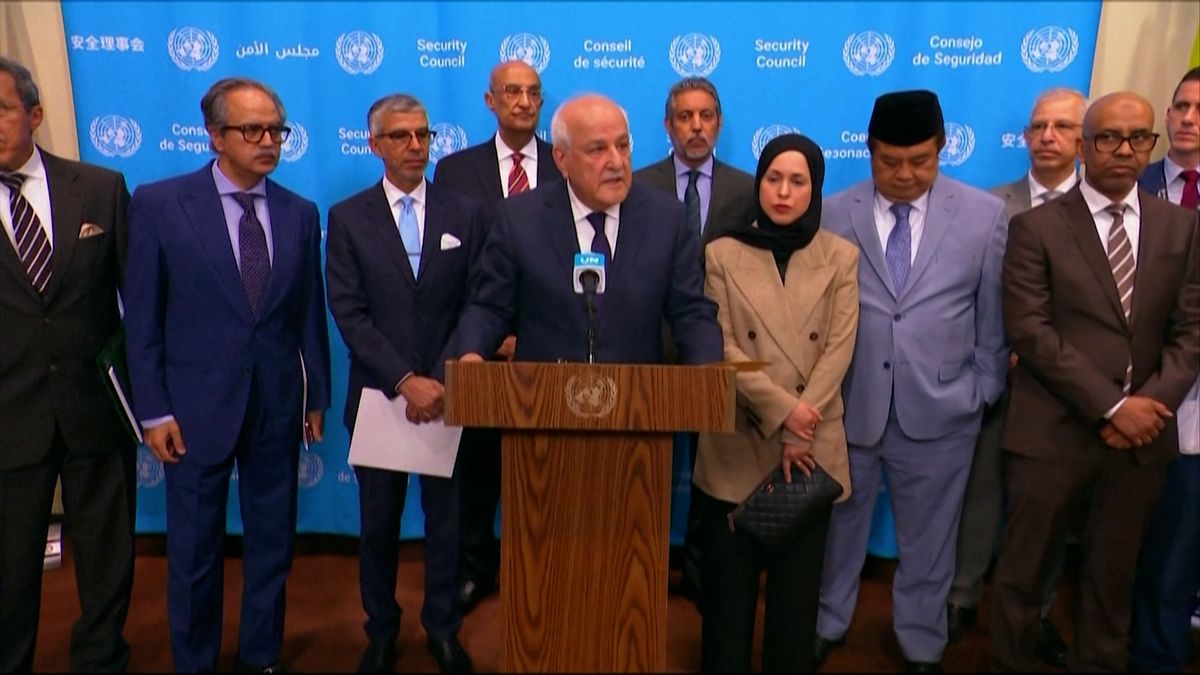
In a significant diplomatic maneuver at the United Nations, envoys from Palestine, the Arab Group, and the Organisation of Islamic Cooperation (OIC) have collectively urged the US President, Donald Trump, to intervene and prevent what they characterize as Israel's escalating annexation efforts in the occupied Palestinian territories. The appeal, made public on June 5, 2026, highlights a concerted international effort to address a contentious issue with profound geopolitical implications.
The central concern articulated by the UN envoys revolves around Israel's perceived acceleration of policies and actions aimed at formally incorporating parts of the West Bank into its sovereign territory. These actions typically include the expansion of Israeli settlements, the establishment of new outposts, and the application of Israeli law to areas beyond the 1967 Green Line. From the perspective of international law, the West Bank, including East Jerusalem, is considered occupied territory under the Fourth Geneva Convention, which prohibits an occupying power from altering the status of the territory or transferring its own population into it. Unilateral annexation is widely viewed by the international community as a violation of these principles and a significant impediment to a peaceful resolution of the Israeli-Palestinian conflict.
The direct appeal to the US President underscores Washington's pivotal, albeit often controversial, role in the Israeli-Palestinian peace process. Historically, the United States has served as a key mediator, advocating for a two-state solution and generally opposing unilateral actions that could prejudge the outcome of final status negotiations. However, the Trump administration adopted a notably pro-Israel stance, recognizing Jerusalem as Israel's capital, moving its embassy there, and declaring that Israeli settlements in the West Bank were not inconsistent with international law. This shift in US policy was perceived by many as emboldening Israel and weakening the international consensus against annexation. The envoys' call, therefore, represents an attempt to leverage the US's unique influence, either to reverse course or to exert pressure on Israel to desist from further annexation.
Should Israel proceed with significant annexation, the geopolitical ramifications would be substantial. Regionally, it could trigger widespread Palestinian unrest, potentially leading to a breakdown of existing security cooperation and a resurgence of violence. It would also likely provoke strong condemnation from Arab states, even those that have recently normalized relations with Israel, potentially straining these nascent diplomatic ties. The OIC's involvement signifies a broader Islamic world's concern, which could further complicate regional stability and inter-state relations.
Globally, annexation would severely undermine the prospects for a viable two-state solution, which remains the internationally recognized framework for peace. This could lead to increased calls for international sanctions against Israel, further isolating it on the world stage. Moreover, it would challenge the credibility of international institutions like the United Nations and the principles of international law, setting a dangerous precedent for other territorial disputes worldwide. The move would also exacerbate the humanitarian situation in the occupied territories, impacting the daily lives and rights of millions of Palestinians.
The issue of Israeli control over the West Bank dates back to the 1967 Six-Day War. Since then, successive Israeli governments have expanded settlements, creating a complex web of facts on the ground that critics argue makes a contiguous and viable Palestinian state increasingly difficult to achieve. The current diplomatic push by UN envoys reflects a deep-seated fear that accelerating annexation efforts could permanently close the door on a negotiated settlement, leading to a one-state reality with significant implications for democratic principles and human rights.
The international community's response to this diplomatic appeal and any subsequent Israeli actions will be critical in shaping the future trajectory of the Israeli-Palestinian conflict. The outcome will test the resolve of international law, the effectiveness of multilateral diplomacy, and the capacity of global powers to influence a deeply entrenched geopolitical dispute.
Source referenced: ALJAZEERA
This brief was synthesized by our Editorial Engine and reviewed by The Ground Narrative team.