TRENDING

Tuesday, 6 October 2026
----------------------
25 Rabi' Al-Thani 1448 AH
The UN Human Rights Council has formally condemned the surge of drone strikes on civilians in Sudan and demanded an immediate, unconditional ceasefire. The resolution also extends a fact‑finding mission as the war pushes the country toward a deeper humanitarian catastrophe.
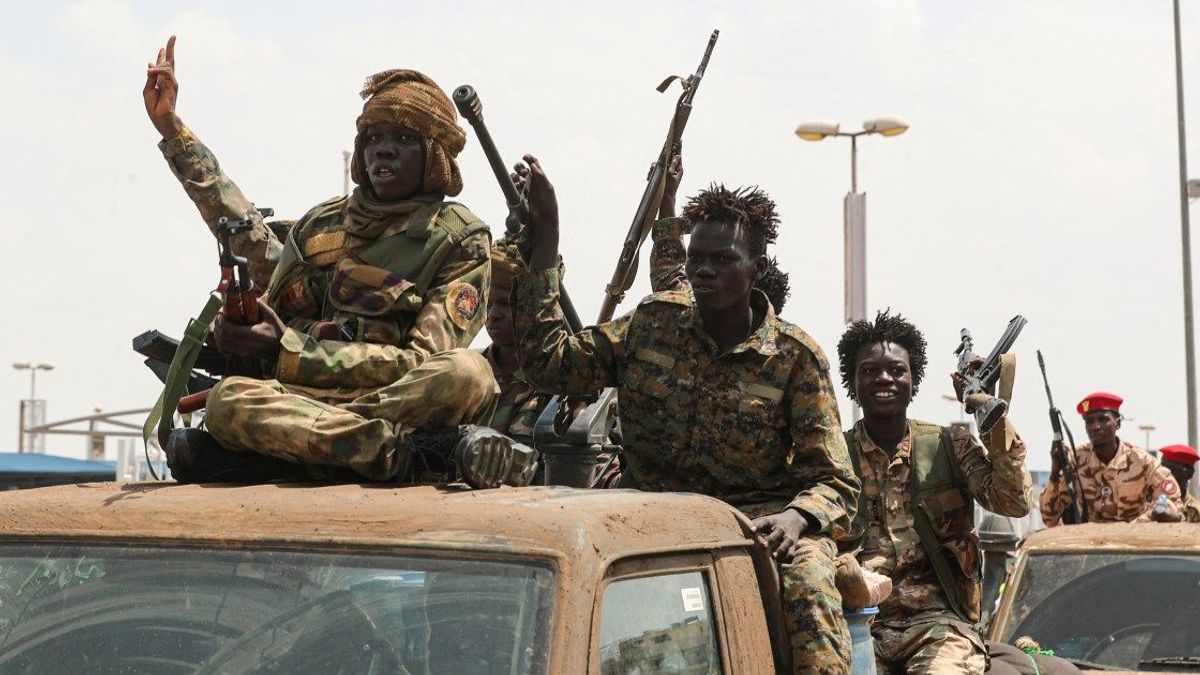
The 47‑member United Nations Human Rights Council adopted a resolution on 6 October 2026 that condemns the intensifying drone strikes and other attacks on civilians in Sudan. The text demands an immediate, unconditional ceasefire, extends the mandate of an independent fact‑finding mission, and calls out the destruction of schools, hospitals, and aid convoys. In the same week, the World Food Programme reported that a marked humanitarian truck was hit by an airstrike in North Kordofan, killing the driver and jeopardising food deliveries to vulnerable populations.
The council’s vote—28 in favour, 10 against, and nine abstentions—reflected deep divisions, with the Sudanese government rejecting the measure as biased. Nonetheless, the resolution underscores that more than 1,100 people have been killed by drone strikes in the first five months of 2026, and that the conflict has already displaced over 13 million Sudanese.
The war pits the Sudanese Armed Forces against the paramilitary Rapid Support Forces, each seeking control over state resources, revenue‑generating mines, and strategic transport corridors. Both sides have turned to cheap, commercially available drones, which allow them to strike deep into enemy‑held territory without risking pilots, thereby lowering the political cost of escalation.
Foreign actors amplify the conflict’s lethality. Regional powers such as the United Arab Emirates, Saudi Arabia, and Egypt have supplied drones, spare parts, and financial backing, often through opaque channels that evade international monitoring. At the same time, private security firms and mercenaries from Russia and other states have entered the battlefield, attracted by lucrative contracts and the prospect of influencing a geopolitically vital corridor linking the Red Sea to the Sahel.
The UN’s fact‑finding mission, now extended, serves a dual purpose: documenting violations to build legal cases, and providing a diplomatic lever for external actors who prefer a managed de‑escalation over a total collapse that could spill into neighboring countries. The council’s language—“no military solution” and “immediate ceasefire without preconditions”—signals an attempt to shift the narrative from a bilateral stalemate to a broader responsibility that includes external sponsors.
The civilian toll is staggering. 13 million displaced people now rely on fragile aid corridors that are repeatedly disrupted by aerial bombardments. In North Kordofan alone, the recent strike on a WFP convoy halted food deliveries to an estimated 250,000 people, pushing many toward famine conditions.
Beyond displacement, 1,100 drone‑related deaths have been recorded this year, many of them women and children caught in indiscriminate strikes on markets, schools, and residential neighborhoods. Health facilities have been systematically targeted; at least 27 hospitals reported damage or destruction, forcing patients to travel hundreds of kilometres for basic care.
The humanitarian workforce bears a disproportionate share of the risk. Aid workers, identifiable by UN logos, have become de‑facto combatants in the eyes of some fighters, leading to a surge in attacks on staff. The death of a WFP driver underscores a broader pattern: each loss not only reduces immediate relief capacity but also erodes donor confidence, threatening future funding streams essential for survival.
While the council’s resolution paints a picture of mutual culpability, it downplays the scale of illicit financial networks that funnel money from mineral exports and oil revenues to armed groups. These networks, often linked to regional elites, enable the purchase of drones and mercenary services, insulating the primary beneficiaries from direct accountability.
Regional powers also manage a delicate public‑relations balance. By framing their involvement as “technical assistance” or “security cooperation,” they avoid overt violation of arms embargoes while maintaining influence over Sudan’s political future. This diplomatic choreography is rarely reflected in official statements, which instead emphasize Sudanese agency and the need for internal dialogue.
The media narrative, especially in Western outlets, frequently omits the depth of foreign mercenary participation, focusing instead on the binary army‑versus‑RSF storyline. This simplification obscures the profit motives of private firms and the strategic calculations of neighboring states that view Sudan as a buffer against rival influence.
The extended UN fact‑finding mission will soon publish a detailed report on drone usage, arms transfers, and alleged war crimes. Its findings could trigger sanctions or trigger ICC investigations, depending on how convincingly they link specific actors to civilian attacks.
Observers should monitor any movement toward a ceasefire, especially negotiations that involve regional mediators like Ethiopia and Egypt. The presence of a transparent monitoring mechanism—if ever agreed upon—could become a litmus test for the willingness of external sponsors to curb drone sales and mercenary deployments. In the meantime, the continuity of humanitarian corridors hinges on the ability of aid agencies to secure safe passage, a factor that will directly affect the survival of millions.
A surge in civilian casualties from drone strikes, including the killing of a World Food Programme driver, prompted the council to adopt a resolution demanding an unconditional ceasefire and extending a fact‑finding mission.
Drone strikes have repeatedly hit marked aid convoys, destroyed food supplies, and damaged hospitals, forcing agencies to suspend deliveries, increase security costs, and risk donor fatigue.
Source referenced: ALJAZEERA
This brief was synthesized by our Editorial Engine and reviewed by The Ground Narrative team.


