TRENDING

Sunday, 25 October 2026
----------------------
14 Jumada Al-Awwal 1448 AH
A recent drone threat in Yekaterinburg, Russia, disrupted operations at a major e-commerce logistics hub and a national athletics championship, signaling an expansion of Ukraine's long-range drone strategy to include key economic infrastructure. This escalation aims to exert domestic pressure on Russia and undermine its war effort by impacting civilian life and supply chains.
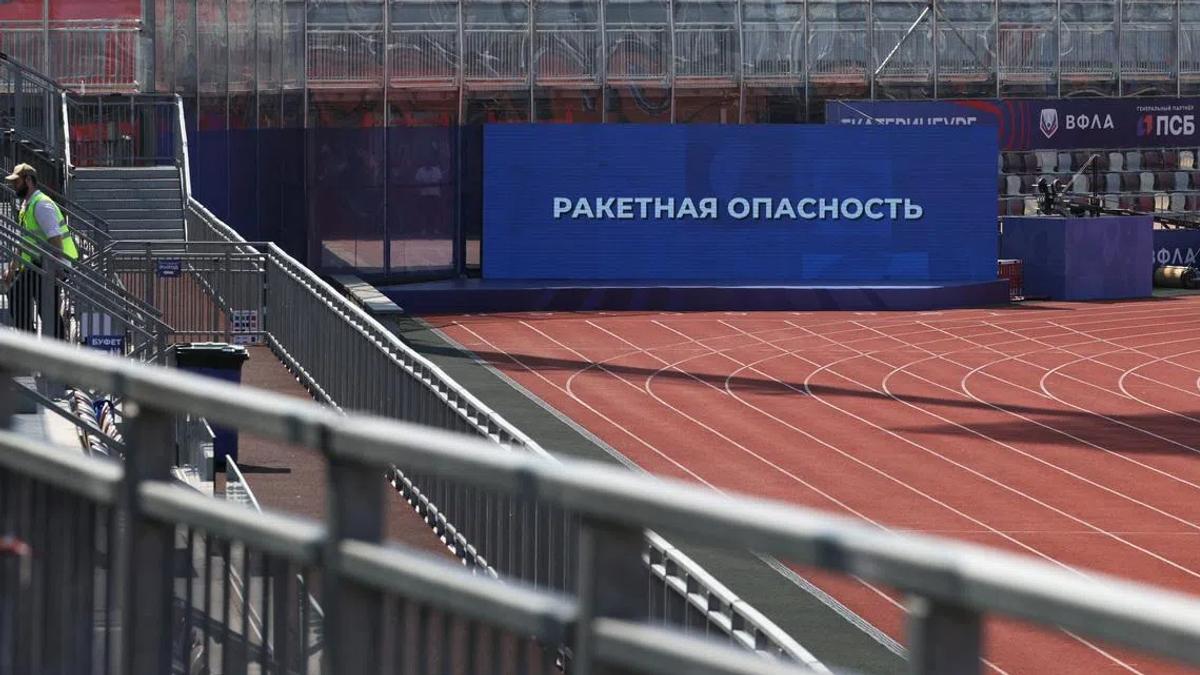
On July 25, 2026, a drone threat in Yekaterinburg, Russia, prompted the evacuation of a significant logistics hub belonging to Wildberries, a leading Russian online retailer, and briefly suspended the national athletics championships. This incident, occurring in Russia's fourth-largest city, far from the Ukrainian border, underscores a notable broadening of Ukraine's long-range drone strategy. While local authorities in the Sverdlovsk region reported repelling one attack and noted that economic and infrastructure facilities were undamaged beyond a parking lot fire caused by debris, the disruption to both commerce and public events highlights the evolving nature of the conflict.
This event is not isolated but rather part of a string of attacks over the past week targeting Wildberries warehouses, including a confirmed incident in the southern Krasnodar region. Ukraine has explicitly stated its intention to step up long-range drone attacks on Russian infrastructure this year, aiming to undermine Moscow's war effort and pressure the Kremlin towards peace. The rationale behind targeting Wildberries, according to Ukraine, is the company's alleged involvement in handling military supplies—a claim denied by the Kremlin. Regardless of the specific veracity of this claim, the strategic choice to target a company central to Russia's consumer economy represents a significant shift.
Wildberries, alongside its competitor Ozon, collectively accounts for goods and services equivalent to 8.5% of Russia's gross domestic product and employs over 5% of the country's workforce, totaling approximately 4 million people. Disrupting such a vital component of the national economy aims to create tangible economic pressure, impacting supply chains, consumer confidence, and potentially generating public discontent. This approach mirrors, in part, Russia's own strategy since its full-scale invasion in 2022, which has repeatedly targeted Ukrainian logistics infrastructure, energy systems, and power grids.
The drone alert in Yekaterinburg not only affected commercial operations but also directly impacted civilian life, forcing athletes and spectators to evacuate an open stadium during the national athletics championships. The candid remark by runner Anastasia Fedonina, stating that drone alerts and sirens are now a "normal atmosphere" in her everyday life and even during training, offers a stark insight into the psychological impact of this prolonged conflict on the Russian populace. While the immediate physical damage may be contained, the pervasive sense of insecurity and the disruption of daily routines are potent tools in psychological warfare, designed to make the costs of the conflict more palpable to the average citizen.
The expansion of Ukrainian drone operations deep into Russian territory, targeting civilian economic assets, carries several geopolitical implications. Firstly, it demonstrates Ukraine's increasing capability to project power and inflict costs far beyond the front lines, challenging Russia's domestic security narrative. Secondly, it signals a potential escalation in the tit-for-tat targeting of critical infrastructure, raising concerns about the broader destabilization of regional economies. Thirdly, by making the war more visible and disruptive to the Russian public, Ukraine hopes to erode domestic support for the conflict and increase pressure on the Kremlin to reconsider its strategic objectives.
For Russia, these attacks highlight the persistent challenge of defending its vast territory against asymmetric threats. Despite claims of repelling attacks, the sheer scale and frequency of drone incursions necessitate significant resource allocation to air defense systems, potentially diverting assets from other strategic priorities. The "normal atmosphere" of drone alerts described by citizens suggests that while the state may contain physical damage, the psychological and logistical strain on the population and economy is growing. As the conflict continues, the targeting of economic and civilian infrastructure is likely to remain a key component of both sides' strategies, further entrenching the war's impact on the daily lives of millions and shaping the geopolitical landscape of Eastern Europe for years to come.
Source referenced: STRAITSTIMES
This brief was synthesized by our Editorial Engine and reviewed by The Ground Narrative team.