TRENDING

Monday, 5 October 2026
----------------------
24 Rabi' Al-Thani 1448 AH
The United Kingdom has imposed sanctions on Russian individuals it alleges were involved in the development of chemical weapons used to kill opposition figure Alexei Navalny. This move underscores a persistent Western effort to hold Moscow accountable for actions deemed violations of international norms and human rights.
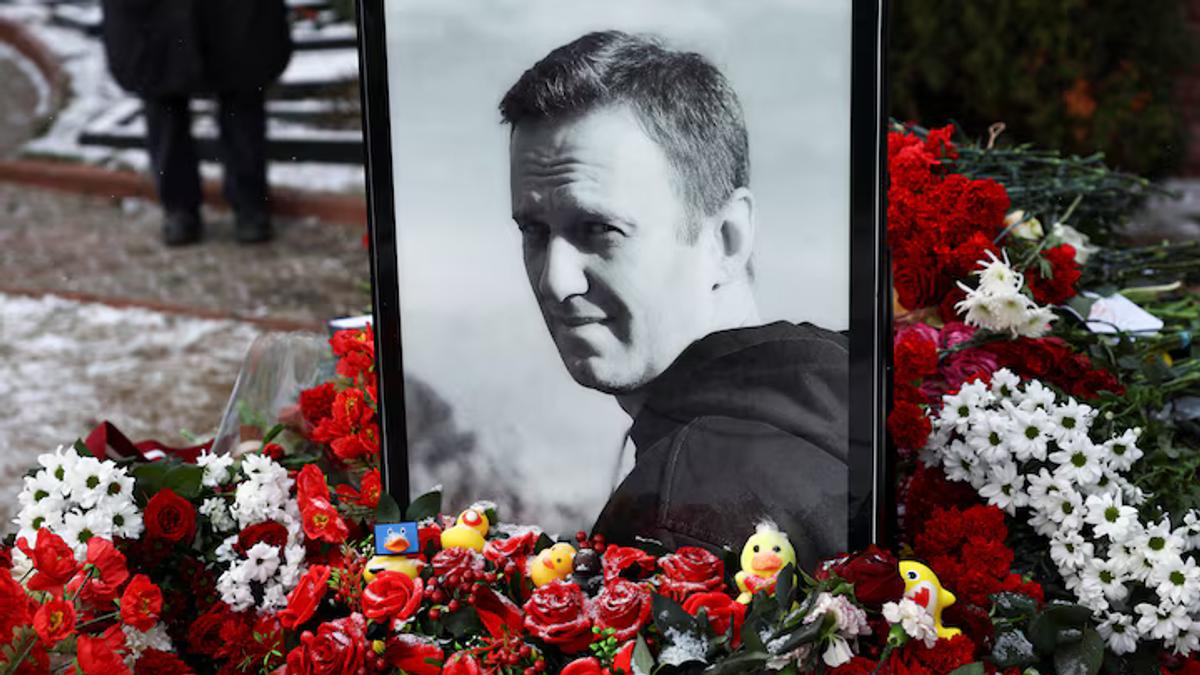
The United Kingdom has announced new sanctions targeting Russian individuals, alleging their involvement in the development of chemical weapons used in the death of prominent opposition leader Alexei Navalny. This action by London represents a continued assertion of Western resolve against perceived state-sponsored assassinations and the use of prohibited chemical agents, further exacerbating already strained diplomatic relations between the UK and Russia.
Alexei Navalny, a vocal critic of the Russian government, first fell ill in August 2020 during a flight within Russia. Subsequent medical examinations in Germany confirmed he had been poisoned with Novichok, a military-grade nerve agent developed by the Soviet Union. Western governments, including the UK, the United States, and the European Union, widely attributed the poisoning to the Russian state, a claim consistently denied by Moscow. Despite the clear danger, Navalny returned to Russia in January 2021, where he was immediately arrested and subsequently imprisoned on charges widely considered politically motivated. His death in an Arctic penal colony in February 2024, officially attributed to natural causes by Russian authorities, reignited international condemnation and calls for accountability.
The use of Novichok, a highly potent chemical weapon, carries profound geopolitical implications. It is a direct violation of the Chemical Weapons Convention (CWC), an international treaty prohibiting the development, production, stockpiling, and use of chemical weapons. The CWC, to which Russia is a signatory, aims to eliminate an entire class of weapons of mass destruction. When a state is credibly accused of using such an agent, especially against its own citizens or political opponents, it undermines the entire international non-proliferation regime and sets a dangerous precedent for state behavior. The UK's focus on individuals involved in the *development* of these weapons highlights a broader concern about the infrastructure and capabilities that enable such actions.
The UK's latest sanctions are not an isolated incident but rather a continuation of a firm and consistent policy against the use of chemical weapons, particularly those linked to Russia. London previously took a leading role in condemning Russia after the 2018 Salisbury poisoning of former double agent Sergei Skripal and his daughter Yulia, also with Novichok. That incident, which occurred on British soil, led to a significant diplomatic crisis, including mass expulsions of Russian diplomats by numerous Western nations. The UK's repeated actions underscore its commitment to upholding international law and protecting its national security interests, as well as those of its allies, from what it perceives as hostile state activity.
The imposition of sanctions serves multiple strategic objectives for the UK. Firstly, it aims to hold individuals accountable for their alleged roles in a grave international crime, even if direct prosecution is not immediately feasible. By targeting specific individuals, the UK seeks to disrupt networks and impose personal costs on those deemed responsible. Secondly, sanctions act as a deterrent, signaling to Russia and other potential actors that the use of chemical weapons or the targeting of political dissidents will incur significant diplomatic and economic consequences. Thirdly, this action reinforces Western unity and solidarity. By taking a strong stance, the UK aligns itself with a broader international consensus that has condemned Russia's actions, demonstrating a collective commitment to international norms and human rights. Finally, the sanctions carry significant symbolic weight, reaffirming the principle that such egregious acts cannot go unaddressed, even in the face of denials from the accused state.
These new sanctions will inevitably further strain the already deeply adversarial relationship between the UK and Russia. While the immediate impact on Russia's broader foreign policy or internal governance might be limited, the cumulative effect of such measures contributes to Russia's international isolation and economic pressure. For the wider international community, the UK's action reinforces the importance of maintaining a robust response to violations of international law, particularly concerning weapons of mass destruction and human rights. It also highlights the ongoing challenge of enforcing accountability when powerful states are involved. The persistence of such measures underscores a long-term geopolitical struggle over norms, sovereignty, and the permissible limits of state power in the 21st century. The international community will continue to watch how these sanctions, alongside others, contribute to the broader effort to address the implications of Navalny's death and the alleged use of chemical weapons.
Editor's Note: The analysis relies on widely established geopolitical context surrounding Alexei Navalny's poisoning and death, as the provided raw article offered minimal specific details beyond the headline regarding the new sanctions.
Source referenced: STRAITSTIMES
This brief was synthesized by our Editorial Engine and reviewed by The Ground Narrative team.