TRENDING

Saturday, 17 October 2026
----------------------
6 Jumada Al-Awwal 1448 AH
The UK government's decision to nationalize British Steel, citing national security, has ignited a sharp dispute with its Chinese owner, Jingye Group, which is now seeking substantial damages. This move underscores growing tensions between economic sovereignty and international investment norms, with significant implications for UK-China relations and global industrial policy.
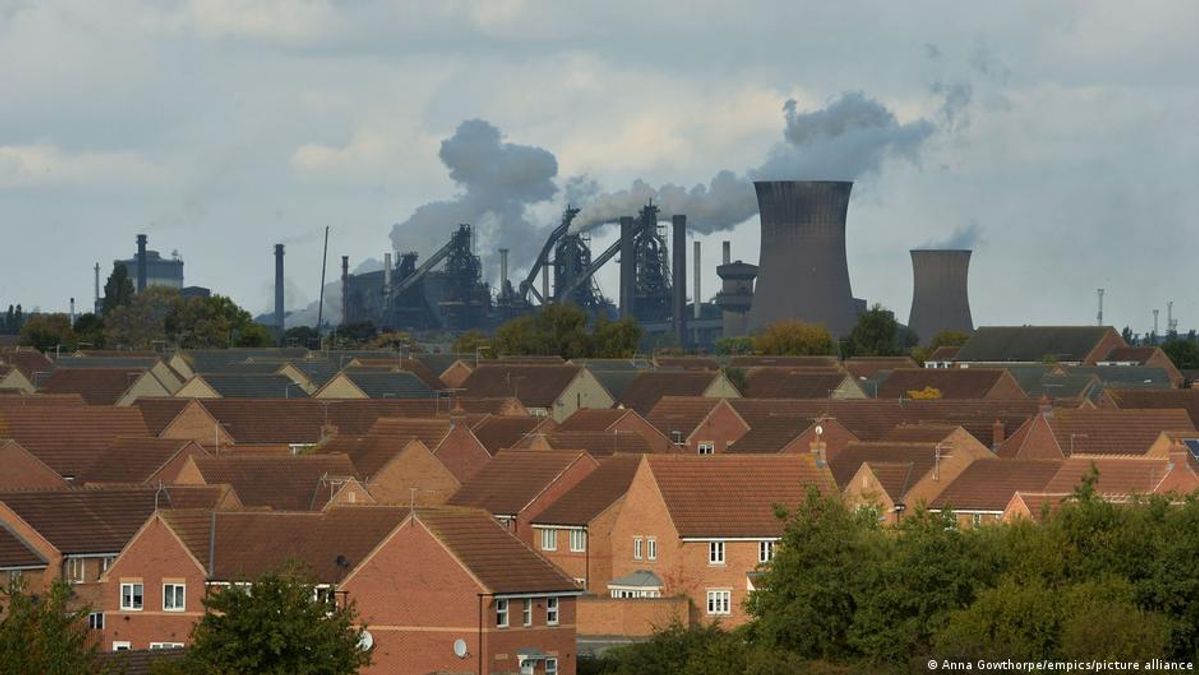
TheUnited Kingdom government has taken full public ownership of British Steel, a move that has triggered a significant geopolitical and economic dispute with its former Chinese owner, Jingye Group. The nationalization, finalized recently after emergency measures were enacted last year, was primarily driven by concerns over national security, the preservation of critical industrial capacity, and the protection of thousands of jobs in a key industrial region.
The decision to bring British Steel under state control came after Jingye Group, which acquired the struggling steelmaker in 2020, warned that the Scunthorpe plant in northern England was no longer financially viable. The plant is the UK's last facility capable of producing virgin steel from raw materials, a strategic capability deemed essential for national defense, critical infrastructure projects like construction and rail, and overall economic resilience. Ministers cited the imperative to safeguard these strategic steel supplies, preventing the permanent closure of blast furnaces that would have eradicated the UK's primary steelmaking capacity.
In response to the nationalization, China's Jingye Group has vehemently condemned the UK government's actions, labeling them "outright robbery" and accusing ministers of "trampling on international investment rules." The Chinese steel giant has threatened legal action, announcing its intention to pursue full compensation through legal means, specifically under bilateral investment agreements. Jingye claims the UK disregarded its continuous investment of £1.2 billion since 2020 and was only willing to provide "almost zero compensation," despite the company's reported daily losses of £700,000 at the Scunthorpe plant. The company is reportedly seeking around £1 billion in damages, a figure significantly higher than the UK's valuation.
China's Foreign Ministry has publicly backed Jingye's demand for compensation, urging the UK to "earnestly respect market principles and the spirit of contract" and to find mutually acceptable solutions. This official endorsement elevates the dispute from a corporate disagreement to a matter of state-level concern, adding another layer of complexity to the already strained UK-China relationship.
The saga of British Steel reflects a tumultuous history for the UK's steel industry, which has swung between state and market control for decades. Nationalized after World War II, the sector was privatized under Prime Minister Margaret Thatcher in 1988. Since then, it has changed hands multiple times, grappling with high operating costs, fierce international competition, and global overcapacity. Jingye's acquisition in 2020 followed the firm's insolvency under previous ownership, highlighting the persistent challenges faced by heavy industries in developed economies.
This nationalization carries significant geopolitical and economic implications. For the UK, it signals a more interventionist industrial policy, prioritizing national security and strategic autonomy over pure free-market principles, particularly in critical sectors. It underscores a global trend where nations are re-evaluating supply chain vulnerabilities and the importance of domestic production capabilities in the wake of recent global disruptions.
For China, the dispute challenges the security of its overseas investments and its perception of international investment norms. The legal battle, if it proceeds under bilateral investment agreements, will test the boundaries of sovereign rights versus investor protections, potentially setting a precedent for how governments handle foreign-owned assets deemed strategically vital. This could influence future Chinese foreign direct investment (FDI) decisions, particularly in Western economies, and further complicate UK-China economic relations.
The immediate future involves a legal confrontation, with an independent valuer appointed under new UK legislation to assess any compensation payable to Jingye. The outcome of this valuation and the subsequent legal challenges will be closely watched by international investors and governments alike. Beyond the compensation dispute, the UK government faces the formidable task of ensuring the long-term viability and modernization of British Steel under public ownership, including navigating the transition to greener steel production methods.
This episode highlights the increasing tension between economic globalization and national sovereignty, particularly when strategic industries are involved. It serves as a stark reminder that in an era of heightened geopolitical competition, the lines between economic policy, national security, and international relations are becoming increasingly blurred.
Source referenced: DW
This brief was synthesized by our Editorial Engine and reviewed by The Ground Narrative team.