TRENDING

Monday, 5 October 2026
----------------------
24 Rabi' Al-Thani 1448 AH
Senator Tammy Duckworth's recent visit to Taiwan aimed to reaffirm long-term U.S. security commitments and economic ties, countering anxieties raised by President Trump's transactional approach to foreign policy. The visit underscores the critical geopolitical and economic significance of Taiwan amidst escalating U.S.-China tensions.
On Monday, July 6, 2026, Democratic Senator Tammy Duckworth arrived in Taiwan, embarking on a high-stakes diplomatic mission designed to reaffirm the United States' enduring commitment to the island's security and economic stability. This visit, occurring amidst a period of heightened geopolitical uncertainty, serves as a critical signal to both Taipei and Beijing, as well as to broader U.S. allies in the Indo-Pacific region.
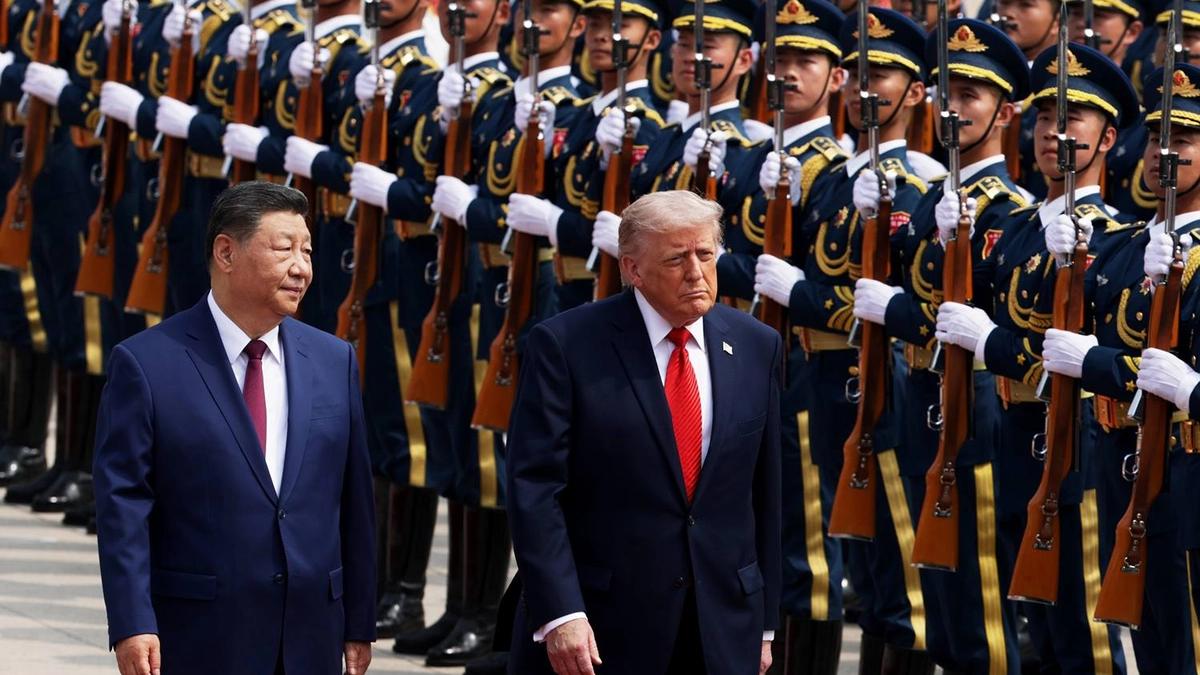
Duckworth's trip is particularly notable as it marks the first visit by a U.S. senator since President Donald Trump's May meeting with Chinese President Xi Jinping in Beijing. During that summit, President Xi explicitly stated that "the Taiwan question is the most important issue in China-U.S. relations," warning of potential "clashes and even conflicts" if not handled properly. This stark warning from Beijing, coupled with President Trump's subsequent remarks suggesting that U.S. arms sales to Taiwan were a "very good negotiating chip," has generated significant anxiety in Taipei and among U.S. allies regarding Washington's reliability.
Taiwan occupies a uniquely precarious yet strategically vital position in global geopolitics. Beijing views Taiwan as an inseparable part of its territory, a breakaway province to be reunified, by force if necessary. The United States, while adhering to its "One China" policy, has maintained robust unofficial relations with Taiwan, legally obligated by the 1979 Taiwan Relations Act to provide the island with defensive capabilities. This delicate balance has underpinned regional stability for decades.
President Trump's transactional approach to foreign policy, particularly his comments about holding a $14 billion arms package for Taiwan "in abeyance" depending on China, appeared to deviate from long-standing U.S. policy, including the spirit of the Six Assurances, which stipulate non-consultation with Beijing on Taiwan arms sales. While a senior Trump administration official later clarified that an $11.1 billion arms package was approved in December 2025, and an Assistant Secretary of State asserted no deviation from policy, the President's public statements created palpable concern.
Senator Duckworth's visit directly addresses these concerns. Her stated purpose was to convey that the U.S. "can't yield even an inch to President Xi" and to reassure Taiwan that "the United States will be here" in the long run, irrespective of presidential transitions. This message is crucial for bolstering Taiwan's confidence and signaling U.S. resolve against potential Chinese coercion.
Beyond security, Duckworth's visit also highlighted Taiwan's indispensable role in the global economy. Taiwan is a dominant force in the manufacturing of advanced semiconductor chips, which are critical components for industries worldwide, from automotive to defense. The senator emphasized that the U.S. economy, and indeed the global supply chain, would struggle to function without Taiwan's manufacturing capabilities. Her discussions with Taiwanese leaders, including President Lai Ching-te and Vice President Hsiao Bi-khim, included pushing for Taiwanese economic investments in the United States, particularly in Illinois, underscoring the intertwined nature of economic and national security interests.
The strategic importance of the Taiwan Strait, a vital international maritime chokepoint, further elevates the island's significance. Any disruption in this waterway would have profound global economic and security repercussions. China's increased military activities and spying in recent months serve as a constant reminder of the potential for conflict and the need for robust deterrence.
Duckworth's mission extends beyond Taiwan, aiming to reassure broader U.S. allies in the Indo-Pacific who have grown "nervous" and "edgy" about the Trump administration's perceived de-emphasis on diplomacy and engagement. Her message that "America is going to remain engaged" and committed to its role as a leader in the Indo-Pacific is vital for maintaining regional alliances and countering China's growing influence.
The senator also underscored the bipartisan nature of support for Taiwan in the U.S. Congress, a crucial point given the perceived unpredictability of presidential foreign policy. As an Iraq War combat veteran, Duckworth framed her commitment to Taiwan as a matter of U.S. national security, asserting that "Taiwan remaining free and independent is important to our national security." This bipartisan consensus provides a layer of stability to U.S. policy, even as presidential administrations may shift their rhetoric or approach.
Senator Duckworth's visit to Taiwan represents a significant diplomatic effort to reinforce U.S. commitments and address the anxieties stemming from a complex and evolving geopolitical landscape. It highlights the enduring strategic importance of Taiwan, both as a democratic partner and a critical economic player, in the face of an assertive China. The interplay between congressional resolve, presidential discretion, and China's unwavering claims will continue to define the delicate balance in the Indo-Pacific, making the Taiwan question a persistent flashpoint in global affairs.
Source referenced: FOREIGNPOLICY
This brief was synthesized by our Editorial Engine and reviewed by The Ground Narrative team.


