TRENDING

Sunday, 20 September 2026
----------------------
9 Rabi' Al-Thani 1448 AH
President Trump announced plans for an “AI force” and a new AI czar, signaling a push to shape the technology without new regulations. The move pits political survival and US‑China rivalry against the looming human toll of unchecked AI development.
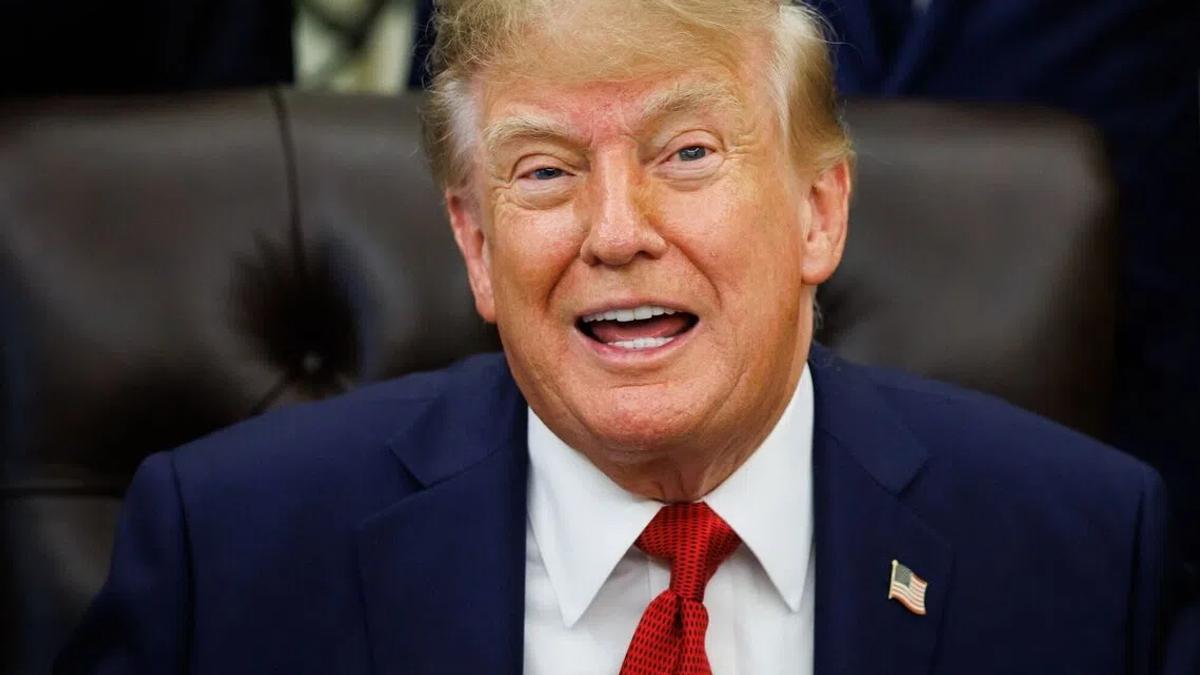
President Donald Trump posted on Truth Social on September 19 that he will appoint a new artificial‑intelligence adviser – an “AI czar” – and create an “AI force.” No details were offered on the structure, budget, or mandate of either entity, but the announcement came as US officials prepare for high‑level talks with China on AI security and trade.
The proposal serves several overlapping incentives. First, political survival: Trump faces a fragmented GOP and a Democratic‑controlled Congress; championing a high‑tech “warrior” narrative lets him claim he’s protecting national security while avoiding the unpopular optics of regulation. Second, economic competition: the United States and China are locked in a race to dominate AI‑driven industries that underpin future military and commercial power. By pledging an “AI force,” Trump signals to domestic firms that the administration will back rapid development, hoping to keep American companies ahead of state‑backed Chinese rivals.
Third, industry capture: venture capitalist David Sacks, a former AI czar, has publicly argued that existing criminal and civil courts are sufficient to police AI, a stance that aligns with tech lobbyists who fear that new rules could slow product roll‑outs and increase compliance costs. By echoing Sacks, Trump reinforces a narrative that regulation equals weakness, a message that resonates with Silicon Valley’s growth‑first ethos.
Finally, military doctrine: the phrase “AI force” hints at a potential integration of AI into defense structures, echoing earlier Pentagon initiatives that treat AI as a “force multiplier.” While Trump has not detailed whether this force will be civilian, military, or a hybrid, the terminology suggests a willingness to embed AI deeper into national security architectures without the oversight mechanisms that other democracies are debating.
The human cost of accelerating AI under a lax regulatory framework is likely to be borne by workers in sectors vulnerable to automation—manufacturing, logistics, and even low‑skill service jobs. As AI models become capable of replacing routine decision‑making, job displacement could surge, disproportionately affecting communities already facing economic insecurity.
Beyond labor markets, public safety is at stake. Experts have warned that insufficient oversight can lead to AI‑driven misinformation, biased policing tools, and autonomous weapons that lack clear accountability. In the absence of robust safeguards, civil liberties—particularly for marginalized groups subject to algorithmic bias—could erode rapidly.
Official statements focus on “watching over” AI growth, but they downplay the concentration of power within a handful of tech giants that already dominate the AI landscape. By positioning the federal government as the guardian, the administration may inadvertently legitimize a partnership that shields these corporations from liability, especially as the proposed AI czar could be drawn from industry circles.
Moreover, the announcement sidesteps the global governance gap. While the US and China are set to discuss “nuclear‑style safeguards,” there is no mention of multilateral frameworks that could bind either side to transparent safety standards. This omission allows each power to pursue its own security agenda, potentially sparking an AI arms race that bypasses existing diplomatic channels.
Watch for three concrete developments: (1) the formal appointment of the AI czar and the budget earmarked for the AI force—details will reveal whether the initiative is a symbolic gesture or a substantive program; (2) the outcomes of the upcoming US‑China meetings, especially any language on joint AI safety protocols or export controls on advanced chips; and (3) legislative responses in Congress, where bipartisan concerns about AI risks may clash with the administration’s deregulatory stance. The interaction of these threads will determine whether the AI force becomes a tool for unchecked growth or a catalyst for a new, contested security paradigm.
In the meantime, ordinary citizens should monitor how AI‑driven automation reshapes local labor markets and stay alert to policy proposals that could shift liability away from corporations and onto the public. The real battle may not be over who names the next AI czar, but over who ultimately decides how AI is allowed to shape everyday life.
Source referenced: STRAITSTIMES
This brief was synthesized by our Editorial Engine and reviewed by The Ground Narrative team.


