TRENDING

Monday, 21 September 2026
----------------------
10 Rabi' Al-Thani 1448 AH
President Trump’s packed UN General Assembly week brings high‑profile bilateral talks, from Ukraine to the Gulf, revealing the power calculations behind the headlines and the human toll hidden from the podium.
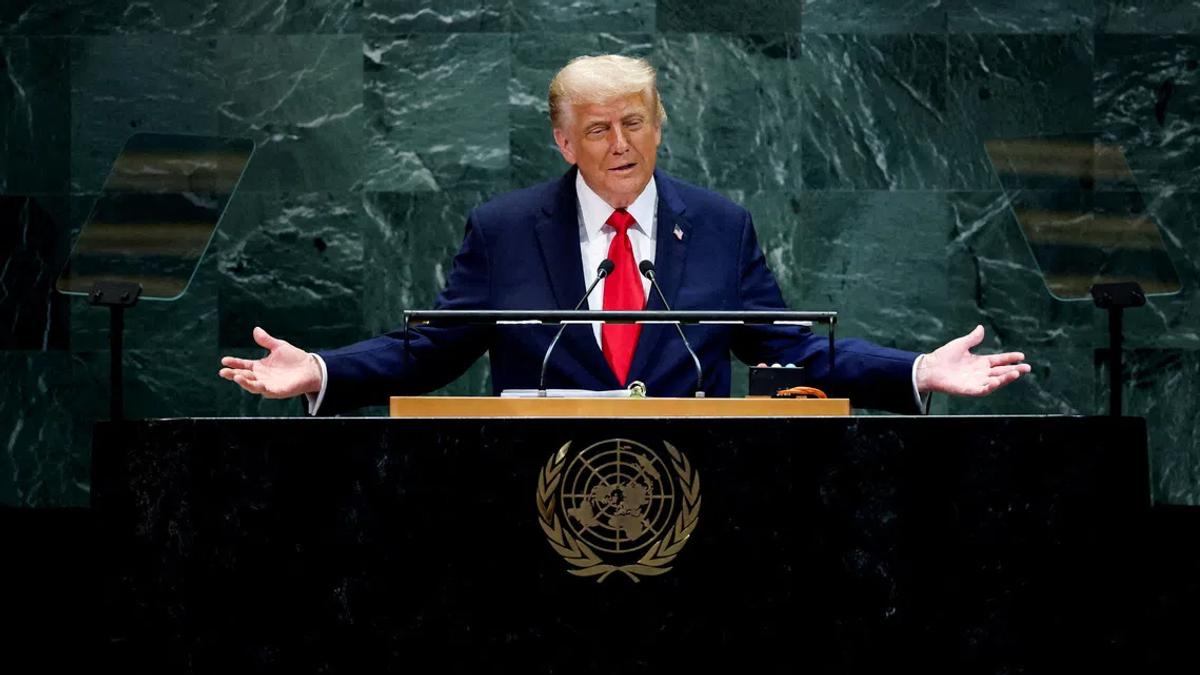
President Donald Trump arrived in New York for the United Nations General Assembly, scheduling a cascade of bilateral meetings with leaders ranging from Ukraine’s Volodymyr Zelensky to Britain’s Andy Burnham, Gulf Cooperation Council heads, Venezuela’s interim president Delcy Rodríguez, and New York Mayor Zohran Mamdani. The agenda also includes talks with Japan’s Sanae Takaichi and Iraq’s Ali Faleh al‑Zaidi, all framed as a “busy week” of diplomacy amid a UN session attended by nearly 130 heads of state.
The flurry of meetings serves multiple structural incentives. Domestically, Trump leverages the UN stage to showcase a hard‑line foreign policy that appeals to his base, emphasizing Iran’s nuclear ambitions and the ongoing US‑Israeli conflict. By meeting Zelensky, he signals continued support for Ukraine, a stance that helps maintain congressional backing for defense spending while deflecting criticism over the war’s human cost.
Regionally, the Gulf talks are a bid to cement US influence in a theater where Iran‑aligned Houthi attacks threaten Saudi oil routes. The United States hopes to extract political concessions that could limit Iranian leverage, even as Washington’s funding cuts have crippled many UN agencies that monitor humanitarian crises.
The encounter with Venezuela’s interim president is a calculated move to legitimize a Washington‑backed regime change, reinforcing the narrative that the US can reshape Latin American politics when it aligns with broader anti‑socialist objectives. Meanwhile, the meeting with New York’s mayor, a Democrat, offers a domestic optics win: a bipartisan façade that masks deeper partisan battles over immigration, housing, and climate policy.
Internationally, the timing coincides with a post‑World‑War II order under strain. By positioning himself at the center of multiple bilateral tracks, Trump attempts to reassert US primacy while the UN’s relevance wanes under his administration’s historic funding reductions.
While leaders exchange handshakes, ordinary citizens bear the brunt. In Ukraine, civilians continue to endure artillery bombardments, displacement, and a crippled economy; any diplomatic reassurance does little to restore homes or jobs. In Yemen, Houthi missile strikes on Saudi ports threaten the livelihoods of fishermen and the global supply chain that depends on Red Sea oil shipments.
Venezuelans face hyperinflation, food shortages, and political repression under a regime whose legitimacy is contested internationally. The US‑backed interim government offers little relief on the ground, where daily survival remains precarious. New York’s low‑income neighborhoods grapple with rising rents and inadequate public services, issues that a brief mayoral meeting with Trump is unlikely to resolve.
Across the Gulf, migrant workers—many from South Asia—continue to live in cramped labor camps, their rights often ignored in high‑level security talks. The human cost of a potential escalation with Iran would be felt most acutely by these vulnerable populations, who lack the political clout to influence diplomatic outcomes.
Official statements spotlight “preventing Iran’s nuclear capability” and “support for Ukraine,” yet they downplay the strategic calculus behind cutting UN funding. By weakening the UN’s peace‑keeping and humanitarian arms, the administration reduces oversight that could expose US‑aligned interventions, such as the recent military ouster of Venezuela’s Maduro.
The narrative also sidesteps the political survival element for Trump. With midterm elections looming, a high‑visibility foreign policy tour serves to rally his core supporters, diverting attention from domestic economic pressures and ongoing legal challenges. The bilateral meetings are less about substantive policy breakthroughs and more about stagecraft that reinforces a perception of decisive leadership.
Furthermore, the emphasis on “bilateral” engagements masks the multilateral erosion occurring at the UN. By treating the assembly as a backdrop for personal diplomacy, the administration signals a retreat from collective decision‑making, a shift that could reshape global governance structures for years.
Watch for three immediate signals: first, any joint declaration emerging from the Trump‑Zelensky dialogue, which could hint at new weapons aid or diplomatic overtures with Moscow. Second, the tone of the Gulf leaders’ reception—if the US secures concrete commitments to curb Houthi attacks, regional shipping lanes may stabilize, but any failure could accelerate a broader Iran‑Saudi proxy conflict.
Finally, monitor the UN’s response to the US funding cuts. A resurgence of member‑state criticism or a coalition of NGOs demanding reinstatement could pressure Washington ahead of the upcoming congressional budget cycle. The interplay between Trump’s high‑profile meetings and the UN’s institutional health will reveal whether the United States is reshaping the global order through personal diplomacy or retreating into unilateralism.
In the weeks ahead, the real test will be whether these high‑level handshakes translate into tangible relief for the civilians caught in the crossfire—or remain symbolic gestures that reinforce existing power asymmetries.
Editor's Note: Analysis based on publicly reported meetings and known policy trends; some behind‑the‑scenes negotiations may not be fully disclosed.
Source referenced: STRAITSTIMES
This brief was synthesized by our Editorial Engine and reviewed by The Ground Narrative team.