TRENDING

Tuesday, 6 October 2026
----------------------
25 Rabi' Al-Thani 1448 AH
President Donald Trump's speech at Mount Rushmore, marking the 250th anniversary of American independence, blended themes of national exceptionalism with stark political warnings, evoking historical fears of communism. This address, interpreted by experts as a move to consolidate power and define political allegiances, carries significant implications for U.S. domestic cohesion and its global standing.
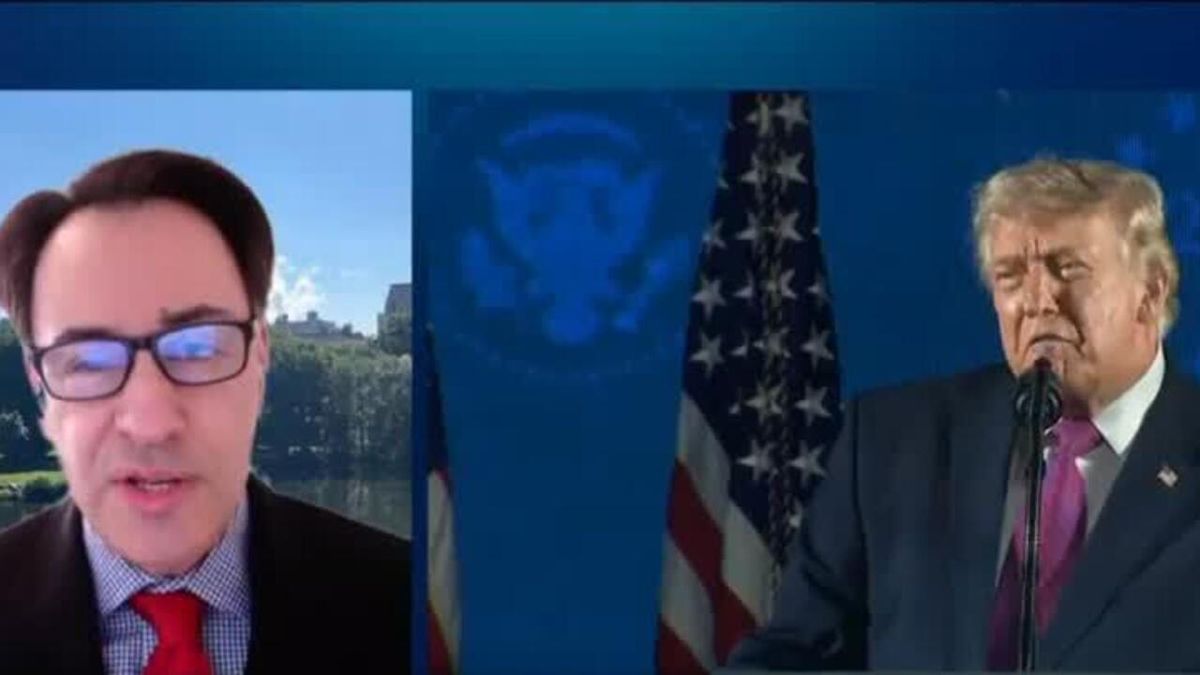
On Friday, July 4, 2026, President Donald Trump delivered a highly anticipated speech at Mount Rushmore, a monument deeply embedded in the American national consciousness. The address, intended to commemorate the 250th anniversary of American independence, quickly transcended traditional celebratory rhetoric, evolving into a politically charged discourse that has drawn considerable analysis regarding its strategic intent and potential ramifications. The event, held at a site symbolizing national unity and historical legacy, served as a powerful backdrop for a message that, according to observers, aimed to delineate political loyalties and consolidate power.
The President's speech was characterized by a striking duality. It began with soaring declarations of American exceptionalism, a common theme in U.S. political discourse that often resonates with a sense of national pride and global leadership. However, this celebratory tone soon shifted, veering into what has been described as a "darkly political speech." A central element of this shift was the issuance of warnings about a "sinister threat of communism," a rhetorical move that, as noted by Ian Reifowitz, SUNY Distinguished Professor of history, evoked "one of the country’s ugliest chapters." This reference strongly suggests an intentional recall of historical periods such as the McCarthy era or the Red Scare, times marked by intense political polarization, suspicion, and often, the suppression of dissenting voices.
Professor Reifowitz's assessment that Trump's primary objective was to "make himself more popular and more powerful" by politicizing the independence celebrations offers a crucial lens through which to understand the speech. The phrase "making it clear 'who's in and who's out'" highlights a strategy of defining political allegiance and creating a clear demarcation between perceived allies and adversaries within the domestic political landscape. Such rhetoric, particularly when delivered on a national holiday and at a revered monument, can serve to galvanize a political base while simultaneously alienating opponents, thereby deepening existing societal divisions. The choice of Mount Rushmore, a site representing the foundational ideals and enduring strength of the United States, for a speech that emphasized internal threats and ideological purity, underscores a deliberate effort to imbue a partisan message with nationalistic authority.
The domestic political implications of such a speech inevitably extend to the international arena. A nation perceived as deeply divided or engaged in intense internal ideological struggles can project an image of instability or unpredictability on the global stage. For allies, such rhetoric might raise questions about the consistency and reliability of U.S. foreign policy, particularly if it signals a more inward-looking or ideologically driven approach to international relations. For adversaries, it could be interpreted as a sign of internal weakness or an opportunity to exploit perceived divisions. The invocation of communism, while perhaps aimed at a domestic audience, also carries historical weight in international relations, potentially influencing perceptions in countries with complex histories involving communist movements or Cold War-era alignments.
Furthermore, the emphasis on American exceptionalism, when coupled with divisive internal messaging, can be viewed differently by international observers. While intended to project strength, it might also be seen as a form of unilateralism or a disinterest in multilateral cooperation, depending on the specific context and the broader foreign policy stance of the administration. The politicization of national symbols and holidays, particularly those celebrating democratic ideals, can also prompt international scrutiny regarding the health and resilience of democratic institutions within the United States.
The deliberate evocation of a historical period marked by intense anti-communist fervor and political purges is a significant aspect of the speech. It suggests a rhetorical strategy that seeks to tap into deep-seated fears and historical grievances, potentially normalizing a more confrontational and ideologically rigid political discourse. The long-term consequences of such rhetoric could include a further erosion of bipartisan cooperation, increased political polarization, and a redefinition of what constitutes acceptable political dissent within the United States. Internationally, it could signal a shift towards a more ideologically driven foreign policy, potentially impacting alliances, trade relationships, and global diplomatic engagements. The speech at Mount Rushmore, therefore, stands not merely as a commemorative address, but as a strategic political statement with profound implications for both the domestic trajectory of the United States and its standing in the global order.
Source referenced: FRANCE24
This brief was synthesized by our Editorial Engine and reviewed by The Ground Narrative team.