TRENDING

Monday, 5 October 2026
----------------------
24 Rabi' Al-Thani 1448 AH
Reports indicate U.S. President Donald Trump plans to offer Turkey re-entry into the F-35 program, signaling a potential thaw in strained bilateral relations. This move, if realized, would challenge congressional restrictions and reshape NATO's southern flank dynamics.
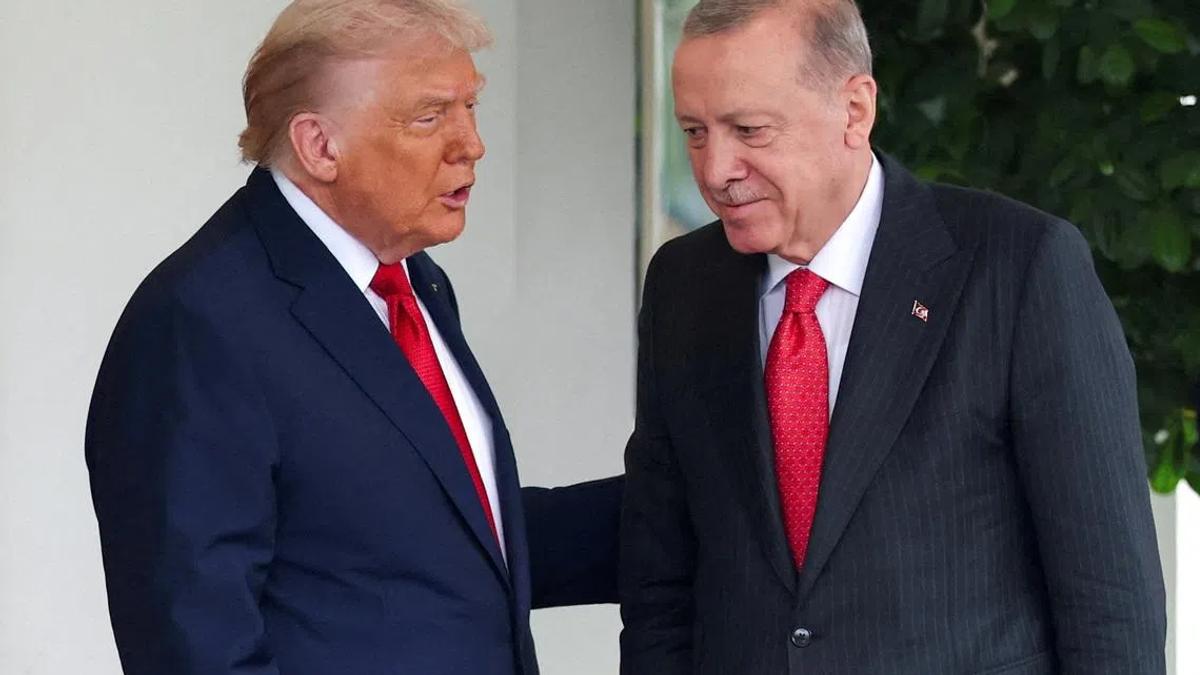
Reports emerging on July 6, 2026, suggest that U.S. President Donald Trump is poised to inform Turkish President Recep Tayyip Erdogan of his readiness to restore Turkey's access to the F-35 stealth fighter jet program. This development, cited by the New York Times from senior administration officials, comes as President Trump prepares to attend a NATO summit in Ankara, Turkey, scheduled to commence on July 7. The potential reversal of Turkey's exclusion from the critical defense program marks a significant inflection point in the often-turbulent relationship between Washington and Ankara, carrying profound geopolitical implications for NATO, regional stability, and U.S. foreign policy.
The strained ties between the United States and Turkey reached a critical juncture in 2019 following Ankara's acquisition of the Russian S-400 Triumf air defense system. Washington vehemently opposed this purchase, arguing that the S-400s posed an unacceptable security risk to the advanced F-35 aircraft, particularly concerning the compromise of its stealth technology and sensitive data. The U.S. maintained that integrating a Russian air defense system into a NATO member's military infrastructure, especially one designed to counter Western aircraft, was incompatible with alliance interoperability and security protocols.
In response to Turkey's decision, the U.S. government, under the Trump administration, took decisive action. Washington imposed sanctions on Turkey under the Countering America's Adversaries Through Sanctions Act (CAATSA) and formally removed Turkey from the F-35 Joint Strike Fighter program. This exclusion meant Turkey, which had been a key partner in the F-35's development and production, would neither receive the jets it had ordered nor participate in their future manufacturing. Furthermore, the U.S. Congress passed legislation explicitly prohibiting any F-35 sales to Turkey as long as the S-400s remained in its possession, underscoring a bipartisan consensus on the issue. This move not only deprived Turkey of a critical component of its military modernization strategy but also created a deep fissure within the NATO alliance, weakening its collective defense posture on its southeastern flank.
The reported intention to re-engage Turkey on the F-35 program signals a potential shift in U.S. policy, driven by a desire to mend fences with a strategically vital NATO ally. While the New York Times report indicates that U.S. officials differ on the precise mechanisms to circumvent existing congressional and legal restrictions, an exchange of letters between the two leaders was suggested as a possible pathway. This diplomatic maneuver follows a recent notification by the Trump administration to Congress regarding the sale of jet engines worth over $700 million to Turkey, suggesting a broader effort to improve bilateral relations.
From a geopolitical perspective, the motivations behind such a move are multifaceted. Reintegrating Turkey into the F-35 program could be seen as an attempt to bolster NATO's cohesion and operational capabilities, particularly in a region marked by increasing geopolitical competition, including Russian influence in the Black Sea and Middle East. For Turkey, regaining access to the F-35s would significantly enhance its air force's capabilities, providing a qualitative edge in regional power dynamics and fulfilling a long-standing military modernization goal. For the U.S., it could represent a pragmatic effort to pull Turkey closer to the Western orbit, potentially mitigating Ankara's perceived drift towards Russia and other non-Western powers.
Should President Trump proceed with this initiative, the geopolitical ramifications would be substantial.
Firstly, on U.S.-Turkey relations: It would undoubtedly signify a major warming of ties, potentially resolving the most contentious issue between the two nations. This could pave the way for cooperation on other regional issues, from Syria to the Eastern Mediterranean.
Secondly, for NATO: While potentially strengthening the alliance's southern flank by equipping a key member with advanced capabilities, it also raises questions about alliance discipline and the precedent set by accommodating a member that acquired adversary military systems. The core security concerns regarding the S-400s and F-35s would need to be addressed, either through a Turkish commitment to remove or deactivate the Russian system, or through a novel technical solution that has yet to be publicly articulated.
Thirdly, domestic U.S. politics: Any attempt to bypass or overturn congressional legislation would likely face significant opposition from Capitol Hill, potentially leading to a legislative battle and further scrutiny of executive authority in foreign policy. The legal and technical complexities of such a reversal are considerable.
Finally, regional stability: A militarily stronger Turkey, equipped with F-35s, would alter the balance of power in the Eastern Mediterranean and Aegean Sea, impacting relations with Greece and Cyprus, both of whom are also U.S. allies.
The reported development underscores the complex interplay of diplomacy, military strategy, and domestic politics in shaping international relations. While the prospect of Turkey rejoining the F-35 program offers a pathway to improved U.S.-Turkey relations and potentially a stronger NATO, it also presents significant challenges, particularly concerning the unresolved S-400 issue and the need to navigate U.S. congressional mandates. The upcoming NATO summit in Ankara will likely serve as a critical platform for these discussions, with the world watching closely for signals of a potential reset in this vital strategic partnership.
Editor's Note: The analysis is based on a New York Times report citing unnamed officials, and the specific mechanisms for overcoming congressional hurdles remain unclear. The actual outcome is subject to ongoing diplomatic negotiations and domestic political processes.
Source referenced: STRAITSTIMES
This brief was synthesized by our Editorial Engine and reviewed by The Ground Narrative team.


