TRENDING

Thursday, 12 November 2026
----------------------
2 Jumada Al-Thani 1448 AH
A federal judge has temporarily halted the construction of former President Donald Trump's proposed monument in Washington D.C., citing questions of congressional authorization. The decision ignites a legal battle and public debate over presidential legacy, urban planning, and the use of national space.
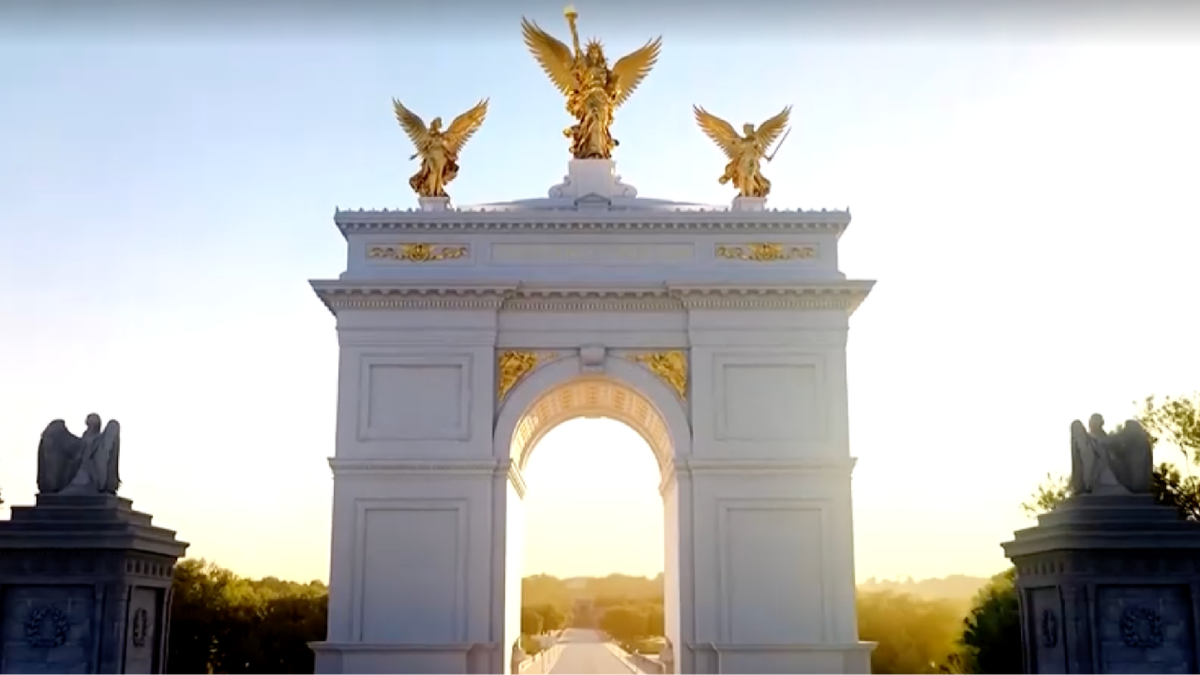
Just hours after receiving initial key approvals, a federal judge has temporarily blocked the construction of former President Donald Trump's proposed "grand arch" monument in Washington D.C. The judicial order, a 14-day restraining order, directly questioned whether Congress had ever formally authorized the ambitious project. This swift legal intervention has brought the monument's future to an immediate halt, triggering a contentious legal battle over its legitimacy and placement. Critics of the project have vocally raised concerns regarding its potential impact on urban traffic flow, environmental integrity, aviation safety due to its proposed height, and its contentious proximity to the hallowed grounds of Arlington National Cemetery. The rapid progression from approval to judicial challenge underscores the deep divisions and procedural complexities inherent in major public works projects within the nation's capital.
The legal challenge to Donald Trump's proposed monument is a stark illustration of the intricate dance between executive ambition and the foundational principles of checks and balances in the United States. At its core, this is a contest between a president's desire to forge a lasting physical legacy and the legislative and judicial branches' roles in ensuring accountability and adherence to established governance. Monuments are rarely mere aesthetic additions; they are potent symbols, statements of power, and concrete expressions of a nation's values and historical narratives. The battle over this arch is, therefore, a struggle over who gets to define and engrave the national identity into the very landscape of the capital.
The intervention by a federal judge highlights the critical function of judicial review, serving as a vital check on both executive overreach and potential legislative shortcuts. Even when projects appear to gain
A federal judge issued a 14-day restraining order, questioning whether Congress had properly authorized the project. This challenges the executive branch's authority in initiating such a significant public work without clear legislative approval.
Critics have raised concerns about potential traffic congestion, environmental impacts, aviation safety due to its height, and its contentious proximity to Arlington National Cemetery. These issues highlight the broader debate over urban planning and the use of national space.
The residents of Washington D.C. bear the immediate human cost through potential urban disruption and environmental changes. Additionally, taxpayers face opportunity costs from funds diverted to the project or its legal battles, while the divisive symbolism impacts national social cohesion.
Editor's Note: The raw intelligence is dated 2026, implying a future event. This analysis treats it as a current event happening in the present for the purpose of geopolitical analysis.
Source referenced: CGTN
This brief was synthesized by our Editorial Engine and reviewed by The Ground Narrative team.


