TRENDING

Tuesday, 6 October 2026
----------------------
25 Rabi' Al-Thani 1448 AH
Donald Trump and the Republican Party are deploying Cold War-era anti-communist rhetoric, labeling Democrats as a 'red menace' ahead of the US midterm elections. This strategy aims to shift the electoral narrative from economic woes and the Iran war fallout to an ideological battle, drawing parallels to McCarthyism.
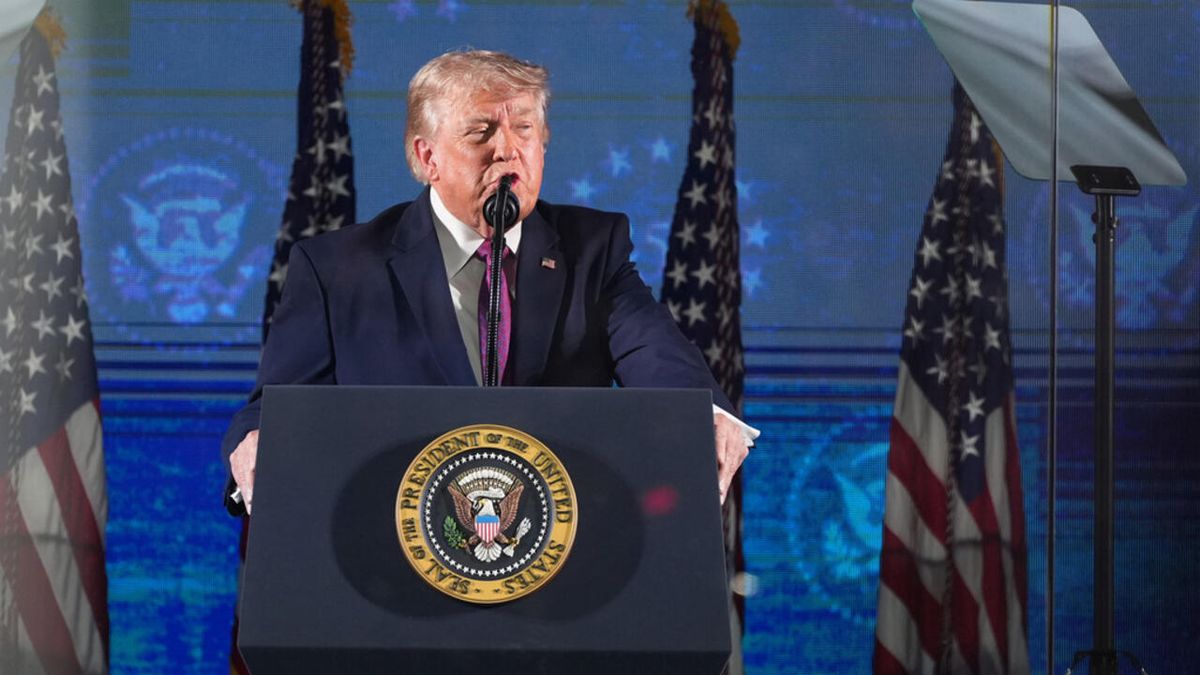
As the United States approaches its crucial midterm elections, former President Donald Trump and the Republican Party have intensified their campaign strategy, employing rhetoric reminiscent of the Cold War era. This approach, characterized by the labeling of the Democratic Party as a "red menace" and "hardcore, godless communists," marks a significant shift in the Republican messaging, aiming to redefine the electoral contest as a fundamental ideological battle.
The strategic pivot by the Republican Party, spearheaded by Mr. Trump, comes at a time when the party faces considerable domestic challenges. Public frustration over persistent inflation, concerns about affordability, and the economic fallout from the ongoing conflict with Iran have created a complex political landscape. Rather than allowing the midterms to become a referendum on these issues or on Mr. Trump's own approval ratings and the unpopularity of his signature tax and spending policies, Republicans are seeking to reframe the narrative.
The core motivation behind this aggressive rhetoric is to shift voter focus from tangible economic and policy concerns to an existential ideological struggle. By portraying the Democratic Party as "extreme" and aligned with "communism," the Republican campaign aims to energize its conservative base and persuade independent voters that the alternative is even more radical than their own perceived extremism. This strategy has been amplified following a series of primary victories by democratic socialist candidates in states like New York and Colorado, providing the Republicans with specific examples to bolster their broader claims. House Speaker Mike Johnson's warning that "barbarians are inside the gate" and Trump spokeswoman Karoline Leavitt's framing of the election as a choice "between communism and common sense" underscore this concerted effort to elevate the ideological stakes.
The current rhetoric draws direct parallels to the McCarthy era of the 1950s, a period marked by Senator Joseph McCarthy's fervent anti-communist crusade. This historical context is particularly salient given that Roy Cohn, McCarthy's chief counsel, later served as a mentor to Donald Trump. The use of terms like "menace" and the call to "cut out" communism "like a cancer," as articulated by Mr. Trump during speeches at Mount Rushmore and in Washington marking America's 250th anniversary, deliberately evoke a period of intense national fear and political purging.
However, analysts note a critical distinction: the conflation of democratic socialism with communism. Democratic socialism, as practiced in many Western democracies, operates within a framework of elections and a market economy, advocating for social welfare policies and greater economic equality. This stands in stark contrast to communism, historically associated with central planning, one-party rule, and the abolition of private ownership of major industries. The Republican strategy, therefore, relies on blurring these distinctions to maximize the negative historical connotations of "communism" in the American psyche.
The effectiveness of this strategy remains a subject of debate among political analysts. Daniel Drezner, a politics professor at Tufts University, suggests that painting the opposition as "even more extreme" is a tactic to address perceptions of the Republican Party's own policy extremism. The Washington Post has reported a significant increase in online mentions of "communist" and "communism" by Trump's allies, indicating a coordinated digital campaign.
However, some experts question the resonance of "communism" as a scare tactic, particularly among younger American voters who grew up after the Cold War. Brad Chase, a communications strategist, argues that "communism is a word that just doesn't resonate anymore" for those under 50. Conversely, Spencer Critchley, a communications consultant who worked on Obama's campaigns, notes that the rise of "wokeness" and a growing, albeit sometimes muddled, support for socialism among young Americans might inadvertently make it easier for Trump's narrative to gain traction, even if the Democratic Party itself is not communist.
Democrats, for their part, largely dismiss the rhetoric as a diversion. Progressive commentator Thom Hartmann argues that Mr. Trump's focus on "Marx" is a deliberate attempt to avoid addressing pressing "pocketbook concerns" that directly impact younger generations, such as housing affordability. This suggests a fundamental disagreement on what constitutes the most critical issues for the electorate.
While primarily a domestic political strategy, the intensity and nature of this rhetoric have broader implications for the United States' global standing. A highly polarized domestic political environment, characterized by the demonization of political opponents, can project an image of internal instability and ideological rigidity. This could potentially impact the perception of US leadership, its reliability as an ally, and its ability to effectively engage on the international stage, particularly in an era of complex geopolitical challenges. The mention of the "Iran war fueling price anxiety" in the article subtly links domestic economic concerns to international conflict, highlighting how global events can become fodder for internal political maneuvering, further complicating the domestic-international nexus.
In conclusion, Mr. Trump's revival of Cold War-era anti-communist rhetoric is a calculated political maneuver designed to reshape the narrative of the US midterm elections. By invoking historical fears and conflating different ideologies, the Republican Party aims to rally its base and discredit its opposition. The ultimate success of this strategy will depend on its resonance with a diverse electorate, whose perceptions of "communism" and "socialism" have evolved significantly since the mid-20th century, and its ability to overshadow the pressing economic and social issues facing the nation.
Source referenced: FRANCE24
This brief was synthesized by our Editorial Engine and reviewed by The Ground Narrative team.


