TRENDING

Monday, 5 October 2026
----------------------
24 Rabi' Al-Thani 1448 AH
Former US President Donald Trump's Independence Day speech at Mount Rushmore linked American exceptionalism with warnings against a 'communist menace' and 'newcomers,' drawing parallels to the 1950s Red Scare. The address strategically intertwined domestic political battles, including upcoming midterm elections and the rise of progressive candidates, with the economic repercussions of an ongoing 'US-Israeli war on Iran,' signaling a potent blend of nationalist rhetoric and foreign policy critique.
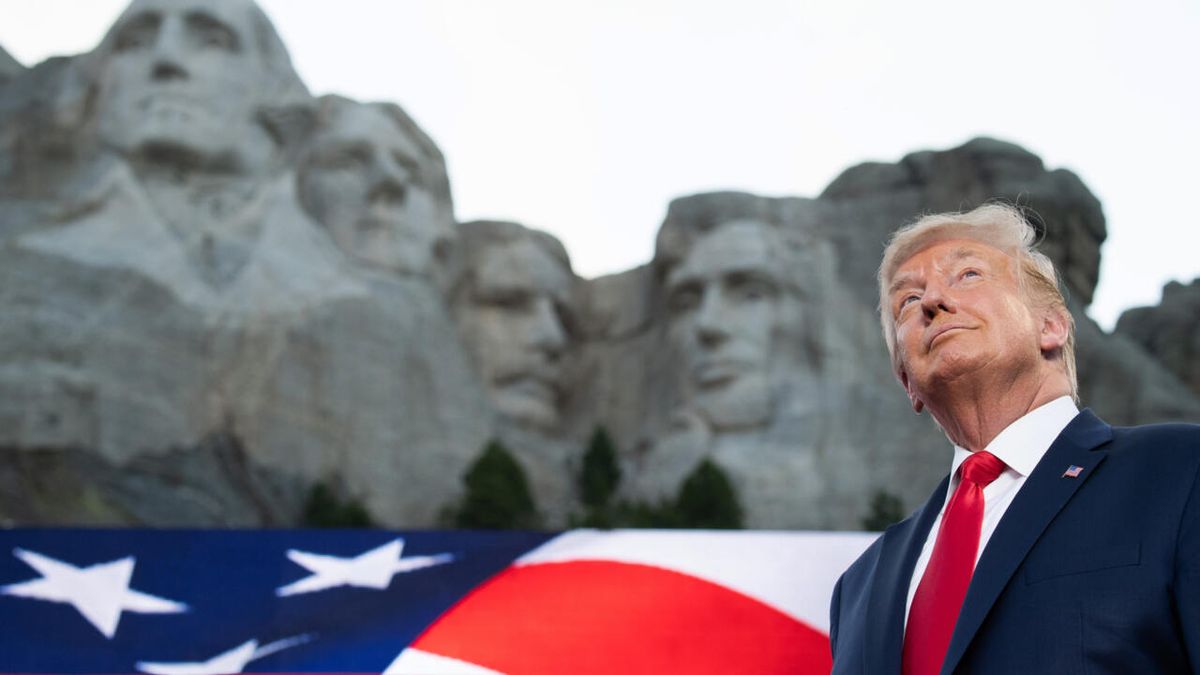
On July 4, 2026, former US President Donald Trump delivered a significant address at Mount Rushmore, marking the 250th anniversary of American independence. The speech, delivered on the eve of Independence Day, was characterized by a dual emphasis on American exceptionalism and a stark warning against what he termed a "communist menace." This rhetoric was notably directed at progressive Democrats and "newcomers" to the United States, drawing explicit parallels to the historical Red Scare of the 1950s.
Trump's choice of Mount Rushmore, a monument symbolizing foundational American leadership and national identity, provided a powerful backdrop for his message. By invoking the concept of American exceptionalism, he sought to reinforce a narrative of unique national destiny and global leadership. However, this was immediately juxtaposed with an assertion of internal threats, specifically a "resurgence of the communist menace in our land." This framing is not merely domestic political posturing; it carries significant geopolitical undertones. Historically, anti-communist rhetoric has been a cornerstone of US foreign policy, shaping alliances, interventions, and ideological confrontations globally. By reviving such language, Trump signals a potential return to a more confrontational ideological stance, even if primarily aimed at domestic political opponents.
The explicit comparison to the 1950s Red Scare, a period marked by widespread persecution and blacklisting of alleged communists, is particularly potent. This historical echo suggests a willingness to employ highly polarizing and potentially divisive tactics to mobilize a political base. Such rhetoric, when amplified, can have profound effects on civil liberties, political discourse, and the social fabric, potentially leading to increased internal fragmentation that could, in turn, weaken the nation's unified front on the international stage.
A critical aspect of Trump's speech was the direct linkage between domestic political developments and broader geopolitical concerns. He explicitly connected the perceived "communist menace" to the recent successes of progressive and democratic socialist candidates in various Democratic primaries across states like New York, Colorado, Kentucky, New Jersey, Ohio, Pennsylvania, and Texas. This suggests a strategic attempt to delegitimize political opposition by associating it with an ideologically charged historical adversary.
Furthermore, Trump's rhetoric extended to immigration, identifying "newcomers to our country who embrace ideas totally opposed to our way of life" as part of this menace. His call to "expel" these newcomers ties his anti-communist narrative to a long-standing anti-immigrant theme that has been central to his political platform. From a geopolitical perspective, such strong anti-immigrant sentiment can strain international relations, impact humanitarian policies, and potentially lead to diplomatic tensions with countries of origin. It also signals a potential shift towards more restrictive immigration policies, which can have economic and demographic consequences for the United States and its global standing.
Perhaps the most significant geopolitical revelation within the speech was the explicit mention of an ongoing "US-Israeli war on Iran." Trump directly attributed "persistent inflation and high gas prices" to the commencement of this conflict. This statement is crucial for several reasons:
1. Confirmation of Conflict: It confirms the existence of a major regional conflict involving the United States and Israel against Iran, a development with profound implications for Middle Eastern stability, global energy markets, and international security.
2. Economic Impact: By linking the war to domestic economic hardships, Trump highlights the tangible costs of foreign policy decisions on the American populace. This framing can be used to critique the incumbent administration's foreign policy and economic management.
3. Political Weaponization: The timing of this statement, ahead of the November midterm elections, suggests a deliberate attempt to leverage the economic fallout of the conflict as a political tool. Republican lawmakers are reportedly "increasingly uneasy that the conflict could cost the party control of at least one chamber of Congress," indicating the high stakes involved.
This direct connection between a major geopolitical conflict and domestic economic and political outcomes underscores the intricate web of modern international relations. The "US-Israeli war on Iran" would undoubtedly reshape regional power dynamics, potentially draw in other actors, and have long-term consequences for global energy security and trade routes.
Trump's speech, delivered at a pivotal moment in American history and amidst an ongoing international conflict, offers insights into potential future directions for US policy. The emphasis on internal threats and the call to "vanquish communism quickly" could signal a more inward-looking, yet ideologically assertive, foreign policy approach. Such an approach might prioritize national sovereignty and perceived internal security over multilateral engagement or traditional alliances, particularly if it aligns with a broader "America First" doctrine.
The explicit concern over the midterm elections and their potential impact on congressional control further highlights how domestic political cycles can directly influence the continuity and direction of US foreign policy. A shift in power could lead to significant changes in how the "US-Israeli war on Iran" is managed, how immigration is approached, and how the US engages with its allies and adversaries globally. The speech, therefore, serves not just as a political rally cry but as a strategic articulation of a particular vision for America's role both at home and on the world stage, deeply intertwined with ongoing geopolitical realities. The rhetoric, evoking a past era of ideological struggle, suggests a potential reorientation of US strategic priorities in an increasingly complex global environment. The implications for regional stability in the Middle East, global economic resilience, and the future of democratic discourse within the United States remain significant. The speech underscores how domestic political narratives are increasingly shaped by, and in turn seek to influence, major international developments. The ongoing "US-Israeli war on Iran" is presented as a critical variable in both the nation's economic health and its political future, making it a central point of contention in the upcoming electoral cycle. The confluence of these factors suggests a period of heightened geopolitical and domestic uncertainty for the United States.
Source referenced: FRANCE24
This brief was synthesized by our Editorial Engine and reviewed by The Ground Narrative team.


