TRENDING

Monday, 5 October 2026
----------------------
24 Rabi' Al-Thani 1448 AH
US President Donald Trump's Independence Day speech at Mount Rushmore National Memorial has sparked controversy, as he praised the US military and criticized democratic socialists, warning of a 'communist menace' threatening the country.
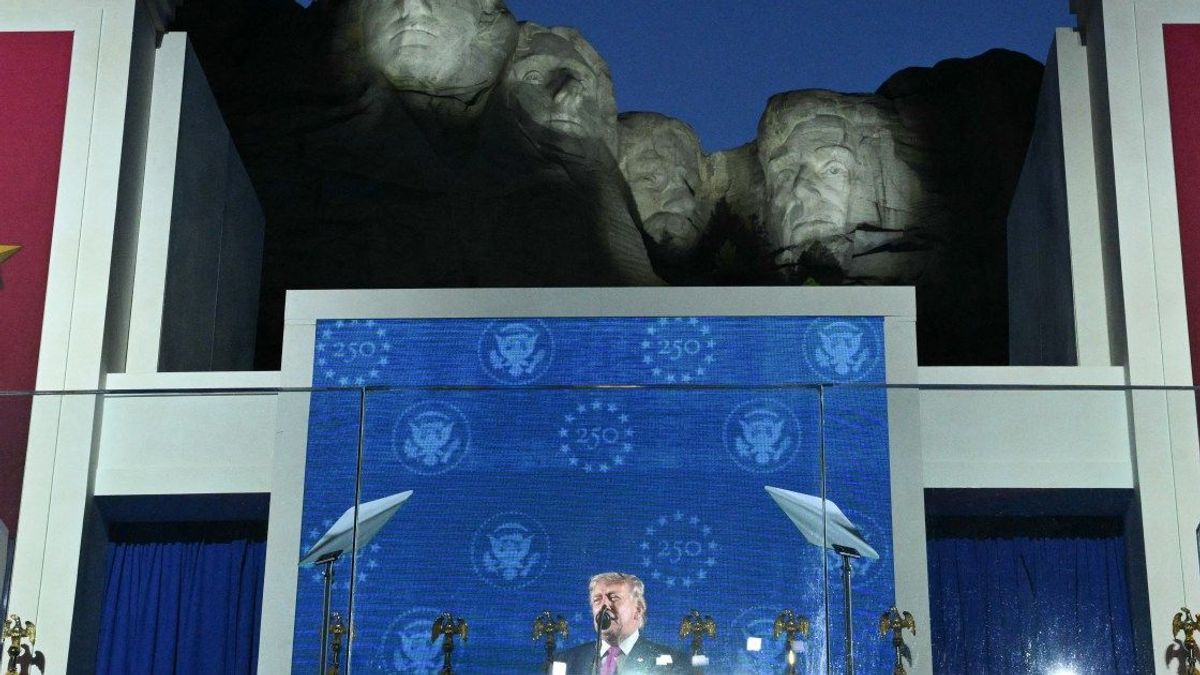
The 250th anniversary of the United States is a significant milestone, marking the country's founding and its evolution into a global superpower. However, President Donald Trump's speech at Mount Rushmore National Memorial on July 3, 2026, has sparked intense debate, as he used the occasion to praise the US military and rail against communism.
Trump's speech is a reflection of the deepening divisions within the United States, particularly between the left and right. The president's rhetoric has been criticized for being divisive and inflammatory, with some accusing him of using the anniversary to score political points ahead of the November midterm elections.
The significance of Trump's speech lies in its implications for the country's future. By framing communism as a major threat to the United States, Trump is attempting to galvanize support among his base and create a sense of urgency around the need for a hardline immigration stance. This rhetoric has the potential to further polarize the country and undermine the democratic process.
The United States has a long history of anti-communist sentiment, dating back to the Cold War era. However, Trump's speech marks a significant departure from previous administrations, which have generally taken a more nuanced approach to addressing ideological threats. By invoking national identity and ideology, Trump is attempting to create a sense of shared purpose and unity, but his approach is likely to be met with resistance from those who see it as a thinly veiled attempt to suppress dissent and opposition.
The impact of Trump's speech extends beyond the United States, as it reflects a broader trend of rising nationalism and anti-globalism. The president's emphasis on American exceptionalism and his criticism of communism are likely to resonate with like-minded leaders around the world, potentially creating a new era of great power competition.
The consequences of Trump's speech are far-reaching and uncertain. If his rhetoric is successful in galvanizing support among his base, it could lead to further polarization and division within the United States. However, if his approach is met with resistance and criticism, it could ultimately undermine his presidency and create a sense of instability and uncertainty.
Trump's 250th anniversary speech is a complex and multifaceted phenomenon, reflecting the deepening divisions within the United States and the broader global landscape. While his rhetoric has the potential to create a sense of urgency and purpose, it also risks further polarizing the country and undermining the democratic process. As the United States looks to the future, it is essential to engage in nuanced and informed discussions about the country's values and ideals, rather than relying on divisive and inflammatory rhetoric.
Editor's Note: While Trump's speech is likely to be met with resistance and criticism, its impact on the country's future is uncertain and far-reaching.
Source referenced: ALJAZEERA
This brief was synthesized by our Editorial Engine and reviewed by The Ground Narrative team.


