TRENDING

Friday, 13 November 2026
----------------------
3 Jumada Al-Thani 1448 AH
The unexpected resignation of Nvidia CEO Jensen Huang has sent shockwaves through the global technology sector, exposing the intense undercurrents of the U.S.-China competition for AI dominance. His departure, prompted by two extramarital affairs—one with an alleged Chinese spy—unveils how personal vulnerabilities can become flashpoints in a high-stakes geopolitical struggle.
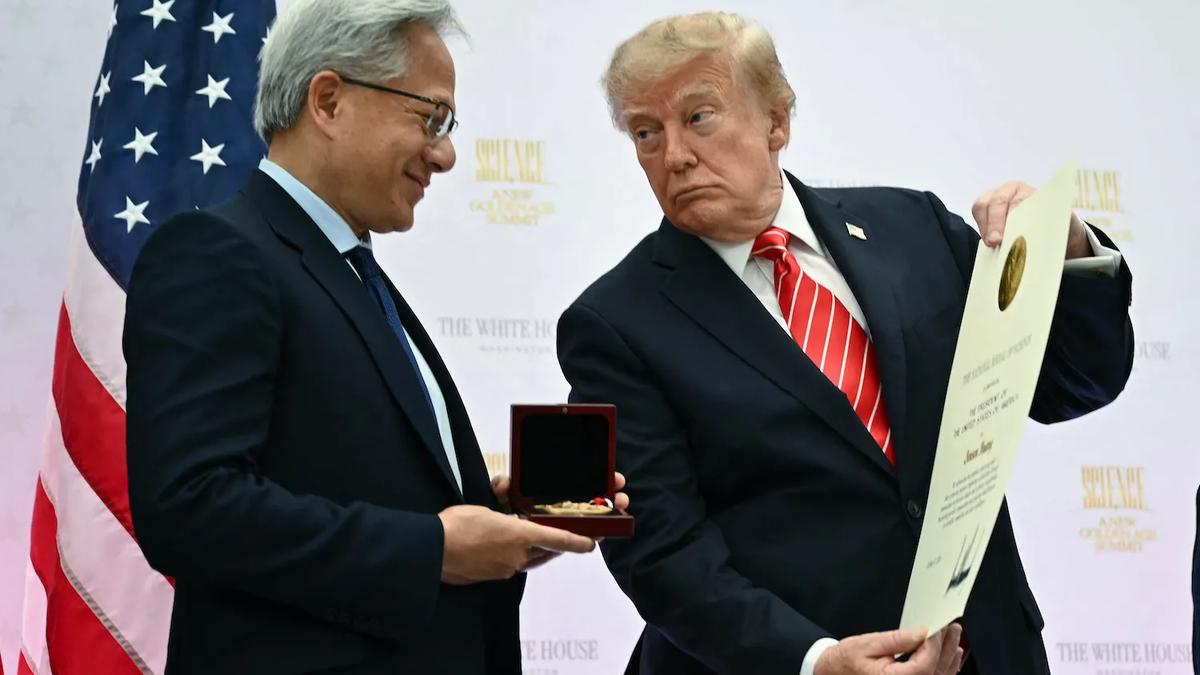
Jensen Huang, the charismatic and influential CEO of Nvidia, the world's leading producer of advanced AI semiconductor chips, has resigned from his position. The abrupt departure followed a series of revelations regarding two extramarital affairs. One affair was with Kimberly Powell, Nvidia's vice president of healthcare, which may have violated company conduct policies. More critically, the second affair was with Alice Huang, an executive at Singapore-based data center company Megaspeed, who is suspected by U.S. authorities of being a Chinese spy. Megaspeed itself has been under investigation by the U.S. Commerce Department since 2024 for allegedly helping China smuggle restricted Nvidia AI chips. The scandal, which saw Nvidia's stock plummet by as much as 14 percent and wiped out over $1 trillion in market value, has triggered an independent investigation by Nvidia's board and calls for Huang to testify before U.S. Congress.
At the heart of Jensen Huang's downfall lies the raw power of Nvidia's technological dominance and the desperate global race for artificial intelligence supremacy. Nvidia is not just a tech company; it is the linchpin of the modern AI ecosystem. Its Graphics Processing Units (GPUs) are the foundational hardware for training and deploying advanced AI models, making them a critical national security asset for the United States and an indispensable, highly coveted resource for China. The ability to produce or acquire these chips directly translates into future economic power, scientific advancement, and military capability.
The U.S.-China tech rivalry is a zero-sum game for technological leadership. The U.S., through export controls and sanctions, aims to hobble China's access to cutting-edge semiconductor technology, thereby preserving its own strategic advantage. China, in turn, is pouring vast resources into indigenous chip development, but until it achieves self-sufficiency, it remains highly reliant on foreign technology and actively seeks ways to circumvent U.S. restrictions. This creates a fertile ground for industrial espionage, where every technological edge is fiercely contested.
Jensen Huang himself wielded immense personal power. His estimated net worth of $162 billion prior to the scandal underscored his influence, but more importantly, his close personal relationship with U.S. President Donald Trump granted him direct access to the highest levels of government. This relationship allowed Huang to successfully lobby the White House to relax some restrictions on Nvidia's sales to China. The quid pro quo was significant: the U.S. government would receive a 25 percent cut of the profits from these sales. This arrangement highlights a critical vulnerability in the system, where personal connections and financial incentives can potentially override broader national security concerns and established policy frameworks. It demonstrates how powerful individuals can carve out exceptions, creating loopholes that adversaries may then exploit.
The alleged affair with Alice Huang, a suspected Chinese spy and executive at Megaspeed, further illuminates the mechanics of power in this high-stakes environment. State intelligence agencies often target individuals in positions of influence, exploiting personal vulnerabilities to gain access to sensitive information or to facilitate strategic objectives. In this case, the objective was clear: to secure access to restricted AI chips for China. Megaspeed's alleged role as a conduit for smuggling these chips underscores the intricate networks that can be established to bypass export controls, blurring the lines between legitimate commerce and strategic acquisition. The scandal reveals how personal conduct, even seemingly private matters, can become a vector for state-level competition, transforming a corporate leader's personal life into a matter of national security.
The fallout from Jensen Huang's resignation extends far beyond the boardroom, imposing significant costs on various populations and communities.
First and foremost, the 42,000-plus employees of Nvidia face a period of profound uncertainty. A leadership vacuum at such a critical juncture, coupled with a massive erosion of market value, can lead to anxieties about job security, company direction, and morale. The company's reputation, built over decades, is now tarnished by allegations of espionage and executive misconduct, potentially impacting its ability to attract and retain top talent in a highly competitive industry. For shareholders and investors, the human cost is starkly financial. The immediate plunge in Nvidia's stock price, wiping out over $1 trillion in market value, represents real losses for pension funds, individual investors, and institutional portfolios. These are savings, retirement plans, and investment strategies that have been severely impacted by the actions of one individual and the geopolitical forces at play.
Beyond direct financial and employment impacts, the alleged compromise of national security carries a broader, less tangible human cost for ordinary citizens. If advanced AI chip technology was indeed illicitly transferred to China, it could accelerate Beijing's military AI capabilities, potentially shifting the global balance of power and increasing the risk of future conflicts. This directly affects the safety and security of citizens in the U.S. and its allies. The erosion of trust in corporate and political leadership is another significant human cost. When powerful executives with direct access to presidents are implicated in scandals involving foreign espionage, it breeds cynicism about the integrity of institutions and the motivations of those in power. Citizens are left questioning whether decisions are made in the public interest or for personal gain and political expediency.
Finally, the scandal could have a chilling effect on the pace and nature of AI innovation. Heightened security concerns might lead to more stringent regulations, increased scrutiny, and a more cautious approach to international collaboration. While some controls are necessary, an overly restrictive environment could stifle the open exchange of ideas and talent that often fuels groundbreaking technological advancements. This could slow down the development of AI solutions that could benefit humanity in areas like healthcare, climate change, and economic development, ultimately impacting global progress and the quality of life for billions.
In the aftermath of such a high-profile scandal, powerful actors are quick to control the narrative, often downplaying or omitting crucial details to protect their interests and manage public perception. The Jensen Huang affair is no exception, with several key aspects being framed away or left unaddressed.
Nvidia's board was quick to state there was
Source referenced: FOREIGNPOLICY
This brief was synthesized by our Editorial Engine and reviewed by The Ground Narrative team.