TRENDING

Monday, 5 October 2026
----------------------
24 Rabi' Al-Thani 1448 AH
US-sponsored talks between Israel and Lebanon over their maritime border are stalled, revealing a deeper regional power struggle. Beyond technicalities, domestic politics, military realities, and a shifting US focus keep a fragile peace on edge, with ordinary citizens bearing the brunt.
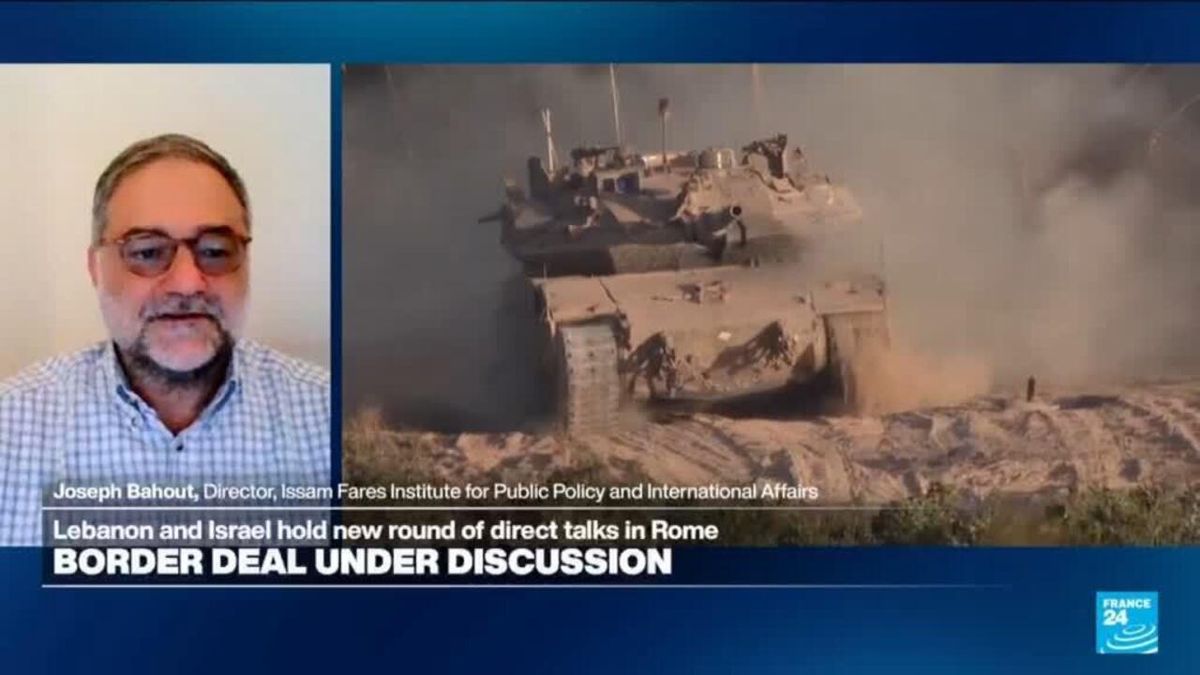
US-sponsored negotiations between Lebanon and Israel, aimed at resolving their long-standing maritime border dispute, have reached a critical impasse. Despite the diplomatic symbolism of ongoing rounds, the process is now characterized by stagnation. Experts note that the core obstacles have moved beyond mere technical disagreements on implementing the June framework agreement, instead reflecting a complex interplay of military realities, domestic political pressures within both nations, a perceived decrease in American engagement, and broader regional tensions, particularly those involving Iran and the US.
At its heart, this negotiation is less about drawing lines on a map and more about the mechanics of power in a volatile region. For Israel, domestic political constraints, particularly under leaders like Benjamin Netanyahu, often dictate a hardline stance to maintain public support and project strength. Security concerns regarding Hezbollah's military capabilities and its alignment with Iran are paramount. For Lebanon, a state grappling with profound economic collapse and a deeply fractured political system, the official government struggles to assert full sovereignty. Hezbollah, a powerful non-state actor with significant military and political sway, openly rejects further talks, positioning itself as the primary defender against Israel and a key player in Iran's regional strategy. The United States, once a more assertive broker, appears to be recalibrating its engagement, possibly viewing the stalled talks as a symptom of larger, intractable regional conflicts, or shifting its focus to other strategic priorities like the Iran-US dynamic. This diminished American pressure allows regional actors greater latitude, often to the detriment of diplomatic progress. The maritime border, particularly its potential energy resources, represents a significant strategic and economic prize, making any concession a high-stakes political decision for all parties.
The human cost of this diplomatic paralysis is borne disproportionately by the people of Lebanon and the communities along the shared border. For Lebanese citizens, the unresolved border dispute directly impedes the country's ability to develop its offshore natural gas reserves, a potential lifeline for an economy in freefall. Without a clear resolution, foreign investment remains hesitant, prolonging the economic crisis and denying ordinary Lebanese access to vital resources and job creation. Along the border, communities live under constant tension, with the ever-present threat of military escalation. Farmers, fishers, and families in these areas face uncertainty, displacement risks, and the psychological burden of living in a perpetual state of readiness for conflict. While Israeli citizens also face security concerns, the existential fragility of the Lebanese state means the consequences of stagnation are far more immediate and devastating for its population.
What powerful actors consistently downplay or omit is the true strategic value of the disputed maritime zone, particularly its potential for vast hydrocarbon reserves. While discussions are framed around technical demarcation, the underlying battle is for control over future energy wealth that could fundamentally alter the economic fortunes of Lebanon and enhance Israel's energy security. Governments often present these as mere 'technical disagreements' to obscure the profound economic and strategic implications. Furthermore, the US's 'diminishing engagement' is rarely framed as a strategic choice that might empower regional proxies or create a power vacuum, but rather as a natural consequence of 'complexities.' Hezbollah's rejection of talks, while framed as a principled stand against Israel, also serves to maintain its own strategic relevance and leverage within Lebanon, ensuring it remains a central, indispensable actor in any future regional arrangement. The idea that these are simply bilateral issues ignores the heavy hand of external powers and their proxy conflicts playing out through these negotiations.
Readers should closely monitor several key indicators. Any significant shifts in Israeli domestic politics, particularly regarding leadership or coalition stability, could alter its negotiating posture. Similarly, any major developments in the broader Iran-US relationship or the regional 'shadow war' will inevitably ripple through the Israel-Lebanon dynamic, given Hezbollah's role. The Lebanese domestic political and economic situation will remain critical; a further collapse could either force concessions or harden stances, depending on which factions gain power. Finally, watch for any attempts by external powers, beyond the US, to mediate or influence the dispute, particularly as the energy potential of the Eastern Mediterranean continues to grow. The border may be stalled, but the underlying power plays are constantly in motion.
Source referenced: FRANCE24
This brief was synthesized by our Editorial Engine and reviewed by The Ground Narrative team.


