TRENDING

Monday, 19 October 2026
----------------------
8 Jumada Al-Awwal 1448 AH
The Druze-majority province of Suwayda in Syria is caught between Damascus's rule and Israeli protection, with the community's leaders pursuing independence but lacking a credible plan to govern and sustain it.
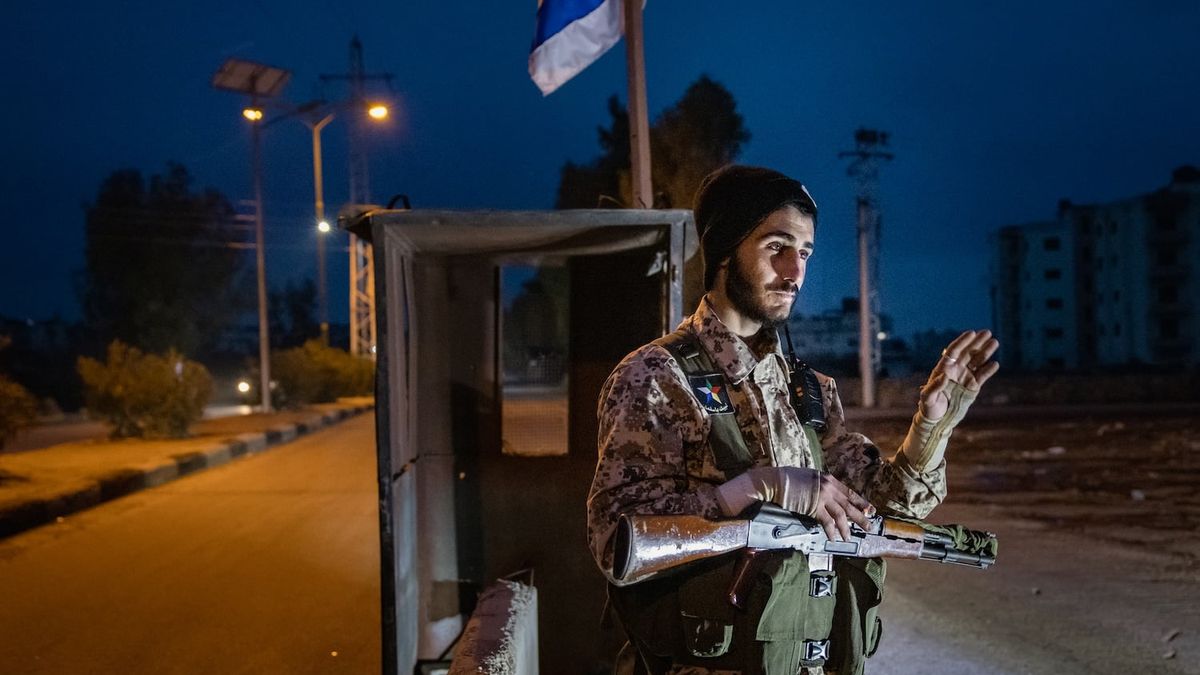
The Druze-majority province of Suwayda in Syria is facing a critical juncture, with its leaders pursuing independence from Damascus but struggling to develop a viable plan to govern and sustain the province. The community's desperation for autonomy is driven by the Syrian government's failure to provide meaningful accountability for the violence committed by its forces in July 2025, which resulted in the deaths of over 1,700 people, most of them Druze.
The violence in Suwayda has left a lasting legacy, with the community's trust in Damascus severely eroded. The government's fact-finding process, which resulted in the suspension of 23 junior-ranking officers and enlisted men, has been widely criticized as inadequate. The investigation has largely avoided the question of command responsibility, and many of those implicated in the violence remain at liberty. This lack of accountability has reinforced the Druze community's perception that they cannot entrust their security to Damascus.
Israel's military intervention in July 2025, which showed that it was prepared to act when Druze civilians came under threat, has constrained Damascus's ability to retake Suwayda by force. The Israeli military's continued presence in southern Syria has also provided a degree of security for the Druze community, which has increasingly relied on Israel for money and weapons. However, this guarantee has limits, and Israel's ability to build a functioning economy or legitimate political institutions in Suwayda is limited.
The situation in Suwayda is characterized by a grinding stalemate, with residents bearing the cost of the province's growing isolation. The community's isolation has helped consolidate a highly personalized order around Hikmat al-Hijri, the Druze spiritual leader who has emerged as the province's de facto authority. Hijri's power rests on force, and his National Guard has targeted Druze figures who favored reconciliation with Damascus.
To move forward, both sides need to take concrete steps. Damascus should work on rebuilding trust with the Druze community in Suwayda by increasing the amount of aid and providing meaningful accountability for the violence committed by its forces. The Druze community, on the other hand, needs to develop a credible plan to govern and sustain the province, which could involve exploring alternative models of autonomy or even independence.
The situation in Suwayda has significant regional implications, particularly for Israel and Jordan. Israel's continued presence in southern Syria has constrained Damascus's ability to retake Suwayda by force, but it also risks being seen as a patron of the Druze community. Jordan, which shares a border with Suwayda, has rejected opening a border crossing with the province or permitting a humanitarian corridor through its territory.
The struggle for autonomy in Suwayda is a complex and multifaceted issue, driven by a combination of historical, cultural, and geopolitical factors. The community's desperation for autonomy is driven by the Syrian government's failure to provide meaningful accountability for the violence committed by its forces. To move forward, both sides need to take concrete steps to rebuild trust and develop a credible plan to govern and sustain the province.
Editor's Note: The analysis is based on publicly available information and may not reflect the full complexity of the situation on the ground.
Source referenced: FOREIGNPOLICY
This brief was synthesized by our Editorial Engine and reviewed by The Ground Narrative team.


