TRENDING

Monday, 19 October 2026
----------------------
8 Jumada Al-Awwal 1448 AH
In October 2026, Indonesia faces its worst forest fires and toxic haze in over a decade, with Central Kalimantan at the epicenter. This recurring crisis reveals deep-seated power dynamics driven by global demand for palm oil and systemic government challenges.
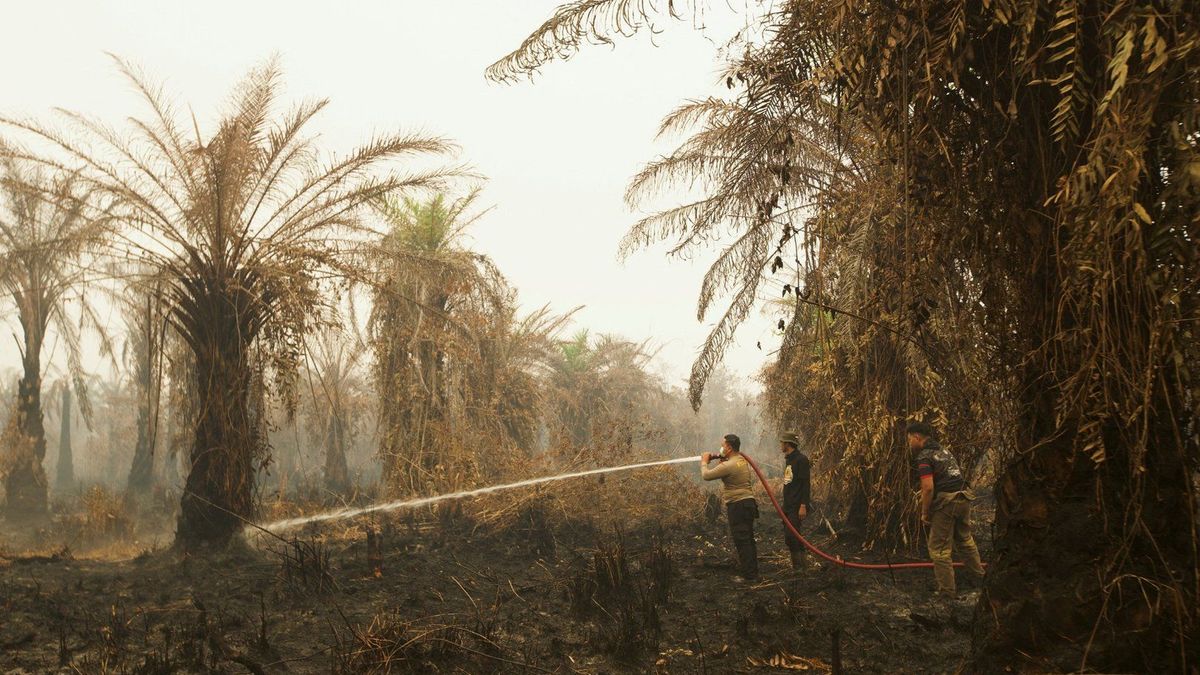
The Indonesian archipelago is once again grappling with a familiar, suffocating crisis. In October 2026, Central Kalimantan emerged as the epicenter of the nation's worst forest fires and toxic haze in over a decade. Vast swathes of carbon-rich peatlands are ablaze, releasing colossal smoke plumes that blanket local communities and threaten to spread across Southeast Asia. Critics are vocal, accusing authorities of failing to implement adequate preventative measures and effective containment strategies, allowing a predictable environmental disaster to escalate.
This annual conflagration is not a natural phenomenon but a deeply embedded symptom of complex power dynamics, driven by global demand and local economic realities. The fires are overwhelmingly set deliberately, a cheap and efficient method to clear land for agricultural expansion, primarily for palm oil and pulpwood plantations.
Indonesia possesses vast, carbon-rich peatlands, ancient swamps formed over millennia. When these lands are drained and dried for plantations, they become highly flammable. Once ignited, often by smallholders or companies, these fires can smolder underground for weeks, releasing immense quantities of greenhouse gases and creating the characteristic thick, acrid haze. Their scale makes them incredibly difficult and expensive to extinguish, often requiring significant rainfall.
The primary driver behind this relentless land conversion is the booming global demand for palm oil. This versatile vegetable oil is found in nearly half of all packaged products, from food to cosmetics and biofuels. Indonesia, the world's largest producer, sees the industry as a significant contributor to national GDP and a provider of livelihoods for millions. This economic dependency creates a powerful lobby that often resists stricter environmental regulations. Large corporations, both domestic and international, operate vast concessions, and while many claim "sustainable" practices, profit pressures often lead to shortcuts, including illegal burning.
The Indonesian government faces a perpetual balancing act. It is committed to economic development, poverty reduction, and attracting foreign investment, all bolstered by the palm oil and pulpwood sectors. Simultaneously, it faces international pressure to curb emissions and protect biodiversity, alongside domestic calls for clean air. Enforcement of existing environmental laws is often weak, hampered by corruption, limited resources, and the problem's sheer scale. Decentralization further complicates matters, as local authorities may prioritize immediate economic gains over long-term sustainability, sometimes conflicting with national directives. Political survival often hinges on maintaining economic growth, even at an environmental cost.
The toxic haze does not respect national borders. Neighboring countries like Malaysia, Singapore, and Thailand frequently suffer from transboundary pollution, leading to diplomatic tensions. The ASEAN Agreement on Transboundary Haze Pollution exists, but its effectiveness is limited by issues of sovereignty and enforcement. While international bodies and NGOs exert pressure, Indonesia's underlying economic drivers remain potent, often overriding external calls for change. The power dynamic is clear: Indonesia, as a sovereign nation, prioritizes its economic development, even if it creates regional environmental externalities.
The most immediate and devastating impact of the fires and haze is borne by ordinary citizens of Indonesia, particularly those in affected regions like Central Kalimantan. This is not an abstract environmental problem; it is a direct assault on human health, livelihoods, and quality of life.
The toxic haze is a cocktail of fine particulate matter (PM2.5), carbon monoxide, and other harmful chemicals. Inhalation leads to a sharp increase in respiratory illnesses, including asthma, bronchitis, and acute respiratory infections (ARIs). Hospitals in affected areas are routinely overwhelmed, struggling to cope with the influx of patients, especially vulnerable groups.
Children, with developing lungs and higher breathing rates, are particularly susceptible to long-term health consequences, including impaired lung function. Schools are often forced to close, disrupting education for millions and highlighting the systemic failure to protect the youngest generation. The elderly, often with pre-existing conditions, also face heightened risks of severe illness and mortality. This annual cycle of exposure creates a generation with compromised health, impacting their future productivity.
Beyond health, the fires devastate local economies. Farmers lose crops, fishermen find catches diminished, and tourism, a vital sector, grinds to a halt. Small businesses suffer as people stay indoors, and outdoor work becomes impossible. The economic ripple effects are profound, pushing vulnerable communities further into poverty. The very land cleared for plantations often belongs to indigenous communities, whose traditional livelihoods are destroyed, forcing them into precarious wage labor or displacement.
While not directly human, the destruction of unique ecosystems and biodiversity represents an immense human cost. The fires decimate critical habitats for endangered species like the orangutan, eroding the natural heritage of the planet. Loss of these forests also diminishes their capacity to absorb carbon dioxide, further accelerating global climate change and impacting human populations worldwide.
Beneath the visible smoke and official statements, a deeper narrative often goes unacknowledged or deliberately obscured by powerful actors. The full extent of corporate responsibility, the global consumer's complicity, and the systemic vulnerabilities that perpetuate this crisis are rarely brought to the forefront.
While small farmers are often blamed for starting fires, the majority of large-scale burning occurs on or adjacent to concessions managed by major palm oil and pulpwood companies. Tracing direct culpability is notoriously difficult due to complex corporate structures, shell companies, and subcontracting. Many companies operate through local subsidiaries, making it challenging for international groups or even national governments to hold parent companies accountable. Official statements often focus on "illegal" burning by unknown actors, deflecting attention from the systemic pressures and sometimes direct actions of large-scale agriculture. The narrative often shifts blame to "traditional practices" or "local communities," downplaying the industrial scale of the problem.
The haze crisis is not just an Indonesian problem; it is a global one fueled by global consumption patterns. Consumers in Europe, North America, China, and India unknowingly contribute to the demand for cheap palm oil, which underpins the economic incentive for land clearing. The ubiquity of palm oil in everyday products means boycotting it is difficult, and "sustainable palm oil" certifications are often criticized for lacking robust enforcement or allowing greenwashing. Governments in consuming nations rarely highlight their citizens' role in driving this demand, preferring to focus on aid or diplomatic pressure on Indonesia, rather than addressing their own market's impact.
Governments and industry often frame the fires as a "natural disaster" exacerbated by dry weather conditions, particularly during El Niño years. While drought certainly intensifies the fires, this framing conveniently omits the fundamental human actions that create catastrophic blazes: the draining of peatlands, extensive deforestation, and the deliberate use of fire as a land-clearing tool. This narrative minimizes human agency and deflects responsibility, portraying the crisis as an unavoidable act of nature rather than a preventable consequence of industrial agriculture.
The most significant long-term untold story is the immense climate impact of burning peatlands. Peat fires release ancient carbon stored over thousands of years, far more potent and destructive than regular forest fires. A single season of Indonesia's peat fires can release more greenhouse gases than the annual emissions of entire industrialized nations. This massive contribution to global warming is often downplayed in official reporting, which tends to focus on immediate health impacts rather than the catastrophic long-term implications for the planet. The scale of this "carbon bomb" is a silent, global threat that governments and corporations alike are reluctant to fully acknowledge, as it would necessitate a radical rethinking of land use and economic models.
The cyclical nature of Indonesia's haze crisis means that without fundamental shifts, the smoke will return. Several key areas will indicate whether meaningful change is on the horizon or if the cycle of destruction will continue.
Watch for genuine, sustained efforts by the Indonesian government to enforce environmental laws against large corporations. This includes prosecuting companies responsible for illegal burning, revoking concessions, and implementing stricter monitoring. The true test will be whether these actions extend beyond symbolic gestures to target powerful domestic and international players, rather than just smallholders. Any significant legal victories or penalties against major corporations would signal a shift in the power dynamic.
Observe the progress and funding allocated to peatland restoration initiatives. Re-wetting drained peatlands is crucial for preventing future fires and reducing carbon emissions. These projects are complex, expensive, and require long-term commitment. The scale and effectiveness of these efforts, particularly in protecting existing peat forests, will be a critical indicator of Indonesia's resolve.
Pay attention to consumer behavior and corporate commitments in major importing countries. Will there be a genuine move towards certified sustainable palm oil that is rigorously verified and free from deforestation and peatland destruction? Or will "greenwashing" continue to dominate the market? Increased consumer awareness and demand for transparency could eventually force a change in industry practices.
Monitor the effectiveness of regional bodies like ASEAN in holding member states accountable for transboundary haze. While the existing agreement has limitations, any new mechanisms for shared responsibility, monitoring, or enforcement could signal a stronger collective will to address the problem. However, the principle of non-interference often limits the power of such regional bodies.
Finally, observe how Indonesia adapts to the broader impacts of climate change, which are predicted to bring more frequent and intense dry seasons, exacerbating the fire risk. Investment in early warning systems, community-based fire prevention, and climate-resilient agricultural practices will be crucial. The annual burn is a stark reminder that climate change is not a distant threat but a present reality with immediate, devastating human costs.
The fires are primarily caused by deliberate land clearing for palm oil and pulpwood plantations, often exacerbated by the draining of carbon-rich peatlands. Dry weather conditions, particularly during El Niño years, intensify these human-caused blazes.
Ordinary citizens in affected regions, especially children and the elderly, bear the brunt of the toxic haze, suffering from severe respiratory illnesses. Local economies, including farming, fishing, and tourism, are also heavily disrupted.
Global demand for cheap palm oil, used in countless consumer products, creates immense economic incentives for land clearing in Indonesia. This demand often fuels the expansion of plantations, leading to the continued use of fire as a cost-effective method.
Source referenced: ALJAZEERA
This brief was synthesized by our Editorial Engine and reviewed by The Ground Narrative team.


