TRENDING

Monday, 5 October 2026
----------------------
24 Rabi' Al-Thani 1448 AH
A maritime collision near the Strait of Hormuz saw two foreign vessels choose a Chinese court for resolution, signaling a quiet but significant shift in the global legal landscape for trade disputes. This decision highlights China's expanding influence and the evolving power dynamics governing international commerce.
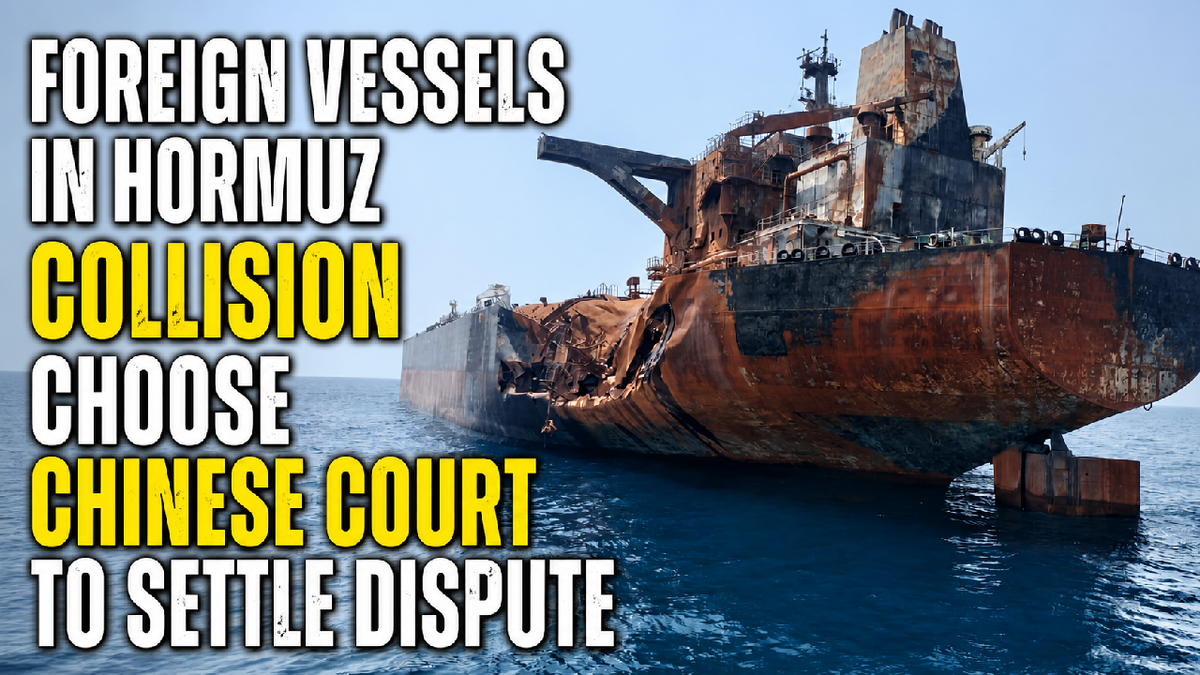
In 2025, two foreign-flagged vessels collided near the critical Strait of Hormuz, leading to legal claims exceeding $23 million. Despite the incident occurring far from Chinese waters and involving companies from multiple nations, both parties ultimately agreed to resolve their dispute through the Guangzhou Maritime Court in China. This decision marked a notable departure from traditional venues for international maritime arbitration.
This seemingly isolated legal case is a clear signal of China's expanding influence beyond its economic might, projecting its legal and institutional power onto the global stage. For decades, major maritime disputes typically found their resolution in established Western legal centers like London, New York, or Singapore, which offered perceived neutrality and robust legal frameworks. The choice of a Chinese court, however, reflects a calculated shift. For parties involved in global trade, especially those with significant commercial ties to China or operating within its vast Belt and Road Initiative (BRI) network, Chinese courts may offer perceived advantages in terms of efficiency, cost, or even a more favorable understanding of specific commercial practices. By successfully adjudicating such a high-value, cross-border case, China is not just handling a dispute; it is actively building its credentials as a viable, and increasingly preferred, alternative in the global legal architecture. This move subtly challenges the long-standing Western hegemony in international commercial law, positioning China as a growing arbiter of global trade rules.
While the immediate parties in this case were likely large corporations, the broader implications of shifting legal jurisdictions ripple through the entire global trade ecosystem, ultimately affecting ordinary citizens and smaller enterprises. The predictability and fairness of international legal frameworks are crucial for global supply chains, impacting everything from insurance costs for shipping companies to the prices of goods on consumer shelves. If the choice of court becomes less about pure legal precedent and more about economic leverage or political alignment, smaller shipping firms, independent traders, or nations without significant legal resources could find themselves at a disadvantage. They might be compelled to accept terms or jurisdictions dictated by larger, more powerful entities, potentially leading to less equitable outcomes and increased operational risks in a system designed to be impartial. The perception of judicial independence and transparency in these emerging legal centers becomes paramount for maintaining trust across the diverse participants in global commerce.
Official reports, particularly from state-affiliated media, naturally highlight the "innovative judicial practices" and the "agreement" of both parties to use a Chinese court. What often remains unstated, however, are the underlying commercial and strategic calculations that lead to such agreements. Was the choice purely based on the merits of the Chinese legal system, or did it involve an implicit understanding of China's growing economic leverage? For companies deeply invested in the Chinese market or reliant on Chinese financing and infrastructure projects, opting for a Chinese court might be seen as a pragmatic business decision, fostering goodwill or ensuring smoother future operations. This case is not just about resolving a collision; it's a strategic step in China's broader effort to create a parallel legal and arbitration system that supports its global economic ambitions, particularly along the maritime silk road. The quiet establishment of such precedents is a powerful, yet often overlooked, mechanism for reshaping international norms and influence.
The resolution of this case in Guangzhou sets an important precedent. Observers should watch for an increase in similar international maritime or commercial disputes being directed towards Chinese courts or arbitration centers. The key will be to assess the transparency, efficiency, and perceived impartiality of these rulings, and how they are recognized and enforced by other international legal systems. Another critical area to monitor is the response from traditional maritime legal hubs in the West. Will they adapt their offerings to compete, or will they push back against what they might see as a challenge to established international legal order? Ultimately, this single collision case in the Strait of Hormuz offers a glimpse into a future where the global legal map is being redrawn, with profound implications for how international commerce is governed and who ultimately holds the power to make the rules.
Editor's Note: The analysis interprets the broader geopolitical and legal significance of the event, which is not explicitly stated in the source, particularly regarding the 'why' behind the choice of court and its implications for global power dynamics.
Source referenced: CGTN
This brief was synthesized by our Editorial Engine and reviewed by The Ground Narrative team.


