TRENDING

Tuesday, 6 October 2026
----------------------
25 Rabi' Al-Thani 1448 AH
South Africa is demanding $18 million from several African nations to cover the cost of repatriating tens of thousands of their citizens, highlighting deep regional economic disparities and domestic political pressures. This move follows escalating anti-immigrant sentiment and violence within South Africa, forcing a reckoning on the continent's ideals of free movement and shared prosperity.
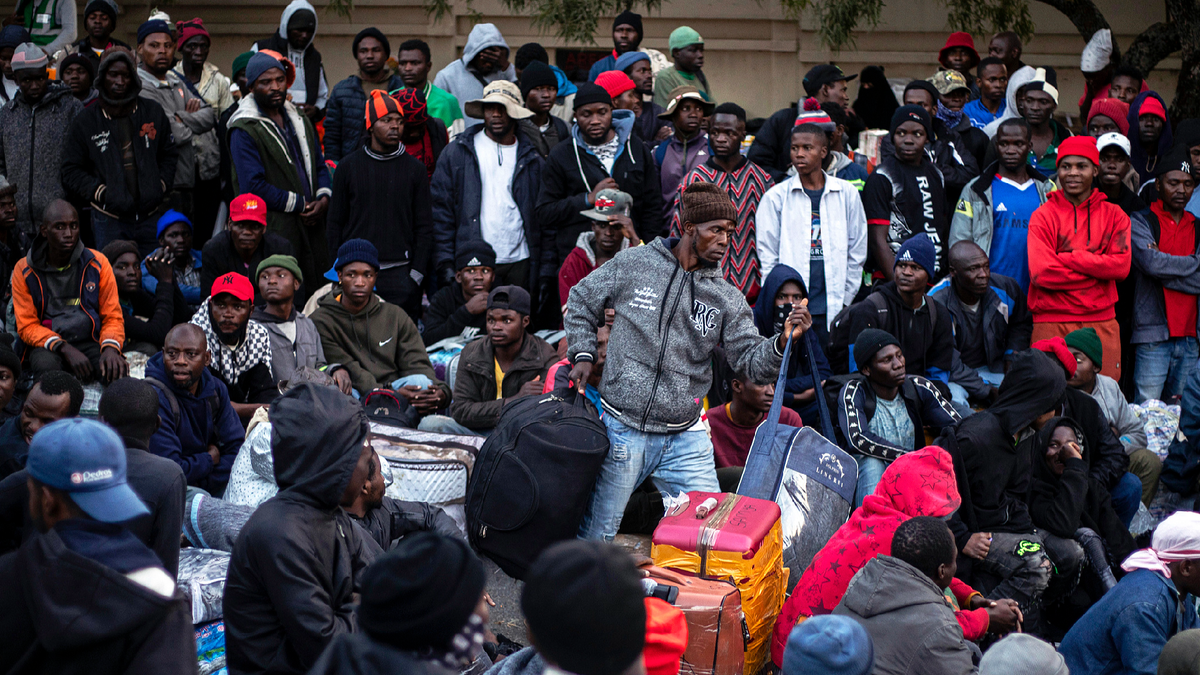
South Africa's Home Affairs Department has formally requested several African governments, including Malawi, Ethiopia, and Nigeria, to reimburse nearly $18 million. This sum covers the expenses incurred by South Africa in accommodating and transporting tens of thousands of their citizens who have been voluntarily repatriated or forcibly deported. The demand comes amidst a surge in anti-immigrant sentiment within South Africa, marked by protests and attacks on foreign nationals, which have strained diplomatic relations across the continent.
This demand from Pretoria is a stark illustration of the power dynamics at play within Southern Africa and the broader continent. As the most industrialized economy in the region, South Africa has long been a magnet for migrants seeking economic opportunities, a legacy of both its historical development and the uneven distribution of wealth across Africa. However, its own persistent struggles with high unemployment, poverty, and inequality have fueled a domestic political narrative that scapegoats foreign nationals for societal ills. By seeking reimbursement, South Africa is attempting to externalize the financial burden of managing migration, effectively asking other nations to pay for the consequences of a regional economic imbalance from which South Africa itself has historically benefited. The rejection of Ghana's proposal to discuss the issue at the African Union signals a continental reluctance to formally address a problem that exposes deep internal divisions and the fragility of pan-African ideals.
The human cost of these policies is borne primarily by the migrants themselves and their families. Tens of thousands of individuals, many of whom have built lives and established livelihoods in South Africa, are now uprooted, often returning to countries that may lack the economic capacity to absorb them. The discrepancy in reported repatriation figures—South Africa citing around 82,000 and home governments closer to 178,000—underscores the chaotic and often uncoordinated nature of these mass movements, leaving many individuals in a state of precarious uncertainty. For those who relied on remittances from family members working in South Africa, the economic lifeline is severed, impacting entire communities. Beyond the immediate displacement, the rhetoric and violence surrounding anti-immigrant sentiment create an environment of fear and instability, eroding trust and fostering division among ordinary people, regardless of nationality. The promise of regional integration and shared prosperity feels distant for those caught between a hostile host country and a struggling homeland.
What governments and official statements often downplay or omit are the fundamental structural issues driving this migration. South Africa's demand for payment, while financially prudent from its perspective, sidesteps the deeper economic disparities, political instabilities, and even climate-related challenges that compel people from Malawi, Ethiopia, Nigeria, Lesotho, Zimbabwe, and Mozambique to seek opportunities elsewhere. These are not merely individual choices but responses to systemic pressures. Furthermore, South Africa's own government has struggled to deliver on promises of economic growth and job creation for its citizens, leading to internal frustrations that are then redirected towards foreign nationals. The $18 million bill is a symptom, not a solution, to the complex interplay of regional inequality and domestic governance failures. The silence from the African Union on the broader issue of xenophobia and migrant rights within member states also represents a significant omission, allowing nationalistic sentiments to overshadow continental solidarity.
The immediate future will reveal the responses of the nations targeted for reimbursement. Will they comply, risking domestic political backlash and acknowledging a financial burden they may struggle to meet? Or will they resist, potentially escalating diplomatic tensions and further straining regional relations? Watch for how these bilateral negotiations unfold and whether they lead to broader discussions within regional bodies like the Southern African Development Community (SADC) or the African Union. The intensifying law enforcement operations in South Africa targeting undocumented immigrants suggest that the pressure on foreign nationals will continue, potentially leading to further mass repatriations. The true test will be whether South Africa and its neighbors can move beyond transactional demands to address the root causes of migration and foster genuine, equitable regional development that benefits all citizens, rather than simply shifting the costs of human movement.
Source referenced: CGTN
This brief was synthesized by our Editorial Engine and reviewed by The Ground Narrative team.