TRENDING

Thursday, 12 November 2026
----------------------
2 Jumada Al-Thani 1448 AH
A student-led movement, the Student List, secured a stunning victory in Serbia's parliamentary elections, ending 14 years of Aleksandar Vucic's rule. This unexpected power shift now faces the immense challenge of governing a state deeply entrenched in corruption and patronage.
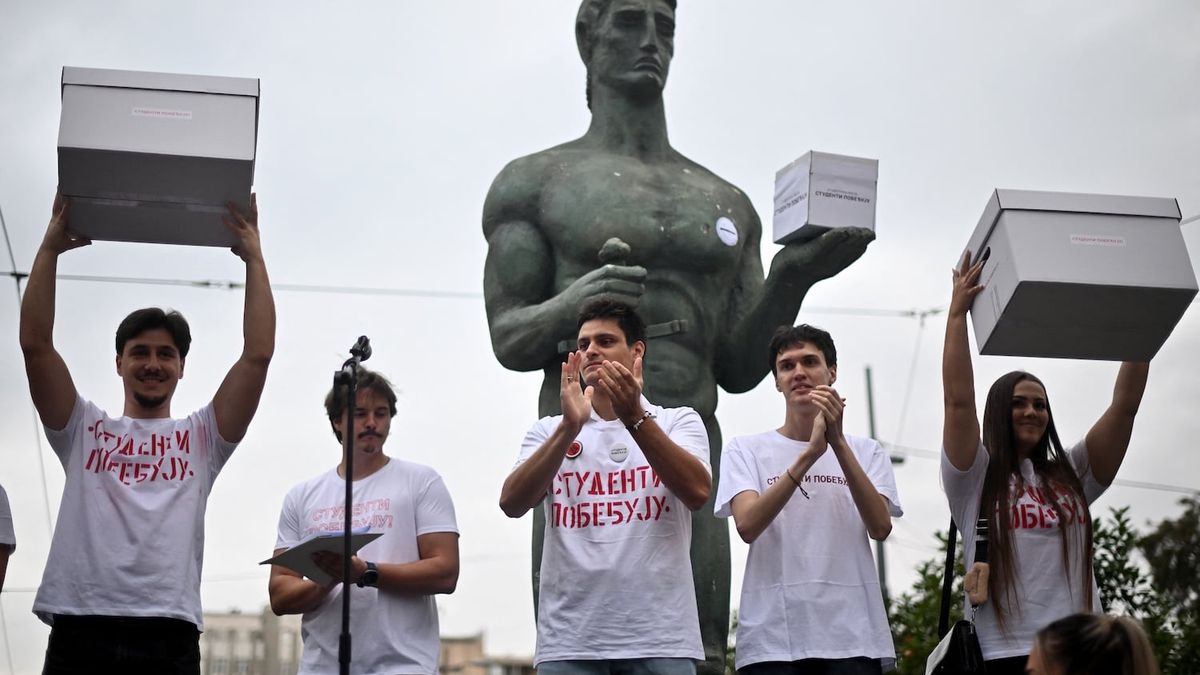
In a remarkable electoral upset on October 25, the Student List, a youth-led movement born from widespread protests, secured a decisive victory in Serbia's parliamentary elections. The coalition garnered approximately 53 percent of the vote and 140 parliamentary seats, effectively ending 14 years of uninterrupted rule by Aleksandar Vucic's Serbian Progressive Party (SNS), which was left with 103 seats. This outcome, achieved with a record voter turnout of nearly 70 percent, mandates the formation of a new government within 90 days of the official results, marking an extraordinary moment in Serbian political history.
The Student List's victory was not merely a change of government but a profound challenge to the very mechanics of power that had defined Serbia for over a decade. Aleksandar Vucic's SNS had built a formidable political machine, characterized by a pervasive patronage system that extended deep into the fabric of society. With reportedly over 700,000 members, party loyalty was often a prerequisite for securing public-sector employment, making support for the ruling party a matter of economic survival for many, particularly in smaller towns where the state was a major employer. This system created a vast network of individuals and businesses with a material stake in preserving the status quo, from public-sector employees to contractors benefiting from state contracts.
Vucic leveraged this entrenched system, campaigning heavily on a narrative of economic stability, infrastructure investment, and rising wages and pensions. His government claimed credit for genuine economic development, attempting to frame the Student List as an inexperienced threat attempting a
The Student List is a youth-led political movement that emerged from widespread protests in Serbia. It successfully contested the October 2026 parliamentary elections, securing a majority and ending 14 years of rule by Aleksandar Vucic's Serbian Progressive Party (SNS).
The Student List won by capitalizing on widespread public discontent over corruption, political patronage, and the rising cost of living under Vucic's rule. Its decentralized structure and rejection of traditional politics appealed to disillusioned voters, turning the election into a referendum against the incumbent government.
The new government faces significant challenges, including dismantling a deeply entrenched system of corruption and patronage, navigating complex geopolitical interests, and translating its moral crusade into coherent governance. Its lack of traditional leadership and internal ideological diversity could also pose challenges in implementing reforms.
Editor's Note: The analysis is based on the provided raw intelligence, expanding on the power mechanics, human costs, and untold stories within The Ground Narrative's editorial framework.
Source referenced: FOREIGNPOLICY
This brief was synthesized by our Editorial Engine and reviewed by The Ground Narrative team.


