TRENDING

Monday, 5 October 2026
----------------------
24 Rabi' Al-Thani 1448 AH
Senegal's President Faye refuses to sign constitutional reform bill, opting for a referendum instead, amidst a growing power struggle between him and former ally Ousmane Sonko.
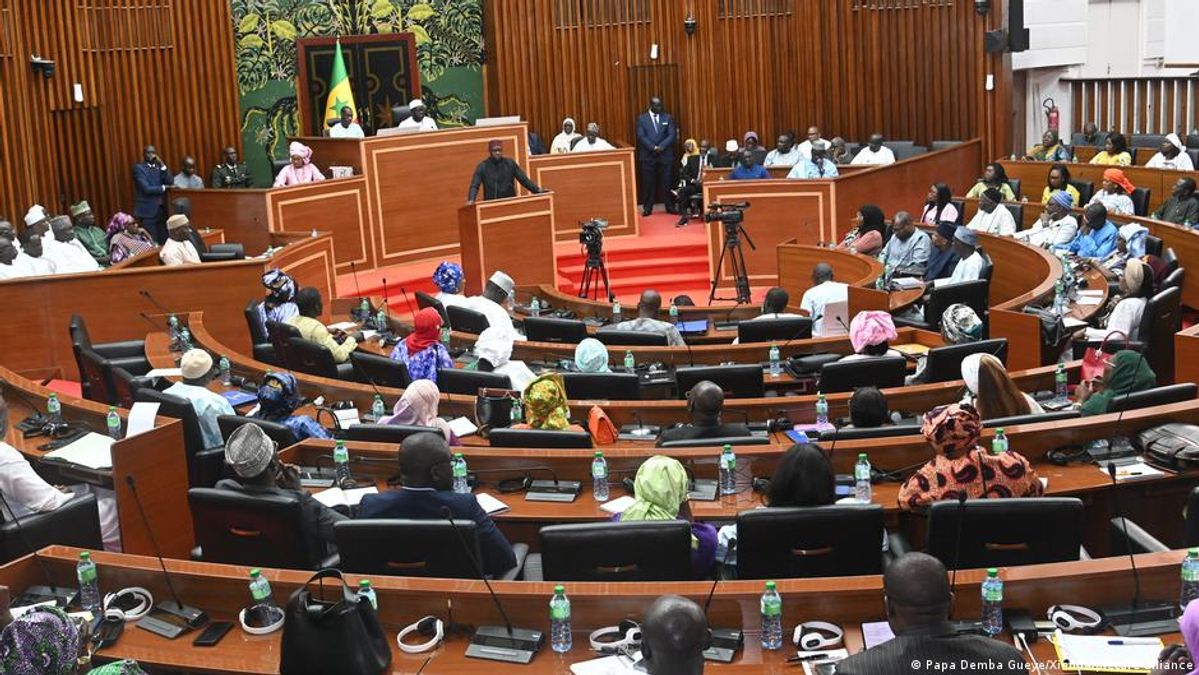
Senegal's President Bassirou Diomaye Faye has refused to sign a constitutional reform bill, opting for a referendum instead. This decision has sparked a heated debate, with both supporters and opponents of the reform taking to the streets to express their views.
The constitutional reform bill, initiated by former Prime Minister and current Parliamentary Leader Ousmane Sonko, aims to curtail the powers of the incumbent President Faye. The proposed changes include replacing the Constitutional Council with a Constitutional Court, comprised of more members, and strengthening parliament's oversight powers.
However, President Faye has refused to sign the bill, citing the need for a referendum to decide on the proposed amendments. This decision has been welcomed by demonstrators, who believe that any reform should be based on consensus.
Senegal's power struggle is not new. The country has a history of political instability, with frequent changes in government and a lack of clear leadership. The current situation is a result of the deteriorating relationship between President Faye and his former ally, Ousmane Sonko.
The two leaders had promised their voters a long list of comprehensive reforms, aiming to combat corruption in the country while boosting the economy and offering better prospects for young people. However, their relationship has deteriorated, with Sonko openly criticizing Faye for his handling of Senegal's debt problems.
The power struggle in Senegal has significant regional implications. The country is a key player in the West African region, and its stability is crucial for the entire region. The current situation has the potential to destabilize the region, with neighboring countries taking sides in the conflict.
The future consequences of Senegal's power struggle are uncertain. If the referendum is held, it could lead to a further polarization of the country, with both sides dug in and unwilling to compromise. This could lead to a prolonged period of instability, with the country's economy and security suffering as a result.
On the other hand, if the referendum is successful, it could lead to a more stable and democratic government, with the power struggle between President Faye and Ousmane Sonko resolved. However, this is a long shot, and the current situation is more likely to lead to further instability.
Senegal's constitutional reform is a complex issue, with both supporters and opponents taking to the streets to express their views. The power struggle between President Faye and Ousmane Sonko is a result of the deteriorating relationship between the two leaders, and the current situation has significant regional implications.
The future consequences of Senegal's power struggle are uncertain, but one thing is clear: the country's stability is crucial for the entire region, and the current situation has the potential to destabilize the region. It is essential for the international community to closely monitor the situation and provide support to the country to ensure its stability and democracy.
Editor's Note: The analysis is based on available information and may be subject to change as new developments emerge.
Source referenced: DW
This brief was synthesized by our Editorial Engine and reviewed by The Ground Narrative team.


