TRENDING

Friday, 16 October 2026
----------------------
5 Jumada Al-Awwal 1448 AH
The small island nation of Sao Tome and Principe is holding presidential elections, drawing international attention due to a recent military cooperation agreement with Russia and its critical strategic location in the Gulf of Guinea. The archipelago's long-standing foreign policy of balancing global partnerships is under scrutiny as major powers vie for influence in the region.
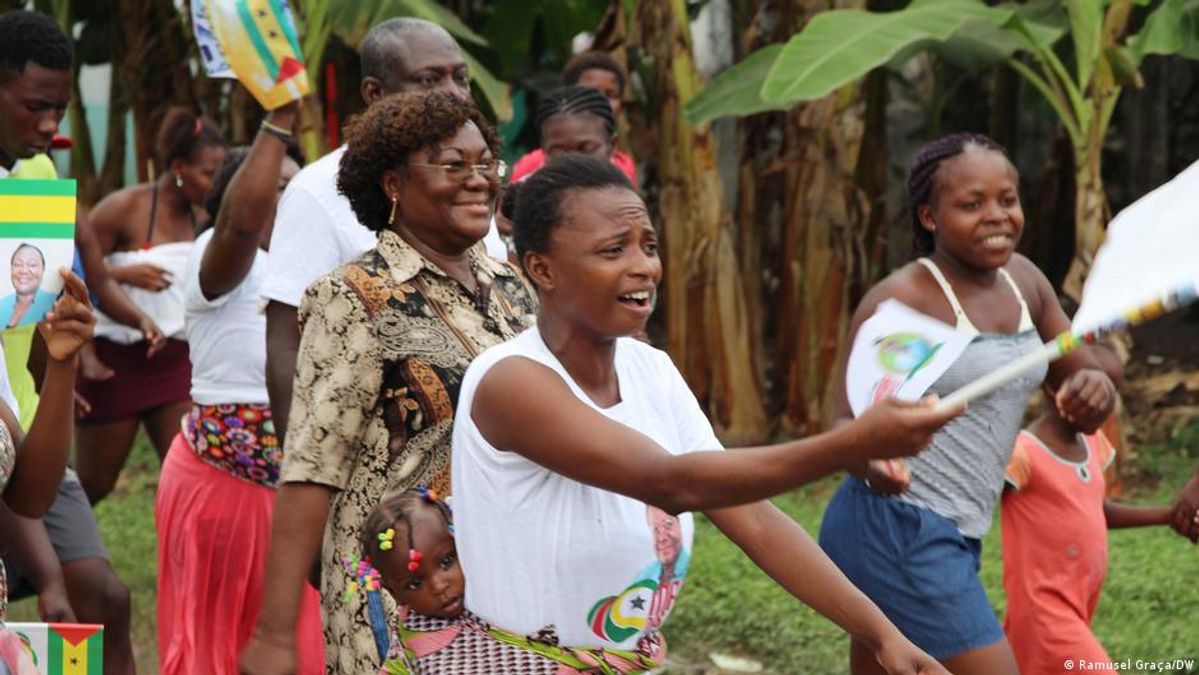
Sao Tome and Principe, an archipelago nation of just 245,000 people, is currently navigating a complex geopolitical landscape as it prepares for presidential elections on July 19, followed by parliamentary elections in September. While these are significant domestic events, they have garnered considerable international attention, primarily due to a military cooperation agreement signed with Russia in April 2024 and the country's enduring strategic importance in the Gulf of Guinea.
Located on the equator off the coast of Gabon and Equatorial Guinea, Sao Tome and Principe's geographical position grants it outsized strategic value. The Gulf of Guinea is a vital maritime corridor, crisscrossed by major international shipping lanes and home to substantial oil and gas reserves. This region is also a critical security hotspot, grappling with issues of piracy and organized crime, making the protection of maritime trade routes a paramount concern for global powers. Former Foreign Minister Elsa Pinto underscored this historical and contemporary significance, noting that the archipelago's location between Africa and South America has made it a strategic asset for centuries, from its colonial past as a hub for sugar and cocoa production to its role in the trans-Atlantic slave trade. This geostrategic importance, she asserts, has never diminished.
The military cooperation agreement between Sao Tome and Principe and Russia, signed earlier this year, immediately drew international scrutiny, particularly from Europe and the United States, which have historically been key security and development partners for the island nation. According to Russian officials, the open-ended accord encompasses military training, technical assistance, cooperation on arms and military equipment, intelligence sharing, and reciprocal visits by naval vessels and military aircraft. A separate agreement was also concluded between Russia's Interior Ministry and Sao Tome and Principe's national police force.
The timing of this agreement, amidst Russia's ongoing war in Ukraine, amplified its perceived geopolitical implications. However, then-Prime Minister Patrice Trovoada defended the deal, emphasizing Sao Tome and Principe's status as an "independent and sovereign country" with the right to forge its own international partnerships. Political analyst Arzemiro dos Prazeres, a former parliament president, suggested that the agreement's practical impact has been limited, describing it as a "perfectly ordinary military agreement" akin to those Sao Tome and Principe holds with the European Union, Brazil, Angola, or Portugal. He argued that the international controversy largely stemmed from the agreement's timing rather than its substance, noting that its implementation has yet to materialize significantly.
Unlike Russia's security-focused engagements in countries like Mali, Burkina Faso, Niger, or the Central African Republic, its interest in Sao Tome and Principe appears to be primarily rooted in the archipelago's strategic location in the Atlantic. This suggests a broader Russian ambition to expand its presence and influence in critical maritime regions, potentially offering Moscow a foothold for naval access and intelligence gathering in a strategically vital area.
Sao Tome and Principe's foreign policy has historically been characterized by a pragmatic approach to international relations, seeking to maintain good ties with a diverse array of partners. Following its independence in 1975, the nation initially aligned with the Soviet Union under a Marxist system. However, with the advent of multiparty democracy in the early 1990s, it gradually strengthened ties with Western partners while continuing to cultivate relations with a broad spectrum of countries, including China. Elsa Pinto reiterated this commitment, stating that Sao Tome and Principe aims to maintain strong relations with the United States, Europe, Russia, and China alike, adhering to principles of non-interference and the values of the African Union and the United Nations. The primary objective of these international partnerships, she explained, is to support the country's development.
Against this backdrop, the upcoming presidential election is not expected to trigger a significant shift in foreign policy. Incumbent President Carlos Vila Nova, who was elected in 2021, is widely considered the front-runner, campaigning on a platform of political stability and national unity. Analysts anticipate his victory, likely in the first round, which would signal continuity in the nation's diplomatic strategy of balancing its international engagements. Under Sao Tome and Principe's semi-presidential system, the president wields significant constitutional powers, including appointing the prime minister, vetoing legislation, dissolving parliament, and serving as commander-in-chief of the armed forces, making the outcome of this election particularly relevant to the country's external posture. The European Union is deploying an election observation mission to ensure a transparent and peaceful electoral process, underscoring the international community's interest in the stability of this strategically important nation.
The growing international interest in Sao Tome and Principe highlights a broader trend where even the world's smallest states are becoming arenas for competition between major powers. For Sao Tome and Principe, the priority remains securing investment, development assistance, and security cooperation from as many partners as possible to foster national growth and stability. For Russia, the archipelago represents an opportunity to expand its presence in the Atlantic. For Europe and the United States, the country is viewed as a relatively stable democratic partner in a region critical for maritime security and global trade.
Whether the military agreement with Russia signifies a genuine reorientation of foreign policy or merely reflects Sao Tome and Principe's pragmatic efforts to diversify its international partnerships remains a subject of ongoing debate. What is clear, however, is the nation's challenge: to preserve its carefully balanced foreign policy and, with it, its crucial room for diplomatic maneuver amidst intensifying great power rivalry. The upcoming elections, therefore, transcend mere domestic politics, embodying the delicate equilibrium a small, strategically vital nation must maintain in an increasingly multipolar world.
Source referenced: DW
This brief was synthesized by our Editorial Engine and reviewed by The Ground Narrative team.