TRENDING

Monday, 26 October 2026
----------------------
15 Jumada Al-Awwal 1448 AH
Russia's new law targets 'propaganda of narcotic drugs' in all forms of media, effectively rewriting the country's cultural history. The law's broad scope and vague definitions have sparked widespread self-censorship, threatening the country's artistic expression and cultural heritage.
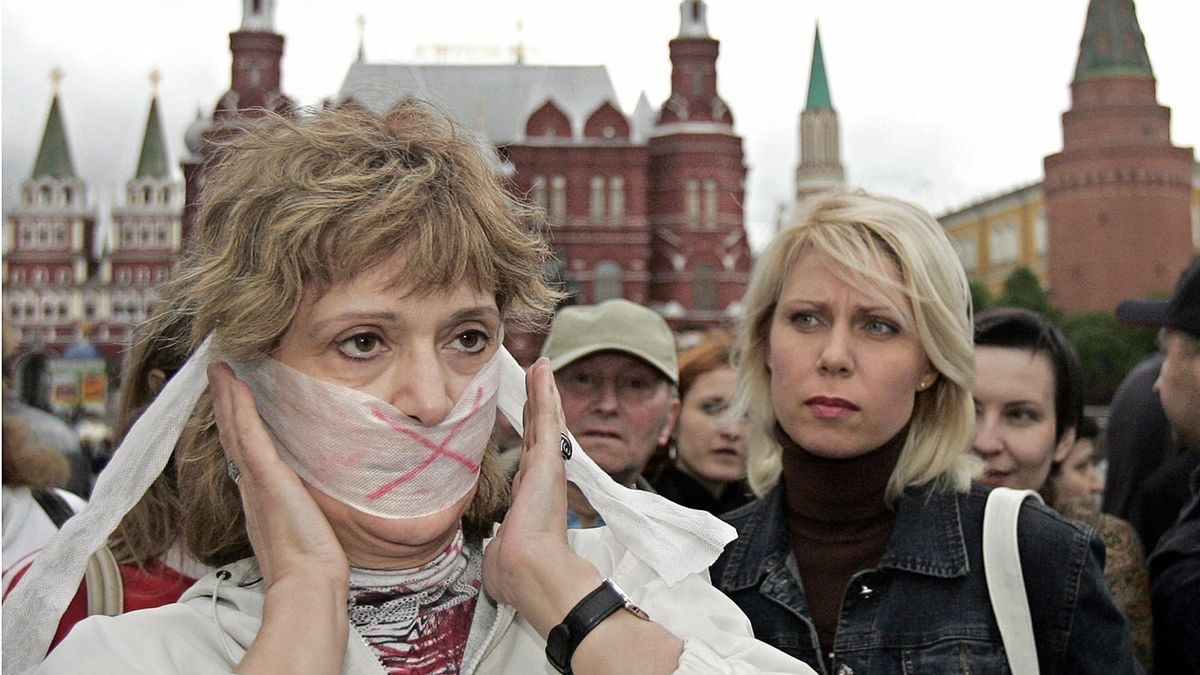
Russia's new law, which came into effect on March 1, 2026, targets 'propaganda of narcotic drugs' in all forms of media. The law, which amends existing regulation on narcotics, has sparked widespread concern among artists, writers, and publishers. The law's broad scope and vague definitions have created a culture of self-censorship, threatening the country's artistic expression and cultural heritage.
The law's most significant aspect is its retroactive application to all content produced since August 1, 1990. This date marks the day the Soviet Union officially abolished censorship and disbanded Glavlit, the feared communist agency that controlled cultural expression. By choosing this date, the Putin regime makes an unmistakable statement: the Soviet era and post-Soviet Russia are now seamlessly joined in the crushing of cultural expression.
The law's impact on artists and writers is significant. The Russian Book Union's compliance list already flags offensive works by prominent authors, including Stephen King, Sergei Lukyanenko, and Haruki Murakami. Biographies of Soviet-era artists, such as Mikhail Bulgakov and Vladimir Vysotsky, now require warning labels. Online bookstores have scoured the 19th century for offensive content, placing narcotic-content warnings on the writings of Alexander Pushkin and Nikolai Gogol.
The law's vague definitions and broad scope have created a culture of self-censorship. Artists and writers are now forced to edit their work to comply with the law, even if it means altering their original intent. The head of Eksmo, Russia's largest publishing group, said the law technically affects more than 3 million titles. Books marked under the new rules are automatically classified as 18+, wrapped in sealed packaging, and taxed at 22 percent VAT rather than the standard 10 percent rate for literary works.
The monitoring mechanism to cleanse online streaming catalogs of heresy is artificial intelligence. However, the AI compliance system has not gone well. Eksmo's internal AI compliance system flagged writer Denis Dragunskiy as a drug propaganda offender – because its algorithm identified the first syllable of his surname as sounding like the English word 'drug.' This highlights the law's reliance on flawed technology and its potential to misinterpret and mislabel content.
The consequences of the law are far-reaching. The law has created a culture of fear and self-censorship, threatening the country's artistic expression and cultural heritage. The law's impact on Russian popular culture is significant, with many classic songs and films now being edited or removed from streaming platforms. The law's reliance on artificial intelligence has also raised concerns about the accuracy and fairness of the censorship process.
Russia's new law marks a significant shift in the country's cultural landscape. The law's broad scope and vague definitions have created a culture of self-censorship, threatening the country's artistic expression and cultural heritage. The law's reliance on artificial intelligence has also raised concerns about the accuracy and fairness of the censorship process. As the law continues to shape Russia's cultural landscape, it is essential to monitor its impact and ensure that artistic expression and cultural heritage are protected.
Editor's Note: The law's impact on Russian popular culture is significant, with many classic songs and films now being edited or removed from streaming platforms.
Source referenced: FOREIGNPOLICY
This brief was synthesized by our Editorial Engine and reviewed by The Ground Narrative team.