TRENDING

Monday, 26 October 2026
----------------------
15 Jumada Al-Awwal 1448 AH
China asserts its crucial role in safeguarding maritime navigation within the contested South China Sea, utilizing a comprehensive, round-the-clock network to mitigate risks. This narrative emerges against a backdrop of complex geopolitical rivalries and competing territorial claims in one of the world's most vital waterways.
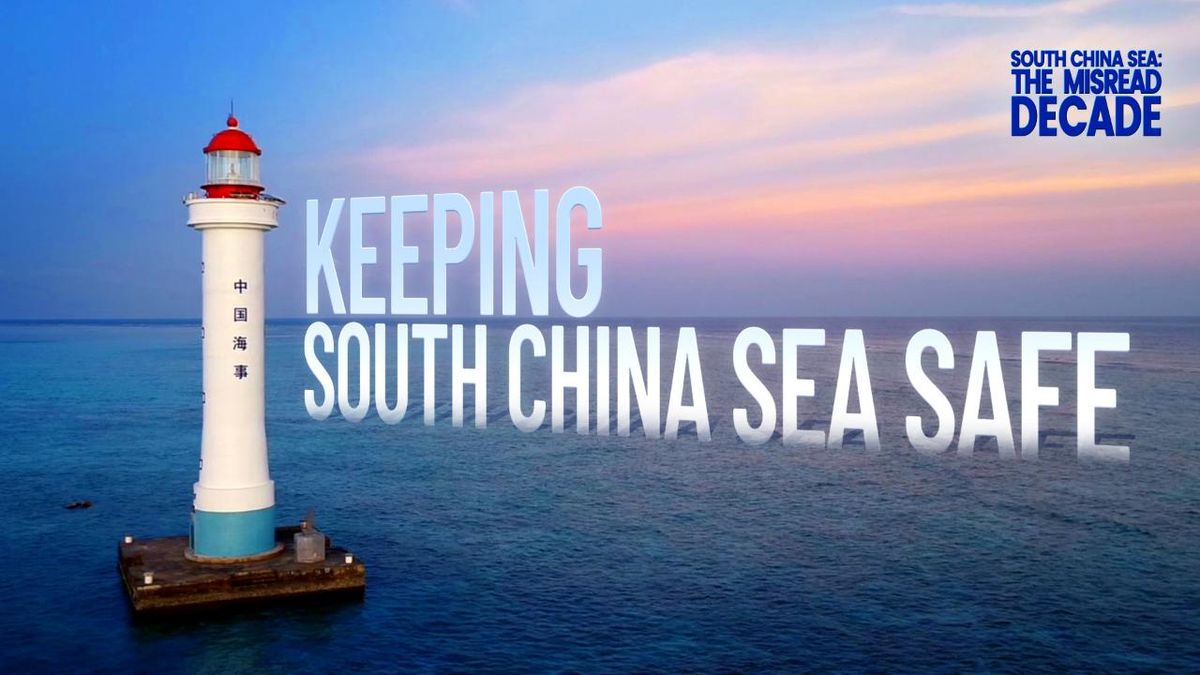
As of late July 2026, China has reiterated its commitment to ensuring maritime safety within the South China Sea, a region characterized by significant geopolitical tension and strategic importance. According to reports, Beijing operates a nationwide network designed to reduce risks and safeguard navigation in these busy international waters. This initiative, highlighted by Chinese state media, positions China as a key contributor to the stability and security of maritime traffic, despite ongoing disputes over sovereignty and territorial claims.
The South China Sea is one of the world's most critical maritime arteries, through which an estimated one-third of global shipping passes annually, carrying trillions of dollars in trade. Its strategic significance is further amplified by its rich fishing grounds and potential hydrocarbon reserves. Consequently, the safety and unimpeded flow of navigation are paramount not only for regional economies but for global commerce.
China's emphasis on its role in maritime safety is set against a complex geopolitical backdrop. The South China Sea is subject to overlapping territorial and maritime claims by several nations, including China, Vietnam, the Philippines, Malaysia, Brunei, and Taiwan. Beijing's expansive claims, encapsulated by its 'nine-dash line,' are largely contested by its neighbors and have been rejected by an international arbitral tribunal ruling in 2016, which China does not recognize. These disputes have led to frequent standoffs, particularly involving coast guard vessels and fishing fleets, raising concerns about regional stability and the potential for escalation.
In recent years, China has significantly expanded its presence in the South China Sea, including the construction and militarization of artificial islands. These actions have been viewed by some regional states and international powers, notably the United States, as an assertion of de facto control and a challenge to the principle of freedom of navigation. The U.S. and its allies regularly conduct Freedom of Navigation Operations (FONOPs) in the area to challenge what they perceive as excessive maritime claims and to uphold international law.
China's public emphasis on its contributions to maritime safety serves several strategic objectives. Firstly, it aims to project an image of a responsible great power and a provider of public goods in a crucial international waterway. This narrative can help counter criticisms regarding its assertive actions and the militarization of features in the South China Sea. By highlighting its operational networks that work 'around the clock' to reduce risks, China seeks to demonstrate its commitment to the common good of maritime navigation.
Secondly, this messaging reinforces China's claims of sovereignty and jurisdiction over the disputed waters. By actively managing and safeguarding maritime activities, Beijing implicitly asserts its administrative authority and presence. It suggests that China is not merely a claimant but a steward of the sea lanes, capable of ensuring order and safety within what it considers its maritime domain.
Furthermore, ensuring safe passage is vital for China's own economic interests, given its heavy reliance on maritime trade for energy imports and export routes. A stable and secure South China Sea is indispensable for the continued growth of the Chinese economy and its global supply chains. Therefore, investing in and promoting maritime safety infrastructure aligns with its national economic security objectives.
The interplay between China's stated commitment to maritime safety and its broader geopolitical ambitions creates a nuanced situation. While enhanced safety measures are generally beneficial for all mariners, the context in which these are provided is critical. Other claimant states and international observers remain wary that such initiatives could be used to further legitimize China's territorial claims or to exert greater control over the region, potentially at the expense of international law and the rights of other nations.
The challenge for the international community lies in distinguishing between genuine contributions to maritime safety and actions that may subtly advance sovereign claims. Maintaining open lines of communication, adhering to international conventions like the United Nations Convention on the Law of the Sea (UNCLOS), and promoting multilateral cooperation in maritime safety are crucial for de-escalating tensions and ensuring that the South China Sea remains a safe and open waterway for all nations, free from coercion and unilateral assertions of control.
Ultimately, China's narrative on maritime safety in the South China Sea underscores the complex balance between national interests, regional stability, and adherence to international norms in one of the world's most strategically vital and contested maritime zones.
Source referenced: CGTN
This brief was synthesized by our Editorial Engine and reviewed by The Ground Narrative team.