TRENDING

Sunday, 25 October 2026
----------------------
14 Jumada Al-Awwal 1448 AH
Russia is increasingly resorting to politically sensitive financial measures, including proposed pension raids and higher household taxes, as its 'easy money' sources for the Ukraine war dry up. This shift highlights the Kremlin's growing fiscal strain and the challenge of balancing military spending with domestic social stability.
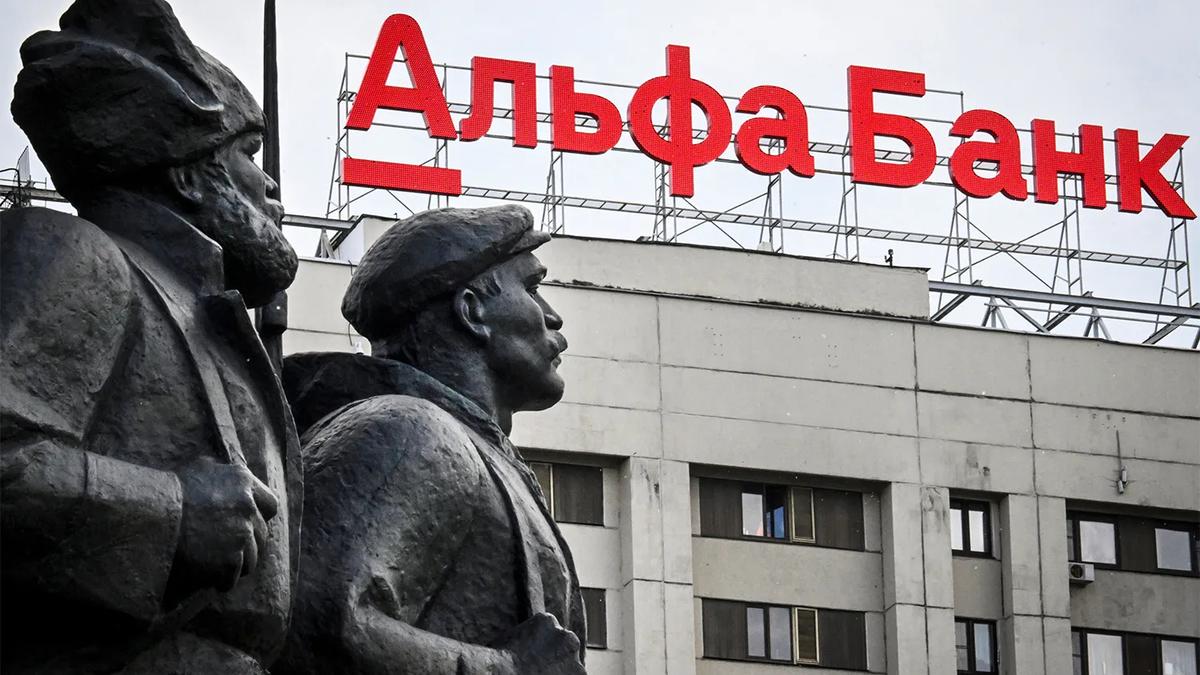
The Russian Federation is facing escalating financial challenges in sustaining its protracted military campaign in Ukraine, prompting the Kremlin to pivot from readily available funds to increasingly politically sensitive sources of revenue. This strategic shift, evident in proposed pension raids and increased household taxation, underscores the growing fiscal pressure on Moscow and its delicate balancing act between financing the war effort and maintaining domestic social stability. The initial economic benefits and easily accessible financial reserves that characterized the early years of the conflict are now largely exhausted, forcing the government to explore more contentious avenues for funding.
In the initial phases of the conflict, Russia's economy demonstrated a degree of resilience, fueled by increased military spending, which generated jobs, boosted wages, and provided substantial signing bonuses for new soldiers, particularly in less affluent regions. This redistribution mechanism, however, appears to be faltering. The Kremlin's first major financial maneuver involved the aggressive confiscation of private assets. Between early 2022 and late 2025, an estimated $60 billion in assets were seized from private entities and individuals, with a notable $7.6 billion transfer from Rusagro founder Vadim Moshkovich to state ownership in May. This trend of nationalization, alongside "donations" from wealthy individuals like Suleiman Kerimov, who offered $1.4 billion to the state, and a concurrent outflow of wealth abroad, signaled the initial depletion of private capital as an easy source.
Beyond direct seizures, the state intensified its extraction from the corporate sector. The profit tax rate was increased to 25 percent in 2025, projected to generate an additional $22 billion annually. Plans for a windfall tax on corporate profits further illustrate this pressure. However, these measures have faced limitations, with data indicating that Russian firms' expenditures exceeded revenues by approximately $150 billion in 2025, suggesting that the well of corporate profits is not as deep as initially hoped.
With private and corporate capital proving insufficient, Moscow strategically shifted the financial burden to state-owned enterprises and regional budgets, often through opaque mechanisms. State-owned behemoths, particularly in the energy sector, were heavily tapped. Gazprom, historically a significant contributor to the federal budget, was compelled to inject the equivalent of $72 billion into state finances in 2022, effectively surrendering its entire 2021 profit. Subsequent monthly contributions in 2023 and 2024 pushed Gazprom to its first annual loss in nearly a quarter-century in 2023. This aggressive extraction has severely diminished the company's financial capacity, with its market capitalization shrinking dramatically from its 2008 peak.
Concurrently, Russia's 89 regions have been increasingly tasked with shouldering war-related expenses. Federal transfers to regions have been frozen at 2021 nominal levels, translating into a real-terms cut of approximately one-third since the war began. Despite this, regions are now responsible for financing death compensation payments, contributing to the reconstruction of occupied Ukrainian territories, and providing the bulk of bonuses for military recruits. This fiscal strain is evident in the fact that 73 out of 89 regions reported deficits in 2025, a significant increase from 49 in 2024. The impact on recruitment was stark, with several regions temporarily canceling large recruit bonuses due to financial constraints, only to hastily restore them as recruitment numbers plummeted.
The most recent and politically sensitive phase of Russia's war financing strategy involves directly tapping the financial resources of its households. In January, the value-added tax (VAT) was raised to 22 percent, explicitly linked to defense and security needs, though it is estimated to generate only about $13 billion annually—barely a month's worth of current military spending. This measure, unlike the expropriation of billionaires, impacts virtually all Russian citizens. Further compounding the pressure on households, the government has projected a 27.9 percent rise in utility rates for gas, electricity, and heating over 2026-28, significantly outpacing the official inflation forecast of around 5 percent.
The most contentious proposal, however, is the draft legislation to transfer approximately $40 billion in private pension savings into government coffers. While officially framed as a transfer to a state-managed fund that invests in government bonds, this move is widely perceived as a direct raid on citizens' savings to finance the war-fueled fiscal deficit. This strategy is a direct response to Russia's mounting budget deficit, which, despite a rise in oil prices attributed to a "war in Iran," exceeded the Kremlin's full-year target by 60 percent in the first five months of the current year. The inability to attract sufficient buyers for government bonds, leading to the indefinite suspension of auctions, further highlights Moscow's desperate need for internal funding sources.
The Kremlin's escalating reliance on politically sensitive financial measures carries significant strategic implications. While these tactics may provide short-term liquidity for the war effort, they risk eroding public trust and potentially undermining the social stability that the regime purports to guarantee. The shift from "easy money" to direct burdens on households and regions signals a deepening economic strain that could test the limits of public tolerance.
From a geopolitical perspective, Russia's internal financial struggles could impact its long-term capacity to sustain the war in Ukraine and project power internationally. The diminishing returns from corporate and state-owned enterprises, coupled with the increasing burden on ordinary citizens, suggest that the current economic model is under severe stress. The inability to attract external financing through bond markets further isolates Russia economically. The "war in Iran" reference, while external to the core article, underscores how broader geopolitical events, particularly those affecting global energy markets, can indirectly influence Russia's financial calculus, even as it struggles with its own internal resource mobilization. The sustainability of Russia's war effort will increasingly depend on its ability to manage these internal financial pressures without triggering widespread domestic discontent, a challenge that appears to be growing more acute.
Editor's Note: The analysis incorporates the article's reference to a 'war in Iran' as a contextual factor influencing global oil prices and Russia's budget, without elaborating on the specifics of that conflict as it falls outside the scope of the provided text.
Source referenced: FOREIGNPOLICY
This brief was synthesized by our Editorial Engine and reviewed by The Ground Narrative team.