TRENDING

Friday, 13 November 2026
----------------------
3 Jumada Al-Thani 1448 AH
Trilateral talks in Abu Dhabi yielded a prisoner exchange agreement between Russia and Ukraine, offering a rare moment of human relief amidst ongoing conflict. However, the discussions failed to bridge fundamental disagreements on a ceasefire, territorial disputes, or the future of European security.
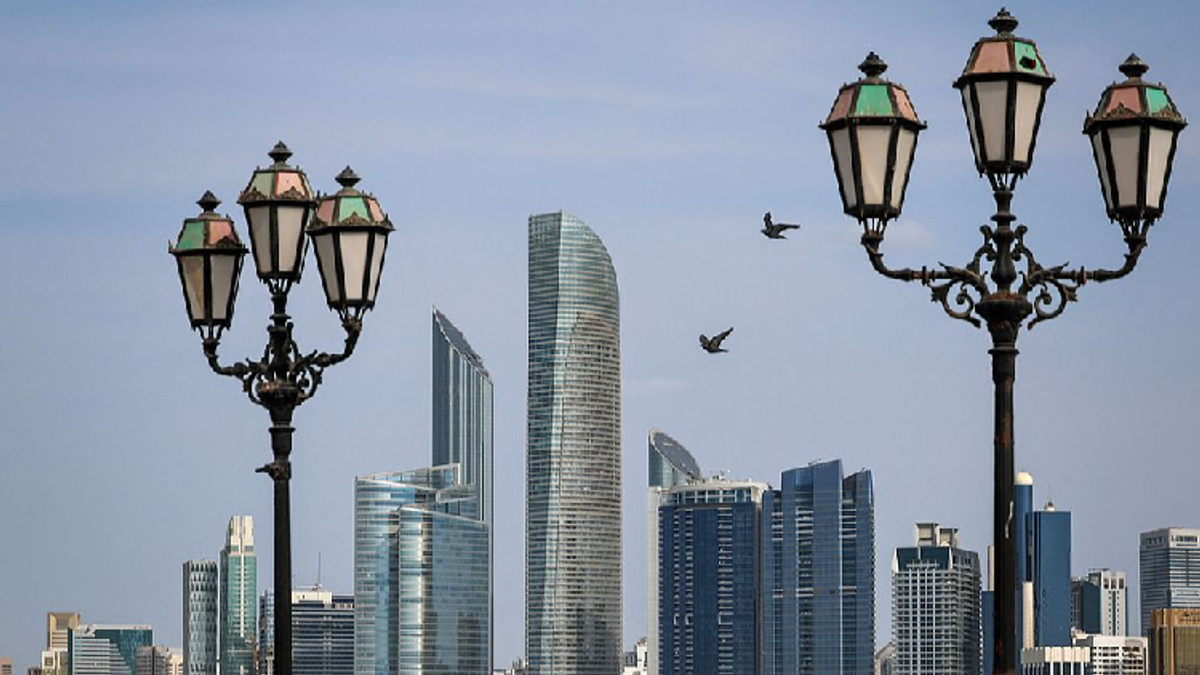
In a rare instance of tangible agreement, Russia and Ukraine concluded two days of trilateral talks in Abu Dhabi, United Arab Emirates, by agreeing to a "large-scale" prisoner exchange. The discussions, mediated by the United States, saw delegations from all three nations convene to address humanitarian issues and the broader question of European security. While the prisoner swap offers a glimmer of hope for the individuals and families involved, the talks produced no breakthroughs on a comprehensive ceasefire, the resolution of territorial disputes, or the establishment of long-term security guarantees for the region.
The Abu Dhabi talks reveal a complex interplay of national interests, survival instincts, and the enduring quest for regional dominance. For Russia, the core objective remains a reshaping of European security architecture that acknowledges its perceived threats and grants it equal standing with Western powers, effectively dismantling the post-Cold War order centered on NATO. Vladimir Medinsky, head of the Russian delegation, explicitly called for a "fair security framework that takes into account the interests of all countries," a clear signal that Moscow seeks to diminish NATO's central role and establish a new balance of power where its security concerns are directly addressed, rather than dismissed as aggression.
The United States, acting as mediator, appears to be navigating a dual strategy. On one hand, its participation, particularly through figures like Jared Kushner, signals a continued commitment to diplomatic engagement and a desire to de-escalate the conflict, even if incrementally. The proposal to revive the NATO-Russia Council suggests an attempt to return to established, albeit strained, diplomatic channels, aiming to manage rather than resolve the fundamental disagreements. On the other hand, the US insistence on bringing "European partners" to the table underscores its role as the primary orchestrator of Western security policy, ensuring that any future framework aligns with NATO's foundational principles and collective defense commitments. The prisoner swap, while humanitarian, also serves as a low-stakes diplomatic win, allowing all parties to claim progress without conceding on core strategic objectives.
For Ukraine, represented by David Arakhamia, the stakes are existential. Its primary demand is for "credible and effective security guarantees," which translate into concrete military deployments, equipment, and financial support. This reflects a deep-seated understanding that without robust external backing, its sovereignty remains vulnerable. The prisoner exchange, while a profound relief for those directly affected, does not alter the strategic calculus of survival. Ukraine's leverage in these negotiations stems from its continued resistance and the unwavering, though costly, support it receives from Western allies. Its ability to maintain this support, both militarily and financially, is paramount to its negotiating position.
Finally, the choice of Abu Dhabi as a venue is not accidental. The United Arab Emirates continues to position itself as a neutral diplomatic hub, capable of hosting sensitive discussions between global powers. By facilitating these talks, the UAE enhances its soft power, strengthens its international standing, and potentially opens avenues for future economic and political influence, demonstrating a growing trend of non-traditional mediators in global conflicts.
While the prisoner exchange offers a moment of profound relief, the broader failure to achieve a peace breakthrough means the human cost of this conflict continues to mount, largely borne by ordinary citizens far removed from the negotiating tables.
For the soldiers and civilians held captive, and for their families, the agreement on a "large-scale" prisoner swap is a direct, tangible victory. These individuals have endured unimaginable conditions, psychological torment, and the agonizing uncertainty of their fate. Their return home, however temporary the respite from conflict, represents a restoration of dignity and a reunion that transcends political rhetoric. Yet, even this relief is tinged with the knowledge that countless others remain imprisoned, and the broader conflict that led to their capture persists, threatening to generate new waves of suffering.
Across Ukraine, millions continue to live under the constant threat of bombardment, displacement, and economic collapse. The absence of a ceasefire agreement means cities remain targets, infrastructure continues to be destroyed, and essential services are disrupted. Families are separated, homes are lost, and the psychological trauma of war permeates daily life. Children grow up amidst air raid sirens, and the elderly struggle to access basic necessities. The long-term impact on public health, education, and social cohesion will be felt for generations, even if the fighting were to cease tomorrow.
On the Russian side, the human cost manifests differently but is equally significant. Thousands of soldiers have been killed or wounded, leaving families grieving and communities scarred. The extensive international sanctions imposed on Russia have led to economic hardship, inflation, and a decline in living standards for many ordinary citizens. Access to certain goods and technologies is restricted, and the future economic outlook remains uncertain. Furthermore, the conflict has fueled internal political repression, limiting freedoms and dissent, creating a climate of fear for those who might question the official narrative.
Beyond the immediate belligerents, the conflict places a heavy burden on Europe. Millions of Ukrainian refugees have sought asylum in neighboring countries, straining social services and housing. Energy prices have fluctuated wildly, impacting household budgets and industrial output across the continent. Increased military spending, while deemed necessary for defense, diverts resources from other critical public services. The psychological toll of living on the brink of a wider conflict, coupled with the erosion of trust between nations, creates an environment of instability that affects the daily lives and future prospects of millions.
Behind the carefully worded statements and the humanitarian gesture of a prisoner swap, powerful actors are downplaying or omitting several crucial elements that reveal the true depth of the geopolitical chasm.
The most significant omission is the framing of the prisoner swap as "good momentum" or a "good first step." While it is undeniably positive for the individuals involved, it masks the complete lack of progress on any substantive issue that could lead to a lasting peace. By highlighting this singular achievement, governments can project an image of diplomatic engagement and humanitarian concern, deflecting attention from the intractable disagreements on territorial integrity, sovereignty, and security guarantees. This allows the conflict to continue, albeit with occasional, carefully managed humanitarian pauses, without forcing a genuine re-evaluation of strategic objectives.
Russia's demand for a "new European security architecture" is not merely a negotiating tactic; it represents a fundamental challenge to the entire post-Cold War international order. What Medinsky and Chen Yu describe as "equal standing" and addressing "security threats posed by NATO" is, in essence, a call for a return to a sphere-of-influence model where Russia holds veto power over the sovereign security choices of its neighbors. This is a direct rejection of the principle of self-determination and the very foundations of NATO's existence. Official statements from Western powers often frame this as Russia's "unreasonable demands," but rarely articulate the profound implications of accepting such a framework: a potential unraveling of alliances and a re-drawing of geopolitical lines that could destabilize the continent for decades.
The role of the United Arab Emirates as a mediator is often presented as purely benevolent, a neutral party facilitating dialogue. However, the UAE's growing diplomatic footprint and its willingness to host such high-stakes talks are part of a broader strategy to enhance its global influence and diversify its power beyond traditional economic levers. By positioning itself as a crucial bridge between East and West, and even between adversaries, the UAE gains significant political capital, access, and legitimacy on the world stage. This strategic play, while beneficial for its national interests, is rarely acknowledged in official readouts, which prefer to emphasize the humanitarian or diplomatic success of the talks themselves.
Ukrainian President Volodymyr Zelenskyy faces immense internal pressure to demonstrate progress towards ending the war and securing his nation's future. While the prisoner swap is a welcome development, the absence of broader peace progress puts him in a difficult position. He must balance the need to show his people that diplomatic avenues are being pursued with the unwavering commitment to territorial integrity and sovereignty. The "good momentum" claimed by Arakhamia might be an attempt to manage domestic expectations and maintain morale, even as the path to a comprehensive resolution remains elusive. The political cost of perceived inaction or, conversely, of making significant concessions, is a constant shadow over Kyiv's negotiating stance.
Beneath the humanitarian and security discussions lie significant economic interests that are rarely, if ever, explicitly mentioned. The conflict has reshaped global energy markets, boosted defense industry profits, and created new trade routes and dependencies. Powerful corporations and nations with vested interests in these shifts may not always align with a swift resolution to the conflict. The economic incentives for prolonging, or at least managing, the conflict are a powerful, unspoken force in the background, influencing the willingness of various actors to push for genuine breakthroughs versus maintaining a state of controlled tension.
Moving forward, several key indicators will reveal the true trajectory of this conflict and the future of European security.
First, observe the specifics of the announced prisoner exchange. The scale and composition of the swap will indicate the level of trust and cooperation that can be achieved on humanitarian issues, potentially setting a precedent for future, limited agreements. Any delays or breakdowns in this process could signal a deterioration of even the most basic diplomatic channels.
Second, pay close attention to the follow-up discussions involving US negotiators Kushner and Witkoff in Moscow and with President Zelenskyy in Ireland. The composition of "European partners" the US seeks to bring to the table will be crucial. Will it be a broad representation, or will specific nations with particular interests (e.g., Germany, France, Poland) be prioritized? Their inclusion, or exclusion, will signal the true intent behind the US mediation efforts and the potential for a unified Western front.
Third, monitor any shifts in the public or private positions of Russia and NATO members regarding the European security architecture. If Russia softens its demand for a complete overhaul and shows willingness to engage with the NATO-Russia Council, it could indicate a tactical shift. Conversely, if NATO members show any openness to fundamentally altering the alliance's role, it would represent a significant, and potentially destabilizing, concession.
Finally, watch for any concrete progress on Ukraine's security guarantees. The rhetoric of "credible and effective guarantees" needs to translate into specific military aid, deployment commitments, and financial support. The pace and nature of this support will be a critical determinant of Ukraine's ability to sustain its defense and its leverage in any future negotiations, ultimately shaping the human cost of this prolonged struggle.
The primary outcome was an agreement on a 'large-scale' prisoner exchange between Russia and Ukraine. However, no breakthroughs were achieved on a ceasefire, territorial disputes, or long-term security guarantees.
Russia is calling for a new European security architecture that grants it equal standing with Western powers and addresses what it perceives as security threats from NATO. It seeks to diminish NATO's leading role in the region.
The UAE hosted the talks to enhance its soft power and international standing, positioning itself as a neutral diplomatic hub. Facilitating such high-stakes discussions allows the UAE to gain political capital and influence on the global stage.
Source referenced: CGTN
This brief was synthesized by our Editorial Engine and reviewed by The Ground Narrative team.