TRENDING

Monday, 5 October 2026
----------------------
24 Rabi' Al-Thani 1448 AH
Russia's Supreme Court has barred the only officially registered party opposing Moscow's war in Ukraine from running in next month's parliamentary elections, stripping voters of the chance to express their discontent with the four-and-a-half-year conflict. This move further tightens the Kremlin's control over the political landscape, silencing dissenting voices and undermining the prospects for peace negotiations.
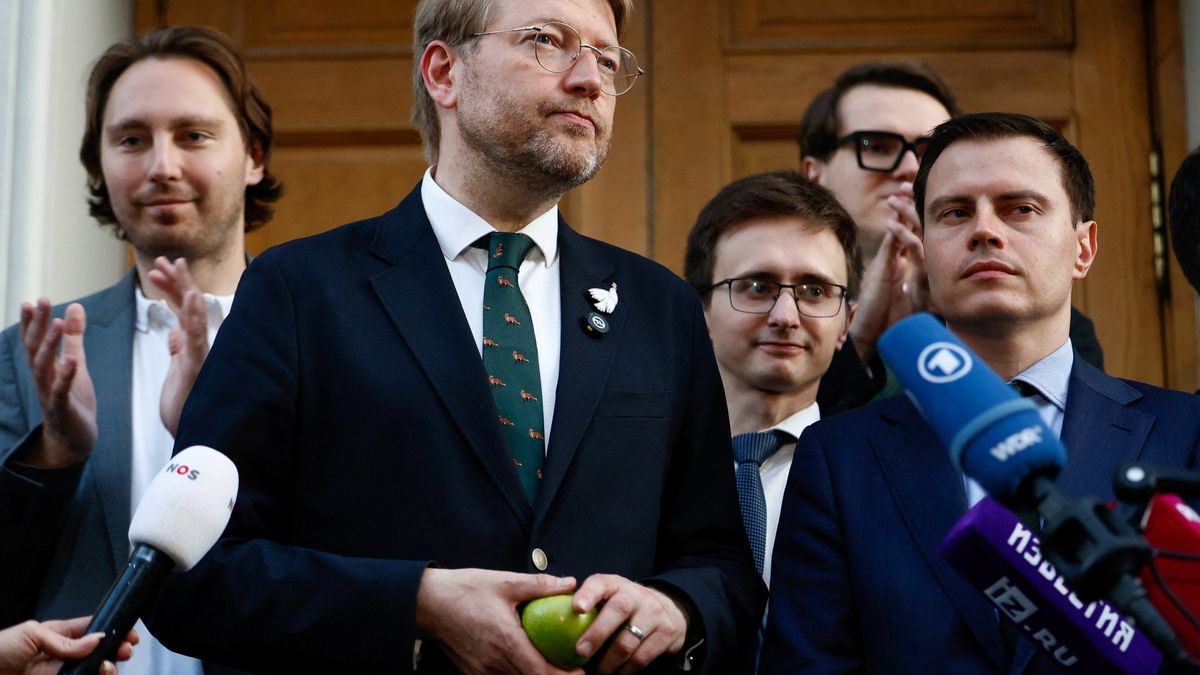
Russia's Supreme Court has upheld a suit to annul the registration of Yabloko, the only officially registered party opposing Moscow's war in Ukraine, thereby barring it from running in next month's parliamentary elections. This decision comes after the Central Election Commission had initially allowed Yabloko on the ballot, only to have its registration challenged by the pro-Kremlin nationalist party Rodina.
The structural forces at play here are clear: the Kremlin's desire to maintain control over the narrative and suppress any dissenting voices that could challenge its stance on the Ukraine war. By disqualifying Yabloko, the Russian government is ensuring that the ruling United Russia party, which backs President Vladimir Putin, will face minimal opposition in the upcoming elections. This move is part of a broader pattern of repression, where most of Putin's opponents are either jailed, exiled, or dead, leaving Yabloko as the only liberal party still operating in Russia.
The people who bear the human cost of this decision are not just the supporters of Yabloko, who are being denied the opportunity to express their discontent with the war through the ballot box. It is also the broader Russian population, who are being deprived of a meaningful choice in the elections and are forced to live with the consequences of a war that most of them do not support. Independent polls show that most Russians favor peace negotiations with Kyiv, but their voices are being silenced by the Kremlin's tightening grip on power.
What the Russian government is downplaying is the fact that this move is not just about suppressing opposition, but also about maintaining a facade of democratic legitimacy. By allowing a few token opposition parties to participate in the elections, the Kremlin can claim that it is respecting the democratic process, while in reality, it is carefully managing the outcome to ensure that its preferred candidates win. The fact that Yabloko has received the backing of several exiled opposition figures, including Yulia Navalnaya, the widow of the late opposition leader Alexey Navalny, is also being omitted from the official narrative, as it highlights the extent to which the Russian government is willing to go to suppress dissent.
Readers should watch for how the international community responds to this move, particularly in the context of ongoing diplomatic efforts to end the Ukraine war. Will Western leaders condemn this decision as a clear attempt to undermine democracy, or will they prioritize maintaining a dialogue with the Kremlin over promoting democratic values? Additionally, it will be important to monitor how the Russian population reacts to this decision, particularly in the run-up to the elections. Will there be any significant protests or expressions of dissent, or will the Kremlin's repression succeed in silencing opposition voices?
Editor's Note: The analysis is based on publicly available information and may not reflect the full complexity of the situation on the ground.
Source referenced: ALJAZEERA
This brief was synthesized by our Editorial Engine and reviewed by The Ground Narrative team.


