TRENDING

Thursday, 17 September 2026
----------------------
6 Rabi' Al-Thani 1448 AH
President Nicusor Dan nominates Liberal MEP Siegfried Muresan as prime minister amid a fragmented parliament, risking a snap election and a ratings downgrade. The move pits EU‑aligned centrists against a rising far‑right bloc while ordinary Romanians stare at stalled reforms.
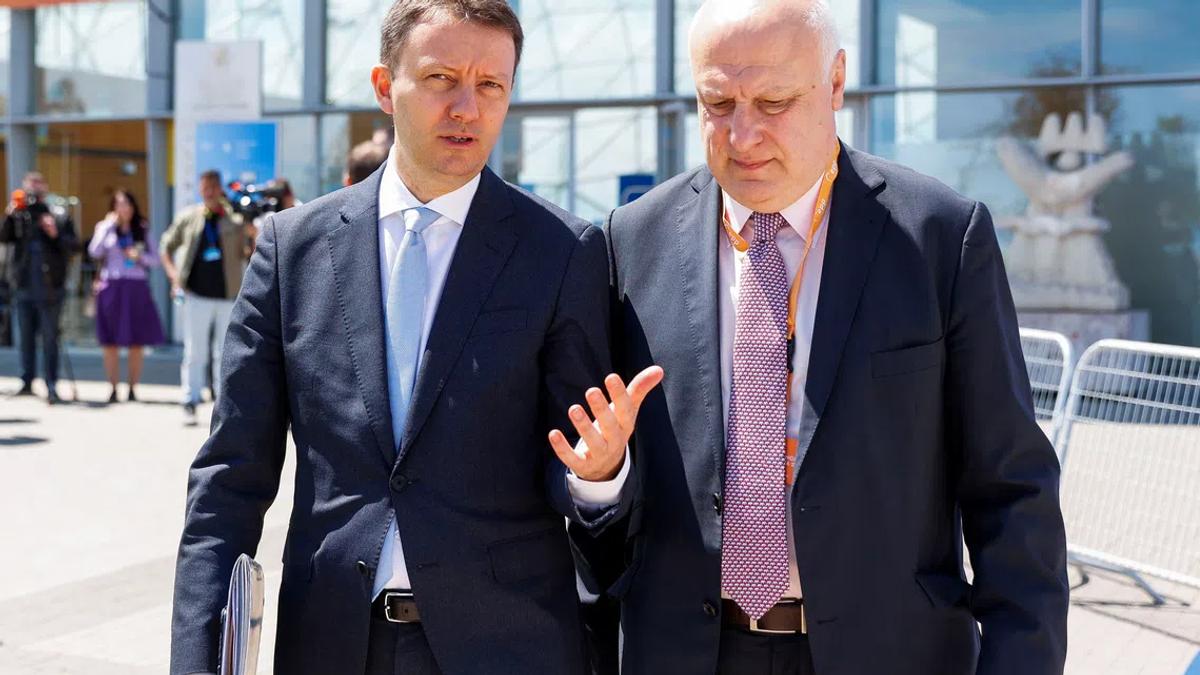
President Nicusor Dan announced on September 17 that he will nominate Liberal MEP Siegfried Muresan as Romania’s next prime minister. The nomination comes despite the absence of a clear parliamentary majority, a situation that has kept the country in a prolonged political deadlock since the collapse of the pro‑European coalition in May.
The stalemate is rooted in Romania’s fragmented party system and the president’s limited constitutional levers. Dan, a centrist, has already tried two other candidates—Eugen Tomac and Adrian Vestea—both of whom failed to secure a confidence vote. The Social Democrats (PSD), the largest party, have allied with the far‑right Alliance for Uniting Romanians (AUR) to block any centre‑right cabinet that excludes them. This alliance gives PSD a veto on any government formation, forcing Dan to look for a candidate who can at least claim a veneer of cross‑party acceptability.
Economically, the deadlock threatens Romania’s investment‑grade rating. Fitch and Moody’s warned that political fragmentation could trigger a downgrade unless a 2027 budget that further narrows the deficit is approved. The EU’s own funding mechanisms, especially those tied to the NextGenerationEU recovery plan, depend on fiscal discipline and governance stability. By nominating Muresan—a European Parliament member with strong EU ties—Dan signals a desire to reassure Brussels and rating agencies, hoping to keep foreign capital flowing.
Strategically, the move also serves Dan’s personal political survival. A prolonged crisis erodes public confidence in the presidency, and a snap election—though constitutionally untested—could reset the parliamentary arithmetic in Dan’s favor. However, analysts warn that any snap poll would likely benefit AUR, which opposes EU rearmament and aid to Ukraine, thereby shifting Romania’s foreign‑policy orientation.
The human cost of this political limbo is most visible in Romania’s ordinary citizens. Stalled reforms delay the disbursement of EU structural funds earmarked for infrastructure, healthcare upgrades, and rural development. Rural communities, already grappling with depopulation, miss out on road projects and broadband expansion that could stem the outflow of young people.
Public sector wages, frozen since the pandemic, remain a flashpoint for teachers and nurses who face rising living costs. The uncertainty also depresses private investment; small‑business owners hesitate to expand or hire, fearing sudden policy shifts. Moreover, the looming ratings review adds pressure on mortgage rates and consumer credit, directly affecting households already stretched thin by inflation.
Official statements focus on “national interest” and “European alignment,” but they downplay the role of external actors in shaping Romania’s internal calculus. The United States, through its security assistance programs, has a vested interest in a government that supports NATO’s eastern flank and continues aid to Ukraine. Meanwhile, Russian media subtly amplifies AUR’s anti‑EU rhetoric, hoping to destabilize a frontline EU member.
Domestically, the president’s willingness to bypass a clear parliamentary mandate reflects a broader trend of executive overreach in post‑communist states, where constitutional ambiguities are exploited to sideline opposition. The media silence on potential constitutional reforms that could grant the president greater appointment powers is a deliberate omission, preserving the façade of democratic procedure while reshaping power balances.
Watch the parliamentary confidence vote scheduled within ten days of Muresan’s cabinet proposal. A rejection would force Dan to either nominate another candidate or call a snap election—both scenarios carry high stakes for EU funding and regional security.
The October 2 rating review by Standard & Poor’s will be a litmus test for how markets interpret political risk. A downgrade would raise borrowing costs and could trigger capital flight, amplifying public discontent.
Finally, monitor AUR’s polling trajectory. If the far‑right continues to outpace the centre‑right, the next election could usher a government less inclined toward EU integration and more sympathetic to Russian narratives, reshaping the security architecture of Eastern Europe.
In short, the nomination of Siegfried Muresan is less about a single individual’s competence and more about a power struggle that pits institutional survival against democratic norms, with ordinary Romanians caught in the crossfire.
Source referenced: STRAITSTIMES
This brief was synthesized by our Editorial Engine and reviewed by The Ground Narrative team.


