TRENDING

Friday, 18 September 2026
----------------------
7 Rabi' Al-Thani 1448 AH
International media spotlight the 18th BRICS summit in New Delhi, noting China's expanding role in the bloc. The analysis uncovers the power calculus, the communities left out, and the signals to watch as the alliance reshapes global trade.
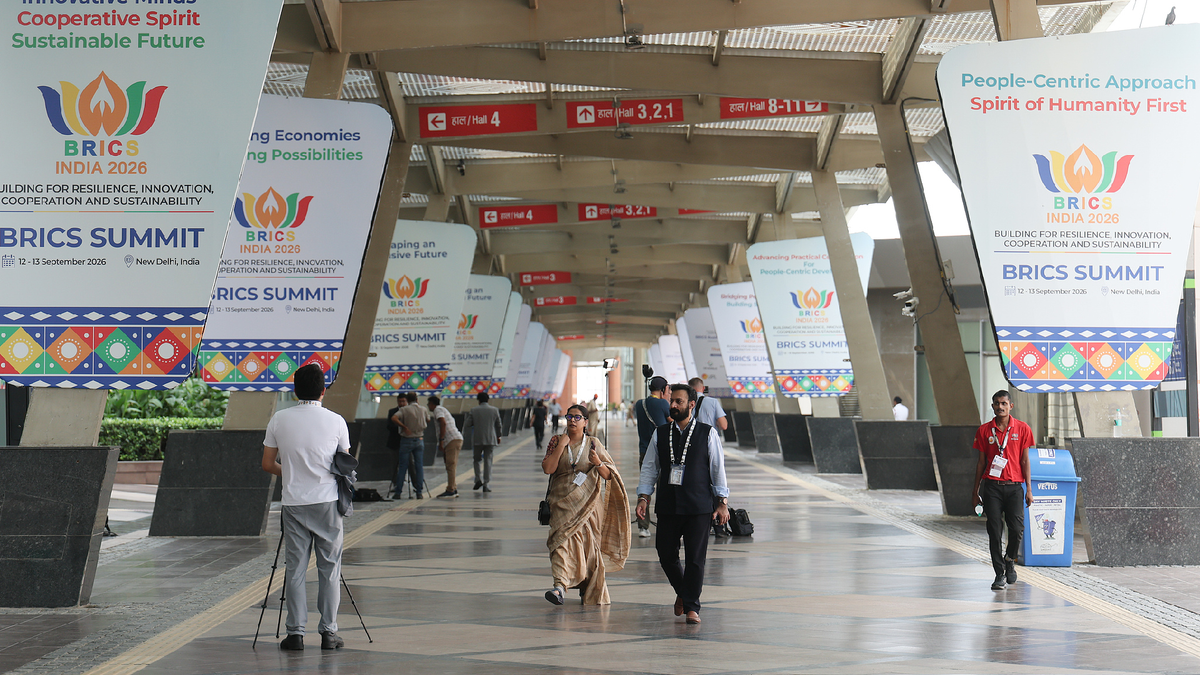
The 18th BRICS summit convened in New Delhi on September 12‑13, marking the 20th anniversary of the grouping. Media outlets from India, Canada, South Africa, Cuba and Russia highlighted the bloc’s growth into a broader platform for Global South countries and underscored China’s position as the largest trading partner for many members.
BRICS now comprises eleven full members and ten partner states, a structure that amplifies its diplomatic weight while diluting any single nation's veto power. China’s leverage stems from its role as the world’s second‑largest economy and its capacity to finance infrastructure, technology transfers and trade deals that smaller members cannot secure elsewhere. For Beijing, deepening intra‑BRICS trade secures alternative markets for its exports, reduces reliance on Western supply chains, and projects a narrative of a multipolar order where Western sanctions lose potency.
India, the summit host, balances its own strategic rivalry with China by championing a “greater BRICS” that includes partner nations, thereby positioning itself as a bridge between the bloc and the wider Global South. This diplomatic juggling act helps New Delhi extract concessions on trade, defense cooperation, and climate finance while preserving its non‑aligned credentials.
Russia, under sanctions, leans on BRICS for energy sales and a diplomatic shield against isolation. Brazil and South Africa contribute agricultural and mineral exports, respectively, completing a diversified economic portfolio that can collectively negotiate better terms with external powers. The bloc’s collective bargaining power is its core asset: a united front can push for reforms in global governance institutions, challenge unilateral sanctions, and shape standards in emerging technologies.
While officials celebrate expanded trade corridors, farmers in rural Brazil and South Africa face volatile commodity prices as BRICS‑wide agreements prioritize bulk exports over local price stability. In India, small‑scale manufacturers worry that cheaper Chinese inputs could undercut domestic production, threatening livelihoods in textile and electronics hubs.
African nations, eager for infrastructure, often encounter debt‑service pressures when Chinese loans are tied to projects that generate limited local employment. Communities displaced by new highways or ports see limited compensation, and the promised “prosperity” remains unevenly distributed.
Labor groups across the bloc voice concerns about working‑condition standards in joint ventures, where regulatory oversight is fragmented. The human cost, therefore, is not a single demographic but a mosaic of workers, smallholders, and displaced residents whose voices are absent from summit halls.
Official narratives stress “equality among countries,” yet the power asymmetry favors China. Its ability to finance projects gives it leverage over partner states’ policy choices, from voting patterns in the UN to alignment on technology standards. Media coverage downplays how Chinese state‑owned enterprises often embed technology transfer clauses that grant Beijing access to domestic data and intellectual property.
Another omitted layer is the environmental toll of accelerated infrastructure. Large‑scale mining and hydro‑electric projects, financed through BRICS channels, can exacerbate deforestation and water scarcity, feeding into climate‑related migration that the summit’s statements rarely acknowledge.
Finally, the geopolitical signaling to the West is understated. By showcasing a cohesive front, BRICS aims to extract concessions from the United States and European Union on trade tariffs, sanctions relief, and technology export controls, a strategic move that receives little scrutiny in the celebratory coverage.
Watch how the new BRICS trade agreements are ratified in national legislatures, especially in India and Brazil, where domestic opposition could stall implementation. The upcoming BRICS Development Bank financing cycles will reveal whether debt sustainability safeguards are strengthened or sidelined.
Monitor technology cooperation initiatives, particularly in 5G, AI and satellite services, for signs of standards that could lock partner economies into Chinese ecosystems. Finally, track civil‑society responses in member states—farmers’ protests, labor union statements, and environmental NGOs’ campaigns—as early indicators of friction that could reshape the bloc’s internal cohesion.
The summit’s rhetoric of a “multipolar world” is now being tested against concrete trade flows, debt contracts, and on‑the‑ground resistance. The balance between collective ambition and national vulnerability will determine whether BRICS becomes a durable counterweight or a fragile coalition of convenience.
Source referenced: CGTN
This brief was synthesized by our Editorial Engine and reviewed by The Ground Narrative team.